The open gate: How the West is being walked into the killing field - opinion
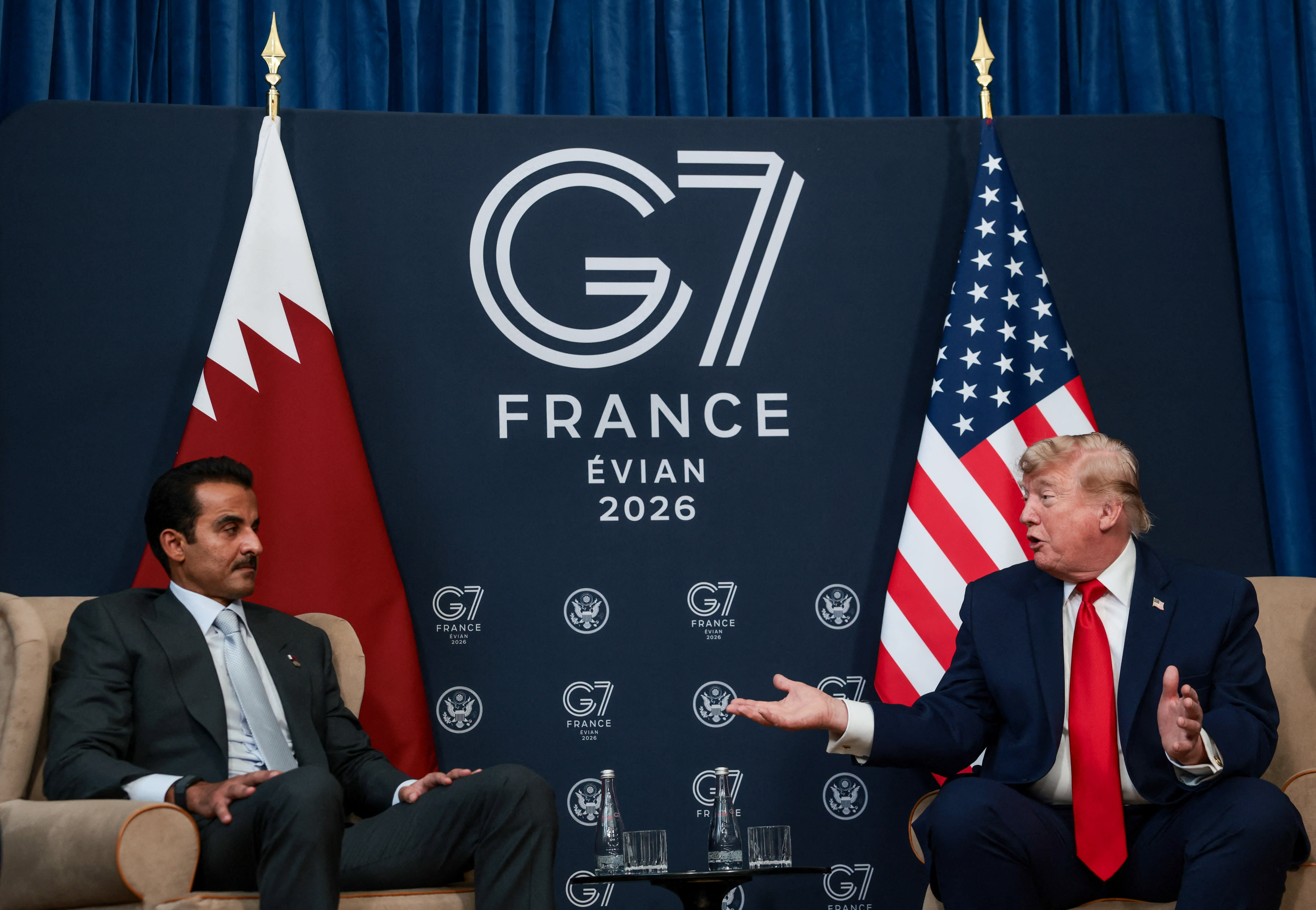
Genghis Khan understood a weakness in human nature that Western diplomacy seems determined to ignore: a man who believes himself trapped may fight ferociously, but offer him a path to safety and he may abandon every advantage that kept him alive.
The Mongol nerge began as a hunting technique. Horsemen spread across the steppe, tightened their formation, and drove the quarry into a narrowing enclosure.
In war, their successors sometimes left a deliberate opening. Soldiers who fled through it lost the protection of their formations and became easier to pursue.
At the Battle of Mohi in 1241, Batu Khan’s forces used this principle against the Hungarians.
The escape route belonged to the hunters.
Each negotiating country can pursue its interests and still leave Iran a threat
I thought of that maneuver while watching Washington pursue another settlement with Tehran, with Qatar once again installed as the indispensable intermediary.
The comparison is strategic, not an allegation that Doha and the Islamic Republic share a secret battle plan. They need not.
The danger is that each participant can pursue its own interest while the final arrangement leaves Iran better placed to threaten its adversaries.
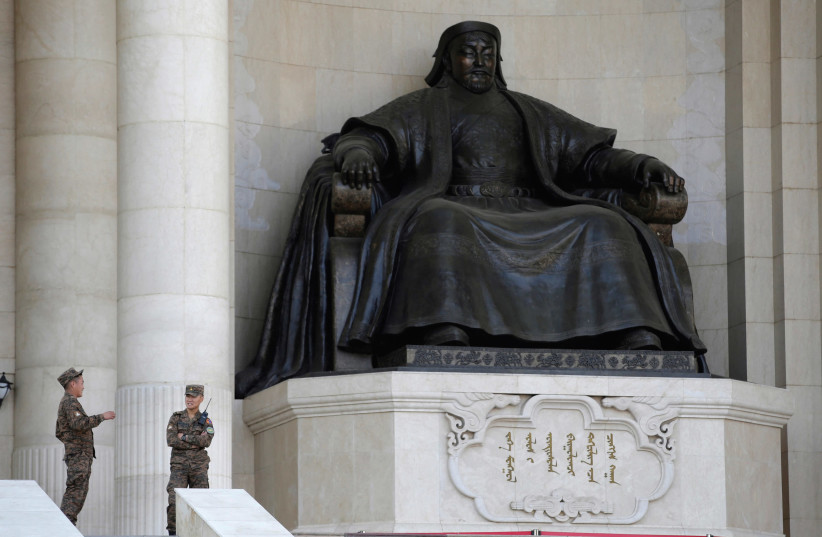
On November 9, US President Donald Trump met Qatar’s prime minister amid discussions over Iran, sanctions, and the Strait of Hormuz. Tehran has demanded relief from American restrictions and access to frozen assets in connection with restoring maritime traffic.
The next day, Iranian Security Chief Mohsen Rezaei insisted that direct talks were not underway. No multibillion-dollar asset-release agreement has been concluded.
Yet the logic of the bargaining is already unsettling. Iran helps make an essential waterway unsafe; its neighbors and trading partners suffer; and Washington is asked to consider economic relief as part of restoring the passage.
This is an excellent way to teach a coercive regime that disruption pays.
The strait is no marginal bargaining chip. Interference there affects tanker insurance, freight costs, energy prices, and governments far beyond the Gulf. Tehran need not defeat the US or Israel in conventional battle. It can impose enough expense to make an imperfect settlement look merciful.
Enter Doha.
Qatar hosts Al Udeid, a major American air base, while maintaining diplomatic ties with Iran and longstanding political contacts with Hamas. Its rulers have turned proximity to Washington’s adversaries into influence in Washington itself.
The more difficult the crisis, the more valuable the messenger who can reach the man responsible.
Of course, Qatar has its own vulnerabilities. Iran struck its Ras Laffan energy facilities in March. Doha is not immune to Tehran’s violence, and its interest in avoiding further attacks is understandable.
But vulnerability does not absolve a mediator from scrutiny of the terms it brokers.
On November 6, Al Jazeera reported that an Iranian parliamentary official described preferential passage for vessels associated with China, India, Iraq, and Qatar. It said Qatari ships could pass without fees, a privilege linked to Doha’s diplomatic role.
The exemptions were limited, and the seas remained dangerous. Still, Iran treated access to international shipping lanes as a favor to distribute according to political usefulness.
It is an extraordinary presumption. Tehran threatens commerce, then presents its restoration as a concession for which it deserves something in return.
Controlling the ground
Qatar's relationship with Hamas makes the mediating role even more delicate. Doha funded civilian salaries, fuel, and humanitarian needs in Gaza under arrangements often coordinated with Israel and supported by Washington.
That does not prove the money paid for Hamas’s weapons. But the political consequences of sustaining a Hamas-run administration deserve examination, particularly while Hamas received military support from Iran.
There are also direct financial-enforcement concerns.
In October 2023, the US Treasury sanctioned Muhammad Ahmad Abd al-Dayim Nasrallah, a Qatar-based Hamas operative who, it said, had close ties to Iranian elements and helped move tens of millions of dollars to Hamas, including its armed wing.
That finding does not establish Qatari government authorization; it demands serious oversight, not diplomatic inattentiveness.
Trump himself once saw the problem. In June 2017, he accused Qatar of having funded terrorism “at a very high level.” In September 2025, he extended sweeping American security assurances to Doha.
The evolution may reflect real cooperation, but it should invite questions about which relationships and financing risks have actually changed.
The awkward problem is Washington’s readiness to confuse diplomatic usefulness with alignment of interests. An ally may provide valuable assistance in one negotiation while pursuing regional policies that undermine the objectives of another.
None of this means negotiations are foolish. Hostage releases, humanitarian access, and de-escalation can be genuine achievements. But a meeting is not an outcome, and the ability to pass messages to Tehran is no substitute for an agreement that constrains Tehran.
If Iran recovers money while retaining the ability to close Hormuz, rebuild military capabilities, and sustain armed proxies, Washington will have purchased a pause while subsidizing the possibility of another crisis.
Israel, whose civilians have endured the consequences of Iranian support for Hamas and Hezbollah, cannot regard that as a technicality.
Any agreement must establish verifiable freedom of navigation, enforceable limits on sanctioned procurement and financing, and consequences for renewed disruption. Financial relief must follow measurable compliance, rather than precede it as payment for ending a threat.
The historical comparison requires no imaginary Mongol conspiracy. It asks us to examine the terrain beyond the opening.
Qatar may sincerely want peace; Trump may sincerely want to avoid war; Europe may sincerely want cheaper energy. Tehran may nevertheless emerge with greater leverage if these understandable desires produce the wrong terms.
The Hungarians at Mohi saw an opening and ran. Washington has the advantage of knowing what happened next.
Before celebrating the open gate, find out who controls the ground on the other side.
The writer is the executive director of the Forum for Foreign Relations and Chief Policy Advisor at Stop The Hate UK.
KioskNews shows a cleaned-up reading view extracted from the publisher’s page — the original always lives on their site, not ours.