Australia can still choose a better, anger-free path
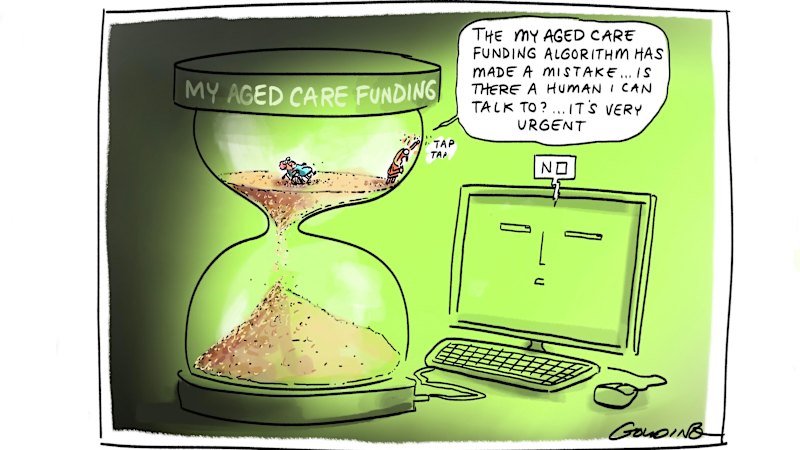
Peter Hartcher’s warning that Australia must defuse its growing anger bomb deserves serious attention (“Australia must defuse anger bomb”, October 27). We should not wait until political hostility becomes entrenched before taking action. It may be already be too late, given last week’s attack on Helen Haines. Anger does not arise in a vacuum. Many Australians and Americans feel economically insecure, ignored by politicians and increasingly distrustful of institutions. When people believe their concerns are dismissed, populist leaders such as Trump and Hanson can exploit their frustration by offering simple answers and identifying convenient scapegoats. However, political leaders must accept responsibility for the tone they set. Demonising opponents, as Trump continually does, exaggerating threats and encouraging division may win votes but it weakens the culture on which democracies depend. The answer is not to silence disagreement. Robust debate is essential to democracy. Rather, we need leaders who address legitimate grievances honestly, challenge misinformation and demonstrate respect for those with opposing views. Australia still has the opportunity to choose a better path. Defusing the anger bomb requires less political opportunism, more responsible leadership and a renewed commitment to our common interests. Pauline Hanson, take heed. Max Redmayne, Drummoyne
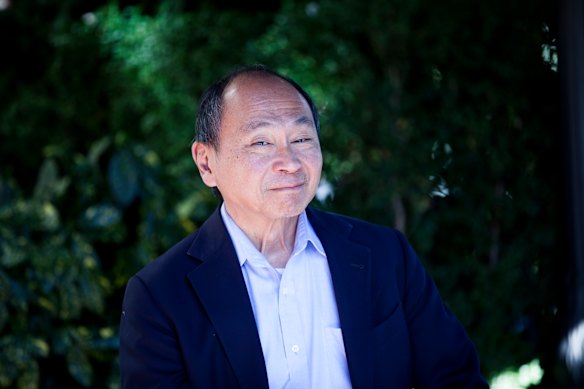
Peter Hartcher’s piece on Francis Fukuyama makes some interesting points, especially the notion of people seeking respect. I would suggest that it played down the importance of less “extreme inequality” by suggesting that today’s protests are simply struggle for the sake of it. We live in a complex society that needs a variety of workers to make it function properly; we should respect those who do all of these tasks, even the most basic, and part of that respect should be allowing everyone to earn enough to be able to live at least a modest life – and that requires a reduction in the current levels of “extreme inequality”. Brenton McGeachie, Hackett (ACT)
It’s interesting to read Hartcher quoting Fukuyama as saying, “There are still big questions about both the political and economic sustainability of the China model”. China’s “model” has, for all practical purposes, been around longer than any other model on the planet. Sure, it’s had its ups and downs, international ructions, been colonised, had revolutions and civil wars. But it has survived all comers. Imperial China may no longer exist but make no mistake: the Communist Party of China is a dynasty by any other name and all but functions as did any other past dynastic organisation. Defining and wholly unique features are its capacities for engaging with change and adaptation. These alone have rewritten and will continue to extend the end of history to unknown limits. Frederick Jansohn, Rose Bay
Peter Hartcher tells us Francis Fukuyama has suggested that our mainstream parties “ought to think about alliances” with One Nation. Making an alliance with Pauline Hanson is an oxymoron for anyone who believes in equal recognition. This is also an oxymoron for anybody who seeks more power and recognition than the next person. That is why Hanson herself rejects the idea of any coalition with the liberals. Mark Porter, New Lambton

One shameful Nation
One Nation’s so-called “cartoons” are crude, sarcastic, mock physical frailty, lack wit and, with their latest attack on Senator Lidia Thorpe, include violence (“Thorpe rebukes Hanson for cartoon showing bus attack”, October 27). I am no fan of Ms Thorpe but I would never find a vicious attack on her humorous. One Nation is not the party for Australia that it purports to be. It does not embody the idea of a fair go for all. It consorts with the mega-rich and behaves with entitlement. The only Australian icon I can identify it with is a squawking galah. Genevieve Milton, Dulwich Hill
Pauline Hanson thinks she’s found a winning formula with her feral cartoons targeting her political opponents. Her “suck it up” attitude to objections to them shows she is either in thrall to her advisers or is unfit to be in parliament. If she’s “saying what we’re thinking”, we’re a pretty sick lot. Ian Adair, Hunters Hills
Presidential candidates
Your correspondent (Letters, October 27) suggests Obama could have been a shoo-in for the 2028 US presidency were it not for the 22nd Amendment that prevents anyone from being elected to the office of president more than twice. I think Melania Trump, who seems to be getting involved in some world events, would have been a shoo-in for the job, except that the US Constitution only allows for natural-born citizens to stand. Stranger things have happened. I think. Mary Julian, Glebe
Careful what you wish for, Graham Lum. I don’t think there are many of us who’d be willing to risk another three years of Trump! Richard Tainsh, Potts Point

For Australians wishing to “lower the temperature” in public and political discourse, they could do worse than follow the example of John McCain in the 2008 US presidential campaign. A woman approached McCain at a rally and said, “I can’t trust Obama. I have read about him and he’s not, he’s not … he’s an Arab.” McCain shook his head and took the microphone from her. “No, ma’am,” McCain said. “He’s a decent family man, a citizen that I just happen to have disagreements with on fundamental issues, and this is what this election is all about.” Graham Fazio, Cootamundra
It is little wonder that Murdoch is donating millions of dollars to the US Republican Party (Letters, October 27). Promoting populist causes such as Brexit, Trump and climate-change denialism has been lifeblood to his media’s columnists and talking heads. Despite the disasters they have wreaked, Murdoch’s hacks then nimbly walk away, avoid any culpability and move on to the next “project”. Australia is not immune to Murdoch media’s partisan political campaigns masquerading as news. Martin Frohlich, Adamstown Heights
Excellent appointment
I am one of the strongest critics of Sydney University but I applaud the appointment of Jacinda Ardern to the professorial ranks (“From PM to professor: Ardern lands gig at Sydney Uni”, October 27). Professor Ardern is a perfect choice to mentor and develop young minds to make our world a better place. It shows that the rusted-on views of some – that you must come through the career ladder in academia – is out of touch. Well done to the leadership team. Michael Blissenden, Castle Hill
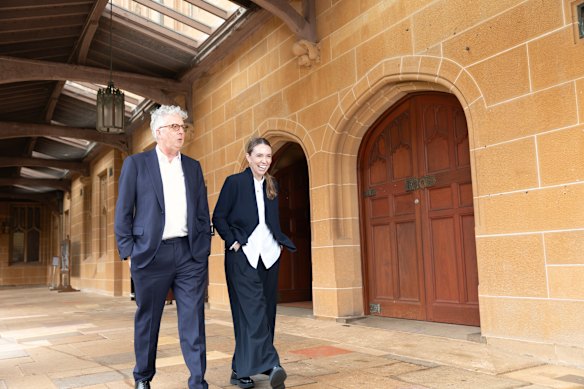
Hopefully, Dame Jacinda Ardern can also be encouraged to run interactive, mandatory-attendance workshops on “empathic leadership, social cohesion and civic trust” for our federal and state politicians. A consultant worth having. Sue Dyer, Downer (ACT)
Religion exploited
Matthew Knott’s disturbing report on Israeli extremists’ desire to occupy Gaza (“‘It is ours’: The far-right settlers laying claim to Gaza”, October 27) demonstrates yet again the dangers of religious zealotry, no matter what religious flag is flown. Too often in history, religion has been used to delegitimise or dehumanise those not in the dominant group, and it’s never been a good story. Colin Hesse, Nowra
The arrogance is breathtaking. Christine Tiley, Albany Creek (Qld)
I am as appalled by the displacement of Gazans as I have been by the reports of horrific human-rights abuses coming out of that place for years. But I’m loath to speak too loudly lest I be charged with one of the many iterations of antisemitism that hang over our heads. Shayne Chester, Waterloo
Resent danger
It’s all so discouraging. Resentment seems to have taken centre stage worldwide in so much political, social and cultural discourse these days. Perhaps now is the time to remember the saying: “Resentment is like swallowing poison and waiting for the other person to die”. Elizabeth Denny, Watsons Bay
Refreshing civility in parliament
How refreshing it was to witness the respectful behaviour during the House of Representatives question time on the tribute day for the member for Indi. Adults behaving as adults, not unruly children. Our nation’s leaders prepared to listen to their counterparts, not shout out at them. How long will it last? Sue Ellyard, Epping
There were many fine words spoken in our parliament yesterday about Helen Haines and the need to “lower the temperature” in parliament. And yet, only one parliamentarian actually publicly stated the pledge. The pledge is: “In my political life, I pledge to act with honesty, respect and compassion”. For the life of me, I can’t understand why all parliamentarians wouldn’t sign up to this. It’s not a very high bar. I wonder how long it will be until they get back to “stone her in the square” business as usual? Julian Mallett, Weston (ACT)
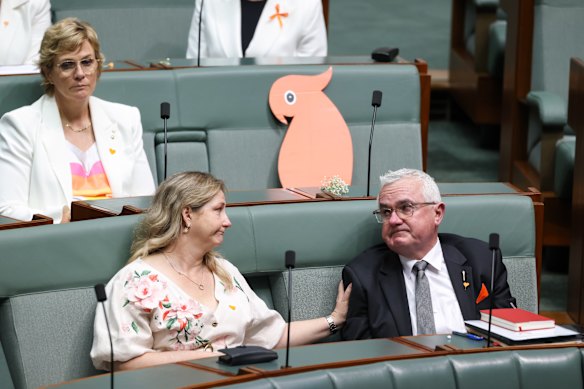
What a powerful tenet from Richard Marles (“A cardboard cockatoo rules roost among emotional MPs”, October 27) that we should all adopt: “to deny the humanity of an opponent is to cede the humanity of oneself”. Elizabeth Maher, Gordon
So Angus Taylor doesn’t see a “causal connection between robust parliamentary debate and political violence”. Perhaps he and his colleagues, hiding behind parliamentary privilege or just scrabbling for a cheap headline, can’t see that less inhibited, less informed, more angry, more desperate people might turn these confected brickbats into actions. But sensible people can see the link. If pollies want to have a go at their opponents, let them do it intelligently and with humour. “A shiver looking for a spine to run up” is far more effective than “stone him in the square”. Andrew Scott, Pymble
When I read letters insisting that parliament must always behave as a model of decorum, I feel that it misunderstands how robust Australian democracy actually works. Parliamentarians fight for their ideology, and we have to remember that many maintain genuine friendships across the chamber. Much of their constructive work happens out of public view, so the adversarial energy in question time is one of the few moments the public can witness the democratic contest in action. A lively, combative question time is part of our political culture. During Paul Keating’s time in parliament, it was the most entertaining and engaging to watch. We shouldn’t rush to sanitise the only forum in which voters can see the clash of ideas playing out openly. A bit of spirited debate is not a threat to democracy – it’s a sign of it. Mukul Desai, Hunters Hill
Heads in the sand
It’s disappointing that the Liberal and National parties are sliding even further from sound climate and economic policy, this time under the guise of fighting inflation (“Taylor banks on climate cuts in war on inflation”, October 27). Don’t they realise that climate change is itself inflationary? So-called “climateflation” – driven by more severe and frequent extreme weather – is already pushing up food, insurance and infrastructure costs. Dumping home battery programs and EV tax breaks will only add to both climate pollution and cost-of-living pressures on families. You can’t fight inflation by ignoring one of its biggest drivers. Karen Lamb, Geelong (Vic)
Act on short-term rentals
Thank you for your editorial “Short-term rentals and home stay wear out their welcome” (October 26). In Millers Point, we have seen a massive conversion of low-rise homes into “horizontal hotels” – busy during weekend peak events such as Vivid, then with empty weekday streets. The greatest loss is of families and children, including a no longer thriving children’s tennis group and the closure of KU Lance childcare. While the popular high-rise towers compensate at one end, it’s not the same. Many contributed to the NSW state government’s request for input on short-term rentals with a deadline of March 2024. Still no response. As the housing crisis worsens, as your editorial points out, it’s time for a serious rethink. Margaret Wright, Millers Point
Barracks must stay
I am surprised there have not been more protest letters regarding the sale of the barracks in Sydney. For once, I am in agreement with John Howard (Letters, October 27). It is disgraceful that the government can even think about selling this wonderful part of our heritage. Too much has gone cheaply already as people have not valued the past effort of settlement. What happened here is part of Australian history, even though the Indigenous one is considerably longer. We must cherish the building and land we have left. Generally, many Australians have not looked after enough of our heritage when we destroy early settlement buildings as well as Indigenous lifestyles such as the Juukan Gorge. All of these are important to what forms us today. This government must not destroy this by selling the barracks to private enterprise. When that happens, so much of what was goes, and only a facade is left. Keep the barracks in public hands. Augusta Monro, Dural
The current process for disposal of Victoria Barracks is totally flawed. How could our politicians consider selling such a valuable public asset in the heart of our ever-growing city without first determining its appropriate highest and best use, both from the viewpoint of public benefit and, if sold in part or in whole, to maximise the financial return to the public purse. This will be a lengthy public process, and no developer is currently going to pay what it could be worth, with such a high degree of uncertainty hanging over it. It clearly demonstrates the failure of our short-term political system, which focuses on quick returns rather than multi-decade strategies. We need to start again with a public planning study, while keeping it occupied, used and loved. Ian Costley, Belrose
Let everyone eat
There is such a mismatch between the editorial in today’s Herald (“In a third of homes, hunger is not a game”, October 27) and the constant articles on fine dining, good food guides and top chefs. Of course, it’s great that excellence is rewarded, and those with the means can eat out, and eating can be a game, but let’s never forget who is left out from the table. Maybe, just as some good people “pay it forward” when buying a coffee, fine diners could just add a fine tip to go to Foodbank so that others might simply dine. Robyn Cashman, Fernhill
I was not impressed with the article (“T2 Tea restaurant of the year”, October 27) describing Stanmore as “sleepy”. It is a thriving vibrant “village” despite being directly under the flightpath, which stops anyone sleeping until after the curfew at Mascot. Jim Croke, Stanmore
- To submit a letter to the Sydney Morning Herald, email letters@smh.com.au. Click here for tips on how to submit letters.
- The Opinion newsletter is a weekly wrap of views that will challenge, champion and inform. Sign up here.
KioskNews shows a cleaned-up reading view extracted from the publisher’s page — the original always lives on their site, not ours.