As Chinese chipmakers snap up local gear, self-sufficiency drive faces commercial test
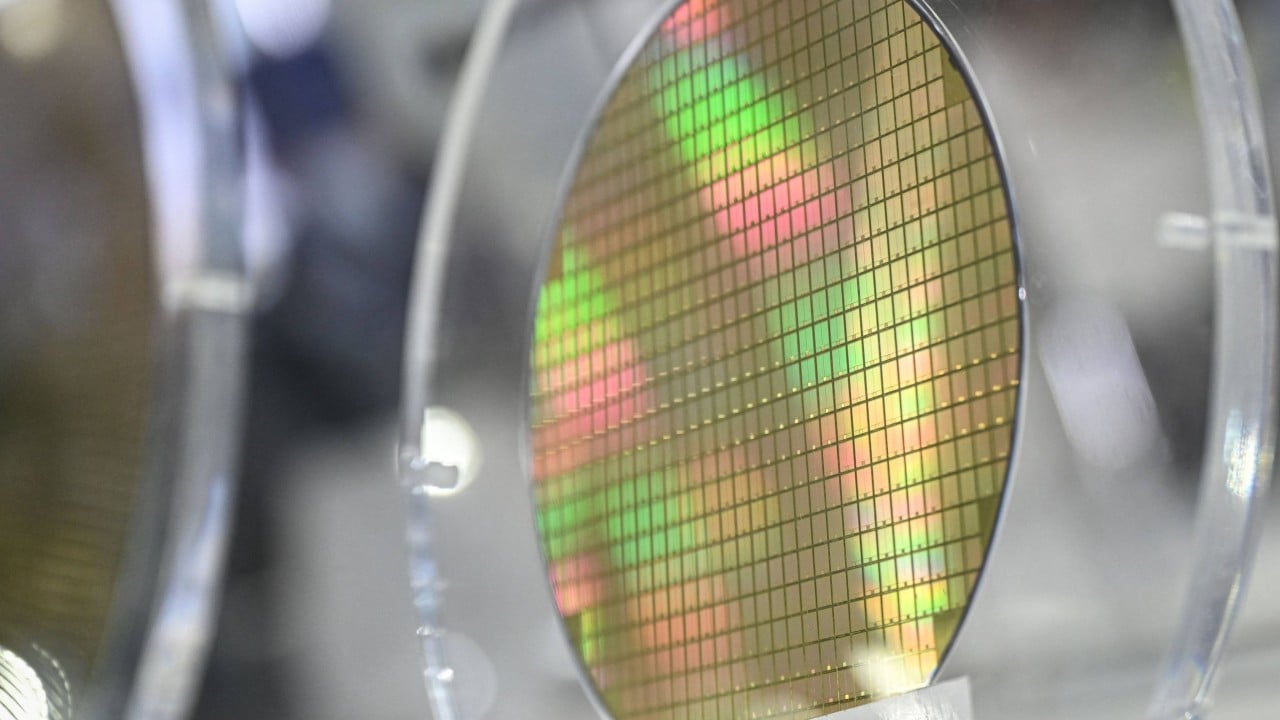
Chinese chipmakers are setting increasingly aggressive targets to source production equipment locally, adding pressure on domestic toolmakers to come up with machines that are reliable in the exacting environment of high-volume wafer production.
Several new wafer fabrication plants, or fabs, in the country were setting explicit localisation targets, according to Jie Chen, chairman of Britech Semiconductor Equipment (Shanghai) Corp, who spoke at an industry conference in eastern China’s Wuxi on Monday.
“One large customer here in Wuxi is aiming for 80 per cent localisation of equipment at its new fab,” Chen said.
Flash memory maker Yangtze Memory Technologies Corp (YMTC) highlights the speed of this transition. Before being targeted under US export restrictions in 2022, American-made tools accounted for about half of YMTC’s equipment, the company said. Now, it is working towards building a fab that relies mostly on domestic machinery.
However, industry leaders caution that the equipment sector must now transition from technical viability to commercial reliability, a shift Chen described as moving from a “zero-to-one” phase into a “2.0 era”.
“Making one machine is easy, but can five machines be the same as the first? What about 10, 50 or 100?” Chen said, noting that fabs required absolute consistency across multiple chambers and machines. He added that the industry’s “final exam” would come when Chinese toolmakers could win top overseas clients without home-turf advantage.
KioskNews shows a cleaned-up reading view extracted from the publisher’s page — the original always lives on their site, not ours.