Health of states: Bihar per capita spend lowest, Sikkim's highest
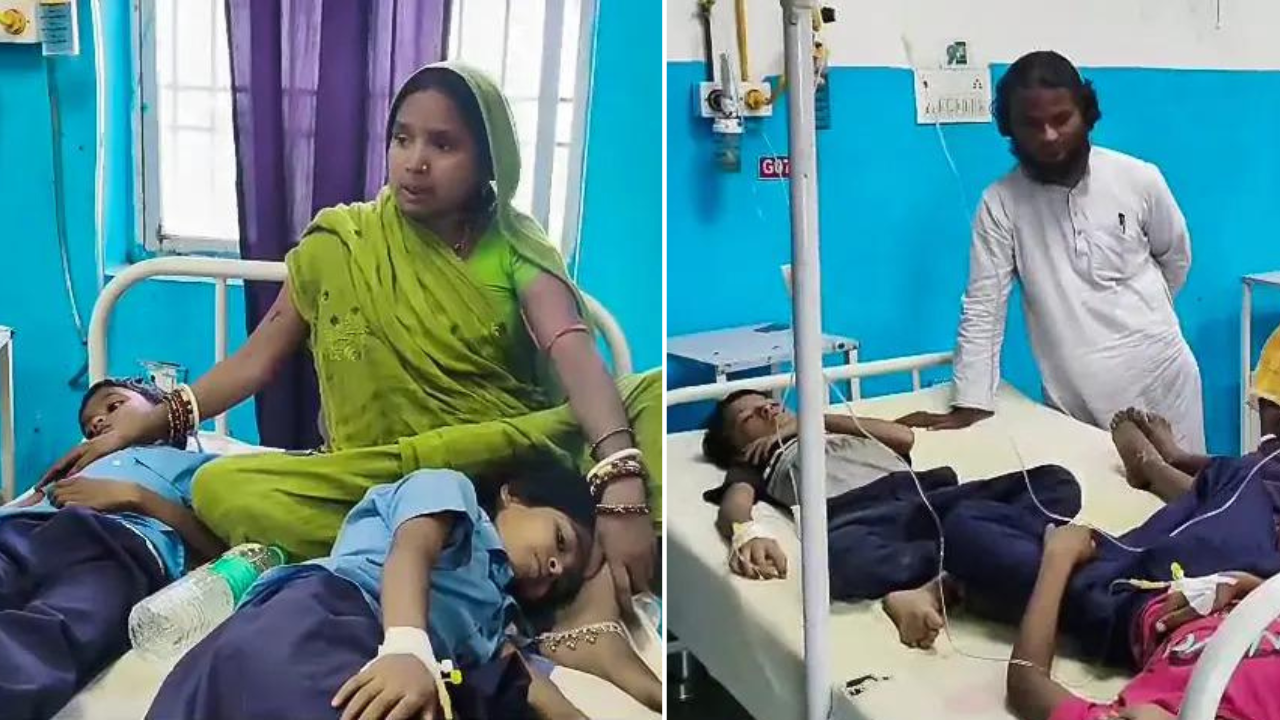

Representative image
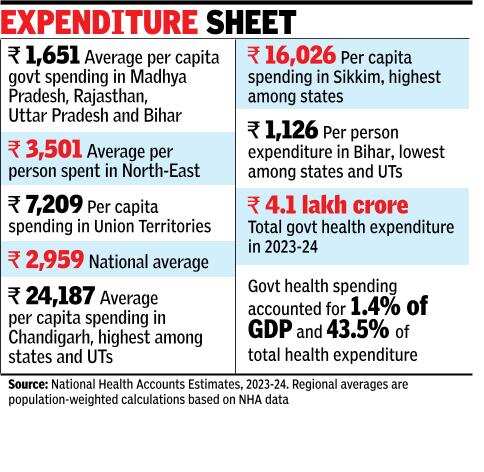
NEW DELHI: There are wide regional disparities on what govt spends on healthcare. Govt health expenditure per person in the four poorer northern states - Bihar, UP, MP and Jharkhand - averages around Rs 1,651, less than half the Rs 3,501 recorded in the northeastern states and nearly a fourth of the Rs 7,209 average for UTs, according to the National Health Accounts (NHA) Estimates for 2023-24.At the national level, govt health expenditure stood at Rs 4.1 lakh crore in 2023-24, translating into Rs 2,959 per person. It accounted for 43.5% of total health expenditure and 1.43% of GDP.Southern states recorded a population-weighted average govt health spending of around Rs 2,960 per person, almost matching the national average of Rs 2,959. Kerala and Andhra Pradesh were above this level at Rs 3,396 and Rs 3,347, respectively, while Telangana spent Rs 3,125.
Tamil Nadu's per capita spending stood at Rs 2,860 and Karnataka's at Rs 2,446, showing considerable variation even within the region.
Expenditure sheet
"The differences and disparities in per capita govt health expenditure reflect differences in states' fiscal capacity, population size, historical investment in healthcare infrastructure and political priorities. Economically weaker, populous states face greater resource constraints and higher investment by govts, while northeastern states incur higher service delivery costs and higher per capita investment due to difficult terrain and dispersed populations," health policy specialist Dr Chandrakant Lahariya said.
"We need to remember some of the fixed costs such as capital investment, infrastructure cost remain relatively high even if people using those services are limited."The disparity is particularly stark in Bihar and UP, where govt health spending was Rs 1,126 and Rs 1,399 per person, respectively. In comparison, Sikkim spent Rs 16,026 per person, the highest among states, while Chandigarh led among UTs at Rs 24,187.
The population-weighted average for the four poorer states worked out to Rs 1,651.The eight NE states show considerable variation. While Assam spends Rs 2,282 per person and Tripura Rs 3,360, spending is substantially higher in Sikkim (Rs 16,026), Mizoram (Rs 9,320), Arunachal (Rs 8,885) and Meghalaya (Rs 7,533). Manipur and Nagaland reported per capita spending of Rs 5,507 and Rs 4,585, respectively. The population-weighted regional average works out to around Rs 3,501.
Among UTs, Puducherry spent Rs 11,165, Lakshadweep Rs 9,643, Andaman and Nicobar Islands at Rs 8,947 and Delhi at Rs 8,611. J&K reported Rs 3,339, while Dadra and Nagar Haveli and Daman and Diu recorded Rs 2,293. The population-weighted average across the seven UTs covered in the report was around Rs 7,209.The figures underline substantial geographical differences in public health financing, although per capita spending alone does not measure the quality, accessibility or outcomes of services.
KioskNews shows a cleaned-up reading view extracted from the publisher’s page — the original always lives on their site, not ours.