A gulag survivor’s view from Lviv: Why superpower summits won’t decide Ukraine’s fate
What in the World, a free weekly newsletter from our foreign correspondents, is sent every Thursday. This is an excerpt. Sign up to get the whole newsletter delivered to your inbox.
Greetings from London.
The sight of three leaders at a superpower summit in Shenzhen has deepened fears that Donald Trump, Xi Jinping and Vladimir Putin have a shared view of how to carve up the world. The meeting of the three presidents at the APEC summit has even drawn parallels – unjustified, in my view – with an earlier era when Franklin Roosevelt, Winston Churchill and Josef Stalin met in Yalta in 1945 to decide the global order after World War II.
Watching from Europe, I have been thinking about how Russia chose to redraw maps at Yalta and seeks to do the same today. And that, in turn, has taken me back to a conversation I had in Ukraine not long ago with someone who survived Russian totalitarianism and imperialism by cutting timber in a frozen Soviet labour camp.
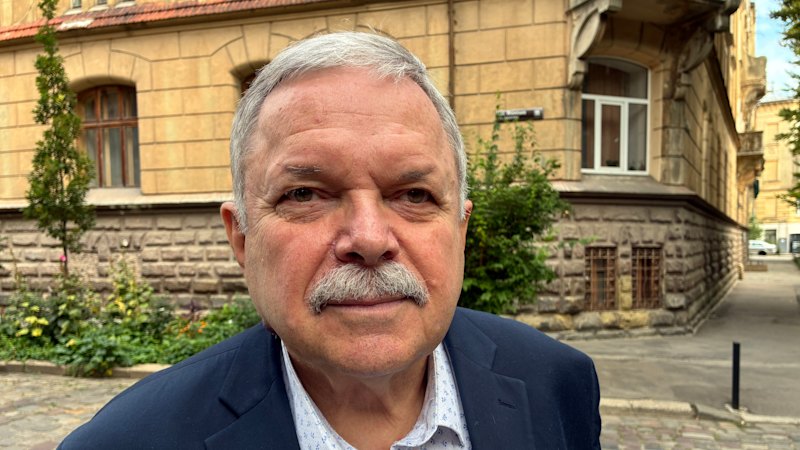
Myroslav Marynovych was 28 when he heard a knock on the door early one morning in the Kyiv apartment where he was staying with his sister. When she asked who it was, a man replied that he was delivering a telegram. When she opened the door, she found 20 KGB agents ready to search the home.
The lessons from the gulags still resonate today.
“And that was that,” Marynovych told me when we met for coffee in Lviv. It was April 1977, he said, and he was not surprised to be arrested. He had signed a letter with fellow dissidents that year and knew he risked detention. He had a record of speaking out against communism and had been questioned by the KGB three years before. His sentence, when it came in March 1978, was to be sent to the gulags.
The iconic account of the camps, The Gulag Archipelago, seems like ancient history because Aleksandr Solzhenitsyn began the book in 1958 and saw it published in 1973. In fact, the lessons from the gulags still resonate today. Survivors such as Marynovych have a rare perspective on Russia then and now.
What motivated him to speak out? “The main reason why I joined the dissident movement was to oppose the unbearable lies,” he said. “I couldn’t survive in such an environment, and so we spoke truth. That was our main crime.”
Marynovych believes Russia under Putin tells the same lies. One of them, he said, is that Ukraine is not a country and is merely Russian territory. This is fundamental to the war against Ukraine because Putin insists Russian civilisation springs from Kyivan Rus, the Slavic state centred on Kyiv a millennium ago. Putin seeks to define Russia, in history and geography, by denying the very existence of Ukraine.
Seen this way, the Yalta summit is not that long ago. Putin seeks to dictate terms to the world in the same way Stalin did. But Yalta mattered because the three leaders who met at the Crimean resort in 1945 were about to win the war. Putin, by comparison, is stalled in Ukraine and killing civilians in apartment buildings because he cannot win on the battlefield. And Trump has taken America into a quagmire against Iran.
Marynovych spent six years in Perm-36, a labour camp in the Urals, where he sawed timber and cut metal six days a week. Even when he emerged from the labour camp, he was exiled to Kazakhstan for a further three years. His wife, fellow dissident Lyuba, joined him there. They could not return to Ukraine until 1987.
There are many opinions about Russia and its war on Ukraine, but only a small number of living witnesses have seen Russian imperialism from a gulag. Marynovych is steeped in this history. He is now the rector’s adviser at the Ukrainian Catholic University in Lviv, an institution he helped form after the fall of the Iron Curtain. He co-founded Amnesty International in Ukraine and is an honorary president of PEN Ukraine, the branch of the worldwide association of writers.
What helped him survive in the labour camp?
“Well, first of all, the understanding that I’m on the right side in my life,” he said. “I’m on the right side in this confrontation with the government. All of us were sure in the prison that the Soviet Union would collapse and communist rule would collapse.
“And, actually, it did. It was our victory.”
This is the enduring lesson of the Soviet era. The Russian regime crumbled from within when Mikhail Gorbachev took power in 1985 and tried to fix a rotten system. Marynovych expects this to happen again.
“I’m sure about that,” he said. “The Soviet regime was based on three cornerstones: lies, hatred and violence. The same cornerstones are beneath Putin’s regime. I am sure that a system that is based on these cornerstones will collapse.
‘It seems to me that our victory will come from change in Russia itself, not from seeing Ukrainian tanks on Red Square.’
“I don’t know when, but it will collapse. As long as Ukraine is on the right side in this confrontation, I even have peace in my soul during the war. This war is existential for us. If we lose this war, we will cease to exist as Ukrainians with our own state.”
Trump talks about a peace deal, but there is no sign of a compromise from Moscow that could be accepted in Kyiv. For the moment, most European leaders agree on keeping the pressure on the Kremlin with more economic sanctions, more financial aid for Ukraine and further military assistance.
There is no easy scenario for halting the war and ending Russian aggression in Europe. The outcome will certainly not be decided in Shenzhen, regardless of the posturing by the three leaders. But an upheaval within Russia is a more logical forecast than a military defeat. After all, it is barely three years since Yevgeny Prigozhin and the Wagner Group tried to march on Moscow.
“It seems to me that our victory will come from change in Russia itself, not from seeing Ukrainian tanks on Red Square,” he said. He does not hold out hope for a pleasant transition to democracy in Russia, but he hopes for a regime change that ends – or at least suspends – Russian imperial ambitions in Eastern Europe.
“The Russian empire has to be dissolved,” he said. “It has to be dismembered.”
This is not the view from Shenzhen, of course. But the three leaders at the superpower summit are not the only ones who will decide the future. The people of Ukraine want a say in it, as well.
Get a note directly from our foreign correspondents on what’s making headlines around the world. Sign up for our weekly What in the World newsletter.
KioskNews shows a cleaned-up reading view extracted from the publisher’s page — the original always lives on their site, not ours.