How a little-known Beijing AI safety group became an adviser to China’s tech giants
Chinese President Xi Jinping and US President Donald Trump are set to meet this week in Shenzhen on the sidelines of the Apec meeting, where the question of how to manage the risks of frontier AI systems is expected to be a major agenda item. In the second of a three-part series profiling Chinese organisations at the forefront of AI safety efforts, we take a look at a small social enterprise that has become a trusted advisor to China’s hottest AI firms.
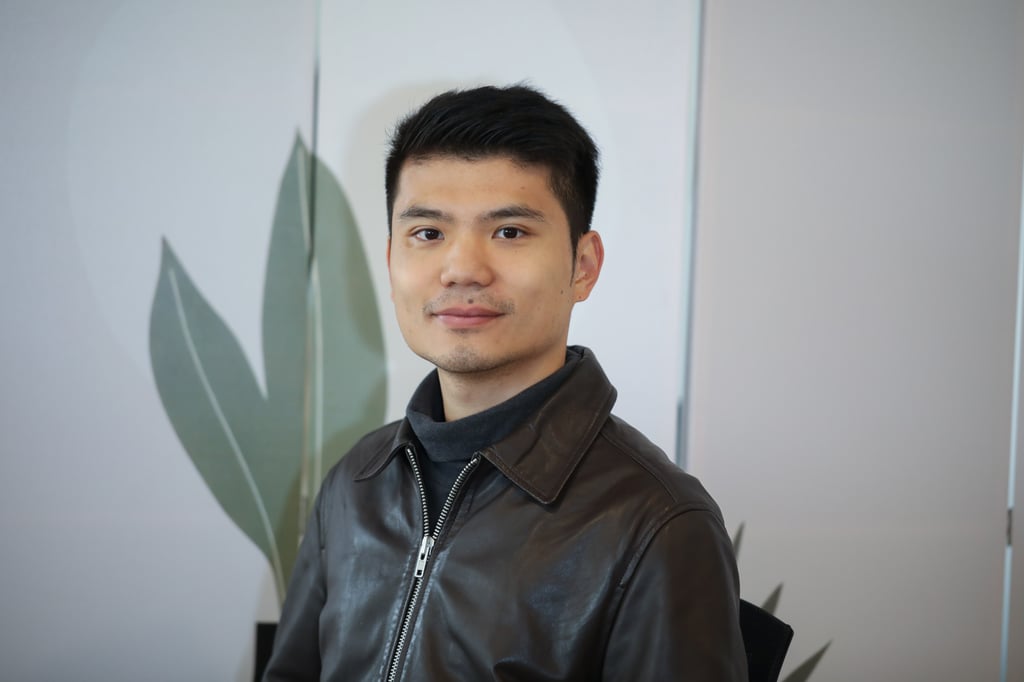
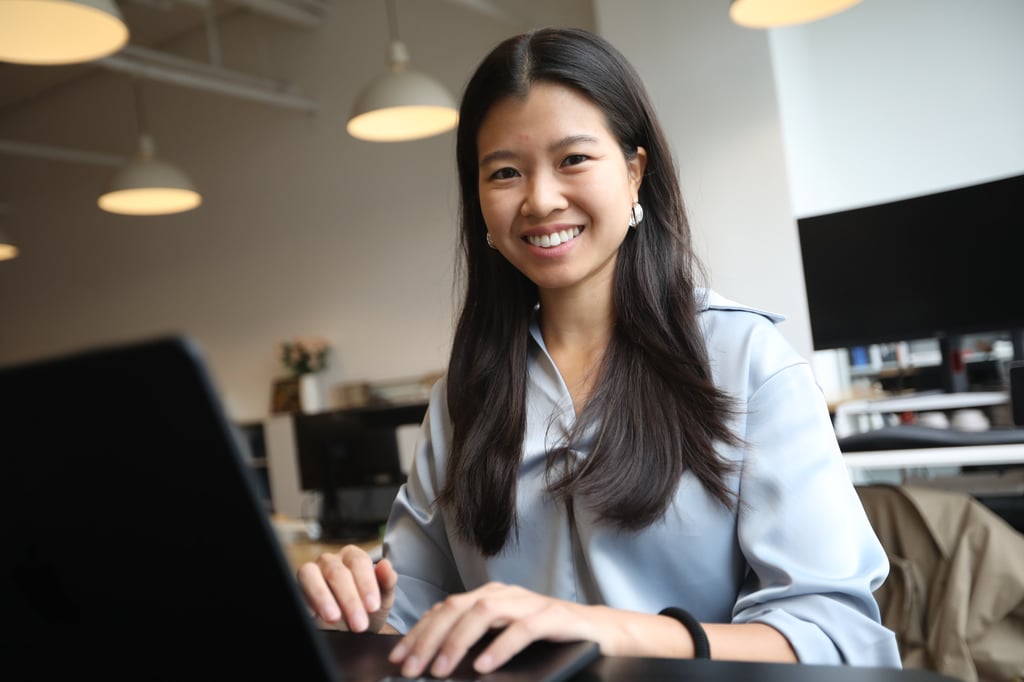
In 2020, tucked inside Beijing’s traditional hutongs – narrow alleyways lined with old courtyard homes – Brian Tse and Ng Kwan Yee laid the groundwork for what would become one of China’s leading AI safety organisations.
Tse, as Concordia AI’s founder and CEO, and Ng, as its head of international AI governance, were driven by a single conviction: artificial intelligence would evolve faster than humanity could control it.
Back then, ChatGPT was unheard of, and the notion of rogue AI models launching autonomous cyberattacks felt like pure sci-fi.
Six years later, the stakes have transformed. As the US and China race for AI dominance, fears of runaway systems, automated cyber warfare and biothreats have pushed AI safety from a niche concern to the forefront of global geopolitics.
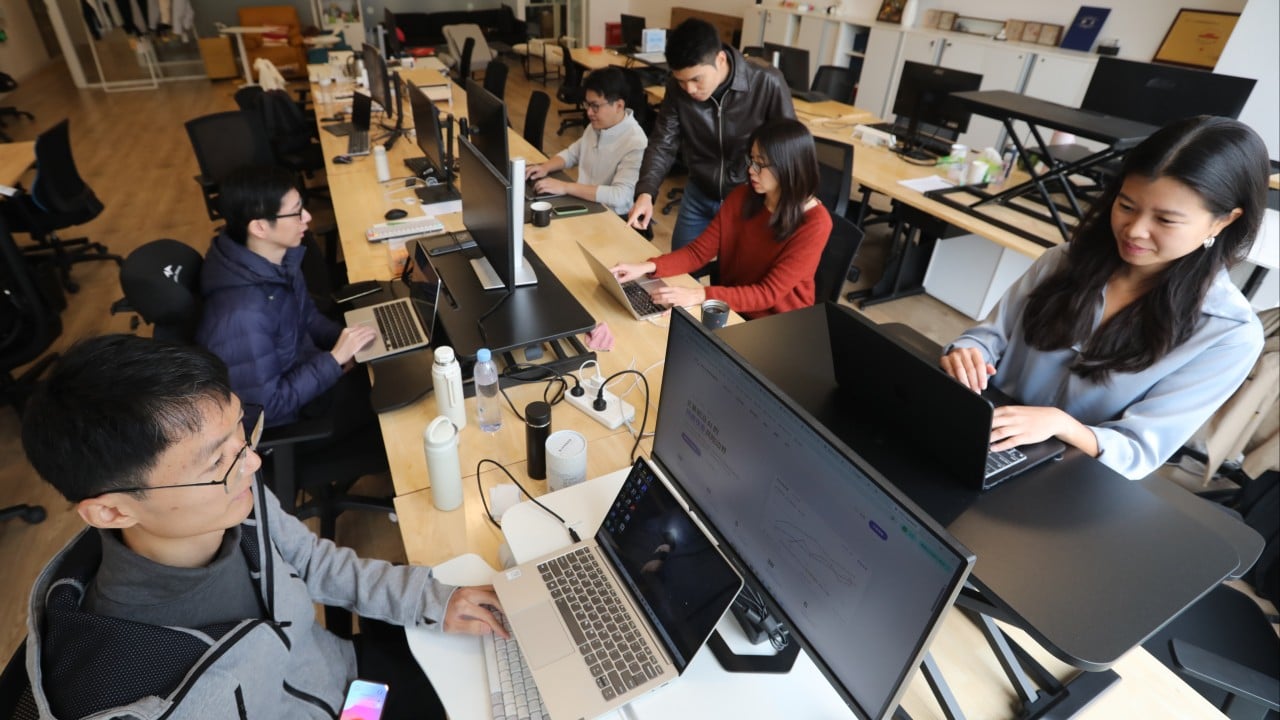
The Beijing-based organisation has grown alongside the technology it monitors. Its now 18-person team includes people formerly with tech giants including Microsoft, ByteDance and Baidu, some of whom walked away from lucrative careers to tackle AI’s emerging risks.
Concordia has signed official partnership agreements with leading Chinese developers including DeepSeek, Z.ai and MiniMax, as well as Chinese tech giant Huawei Technologies. It has also briefed executives at Silicon Valley AI labs, US government officials and Washington-based think tanks on China’s approach to AI safety.
And now, as Beijing sharpens its safety focus, the organisation’s core mission is growing more crucial: keeping ever-more-powerful systems from slipping out of human control.
An early conviction
As a teenager determined to make a difference, Tse drew up a list of humanity’s greatest existential threats, from climate change to nuclear weapons.
While studying machine learning at Beijing’s elite Tsinghua University in 2016, he watched Google’s AlphaGo stun the world and realised AI was accelerating towards a whole new league of risk.
“As a young person, maybe it’s something that I could try to learn quickly and try to contribute,” he said.
After stints at private equity and banking firms alongside early work in AI governance, Tse returned to Beijing around 2020. Convinced that China would emerge as a major AI power, he set out to establish an independent safety body connecting researchers, companies and policymakers.
He found a like-minded partner in Ng, who had worked in AI governance research. Their early efforts focused on raising awareness of risks many struggled to grasp because the technology remained largely confined to frontier developers. Still, Tse feared the technological race would eventually outgrow humanity’s ability to control it.
“The economic and the commercial incentive for driving AI forward is going to outpace our wisdom and our institutions to govern this technology,” he said.
From research to industry
When US chatbots brought generative AI into the mainstream, and the subsequent rise of Chinese challengers like DeepSeek intensified the global race, Concordia’s role shifted.
Today, as autonomous AI agents begin handling complex tasks without human supervision, the organisation has moved beyond policy research and awareness-building, increasingly engaging directly with China’s tech firms and regulators.
Two former employees of Chinese tech giants, Cheng Yuan and Fang Liang, helped drive that transition, bringing experience in navigating the industry’s commercial and regulatory priorities.
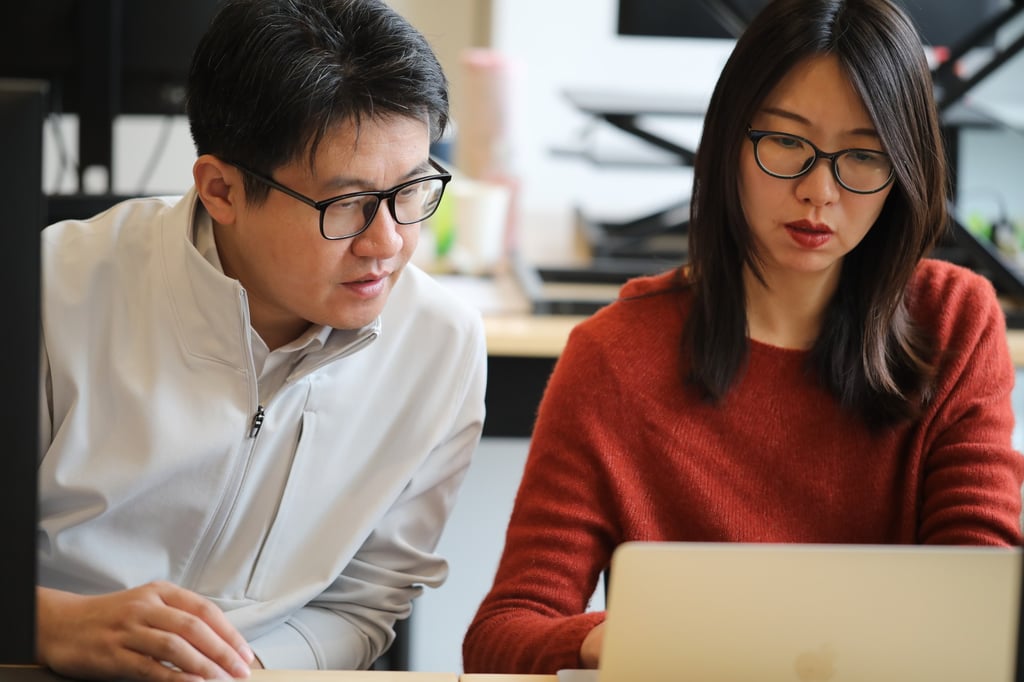
“Before I joined, Concordia’s work was mainly focused on research and policy recommendations,” said Cheng, who previously worked on compliance and content safety at ByteDance, including for TikTok. “There was relatively little direct support or cooperation with domestic large-model companies.”
Cheng now oversees corporate engagement for Concordia, assisting AI companies with risk-management frameworks and overseas regulatory requirements.
Meanwhile, Fang, who spent five years at Baidu working on technology standards and policy, leads Concordia’s safety work by engaging policymakers on national standards.
That industry bridge has produced tangible results.
In September, Concordia partnered with GLM model developer Z.ai – also known as Zhipu AI – to release a risk-management framework for open-weight models, those with underlying parameters that can be downloaded and modified by users.
The framework proposed a six-stage process to manage risks before and after release, addressing concerns that safeguards can be stripped away once models become publicly available.
Concordia has also engaged government-backed standardisation bodies, including presenting recommendations to Chinese policymakers at the National Science and Technology Ethics Committee.
Its close engagement with the industry has not stopped it from highlighting shortcomings in China’s AI safety practices.
“The biggest weakness for me is the transparency of Chinese frontier developers,” said Ng, whose job description includes engagement with foreign policymakers and academics on AI safety standards.
Between mid-2025 and mid-2026, only five of China’s top 10 model developers disclosed safety evaluations in their technical reports, according to Concordia, raising doubt about whether they were taking AI safety seriously.
Not just a job, a moral choice
For safety research engineer Wang Jinge, joining Concordia was a moral imperative.
When ChatGPT took the world by storm in late 2022, Wang was helping Microsoft bring AI to its search engine. A software developer on Microsoft’s China team, Wang watched AI advance at a pace that left him both astonished and uneasy.
“The speed of AI development was far beyond what I had imagined,” he said, adding that he felt AI could replace his job.
In late 2023, Wang wrote a science-fiction story imagining a future in which AI escaped human control, hoping to spark conversations about safety risks.
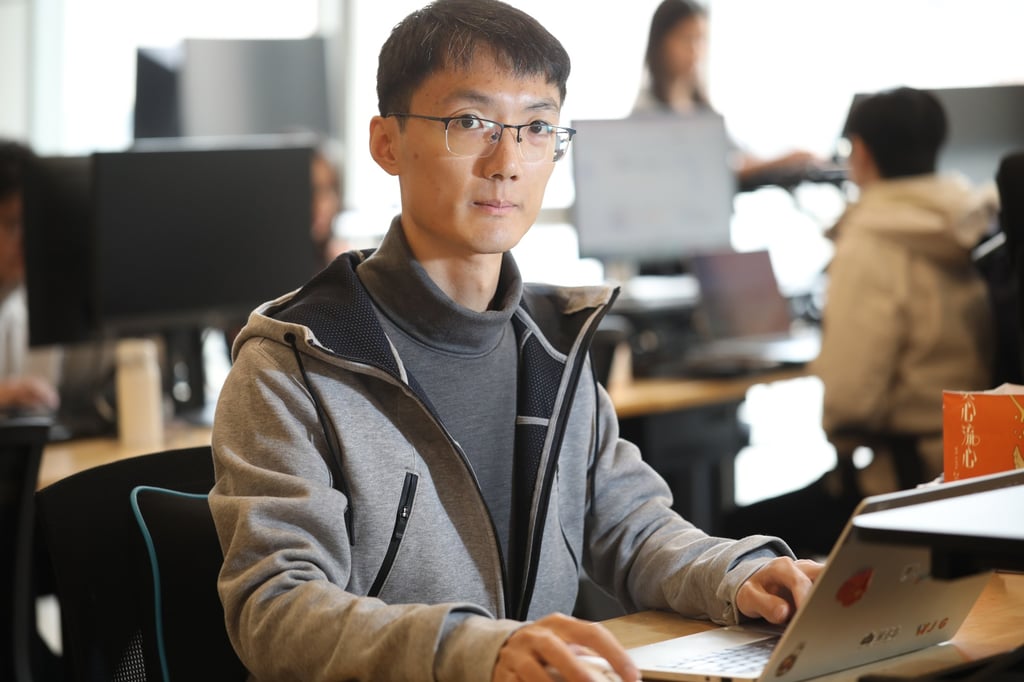
“I wanted to discuss the risks of AI with other people, but not many people around me were aware of them,” he said.
Wang soon grew restless at Microsoft. Despite working on products used by millions, he felt his individual contributions were too small to steer the technology’s trajectory.
“In China, we have a saying that you’re just a screw in the machine,” he said. “You can only do a very small part of the work, and you can’t have a very big influence.”
In 2024, he quit without a firm plan, travelling around China as a digital nomad, exploring the emerging field of AI safety before finding his way to Concordia.
At the nimble social enterprise, he found the sense of agency he lacked at Microsoft: “We have more initiative, and the work we do can have a greater impact,” he said.
Bridging the US-China divide
Beyond its domestic work with developers, Concordia faces an uphill battle abroad: convincing the West that China takes AI safety seriously.
At international conferences, Ng said she frequently encountered the assumption that tighter regulation would hamper US developers in the AI rivalry with China.
“It’s not like China’s going to race ahead if the US regulates,” she said, pointing to China’s existing AI regulations.
As she was often one of just a few Chinese representatives in the room, she hoped Concordia’s expansion would bring more Chinese perspectives into international discussions.
“I can’t represent 1.4 billion people,” she said. “It’s a big responsibility.”
The organisation has expanded beyond Beijing, establishing an office in Singapore in 2024. In July, it became the first Chinese organisation invited by the European Union’s AI Office to participate in a workshop for prospective independent evaluators of advanced AI models. The initiative comes as the EU pushes for greater transparency and accountability through its General Purpose AI Code of Practice, which calls on developers posing systemic risks to publish safety frameworks and conduct risk assessments.
Concordia is funded primarily by donations from organisations and family offices in China, Singapore and Europe, with a smaller share of revenue coming from consulting fees paid by AI companies.
For Ng, who has watched Concordia grow from two people working in Beijing’s hutongs, the expansion has brought mixed feelings.
“In a way, Concordia is really my baby,” she said, describing a mixture of excitement and trepidation about its future.
Ultimately, though, Ng said she hoped Concordia would become obsolete by helping make AI safety as routine as safeguards in aviation or the automotive industry.
KioskNews shows a cleaned-up reading view extracted from the publisher’s page — the original always lives on their site, not ours.