‘Felt like nothing happened’: Hongkonger lauds incision-free kidney cancer therapy
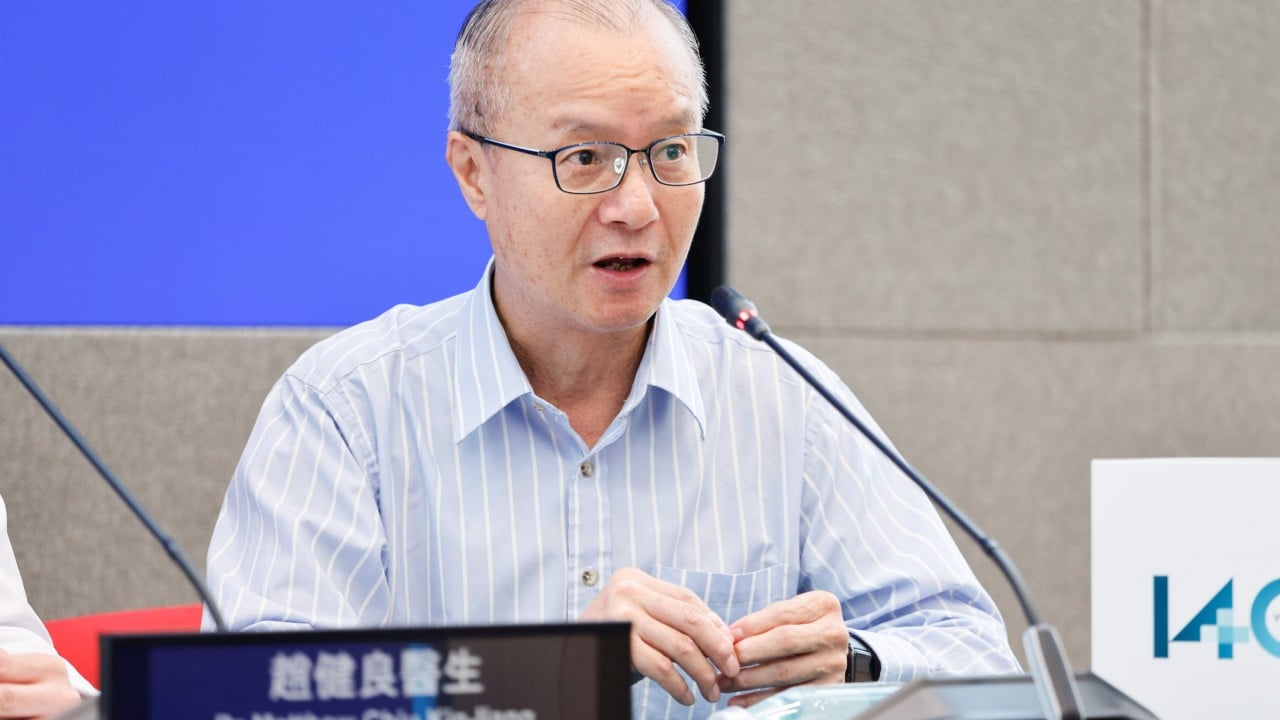
Hongkonger Li Sing-yan has recalled how he “felt like nothing happened” on the day he became one of Asia’s first two kidney cancer patients to receive an incision-free procedure that left him with no wounds or pain, enabling him to eat normal meals by that evening.
The cutting-edge technique, called histotripsy, uses focused sound waves to break apart tumours without surgical incisions.
The non-invasive medical procedure has already been used to treat more than 400 patients with liver and pancreatic cancers in Hong Kong over the past two years and is now being used to target kidney cancer.
After discovering a small tumour on his kidney three months ago, Li, 70, who had undergone major abdominal surgery on his hepatobiliary and pancreatic system 10 years ago, considered skipping the operation.
“I’m already old and can’t go through another open surgery again,” he said.
Li later underwent the histotripsy procedure at Gleneagles Hospital Hong Kong on October 13, with the treatment taking less than an hour. He was discharged after a follow-up MRI scan the next day showed good tumour cavitation, with no wounds or observable complications.
“I felt like nothing happened on the day of the surgery. I could eat normal meals by evening, and there was no pain afterwards, just some blood in my urine in the first two days,” Li recalled, adding that he was able to resume his sports routine after a month of recovery.
“Having undergone a major surgery before makes me know how painful it could be,” Li said. “With histotripsy, there is really no incision. It really helped me.”
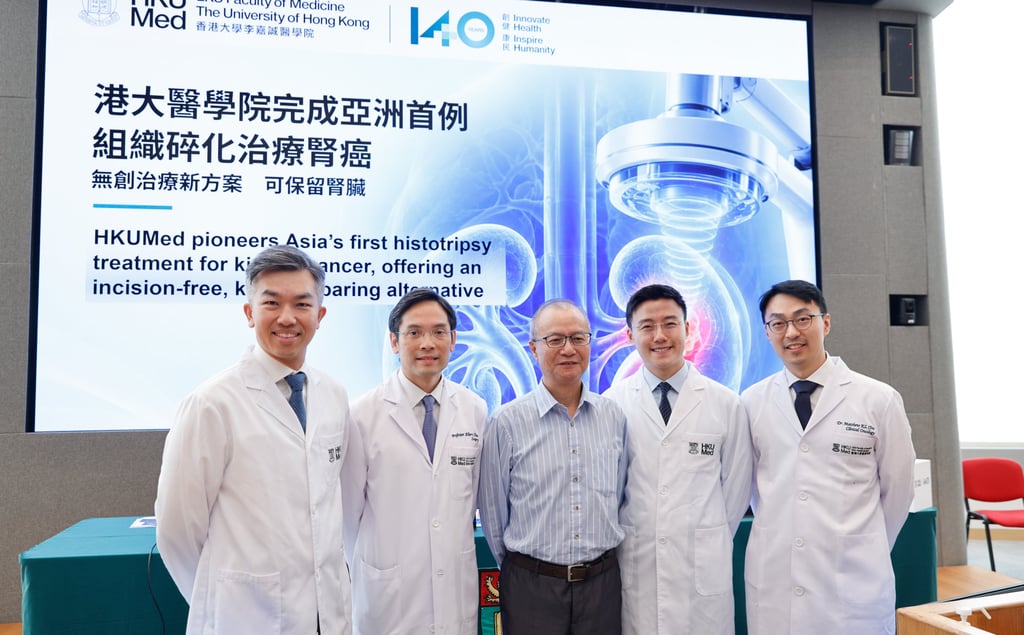
The treatment was performed by a team from the University of Hong Kong’s Li Ka Shing Faculty of Medicine (HKUMed) in collaboration with Gleneagles Hospital Hong Kong, marking the first use of histotripsy for kidney cancer in Asia, according to the research team.
The Li Ka Shing Foundation earlier announced that CUHK Medical Centre, Gleneagles Hospital Hong Kong and Hong Kong Sanatorium & Hospital would conduct trials involving 30 patients in total to assess the safety and efficacy of histotripsy.
HKUMed is collaborating with Gleneagles Hospital Hong Kong on a clinical trial involving 15 patients with localised renal cell carcinoma (RCC), a common type of early-stage kidney cancer.
Treatment for patients in the trial is free.
Kidney cancer cases in Hong Kong have risen over the past decade. In 2023, there were 598 new cases of kidney cancer and cancers of other urinary organs excluding the bladder among men, with a crude incidence rate of 17.4 per 100,000 males, making it the seventh most common cancer among men, according to the Hong Kong Cancer Registry.
While surgery to remove part or all of the kidney remains the main treatment for localised kidney cancer, Dr John Leung Shung-lai, clinical assistant professor in HKUMed’s Department of Surgery and the study’s urology lead, said histotripsy “is a potentially valuable treatment option for selected patients with RCC”.
“Its main advantages are that it does not involve any skin incisions and allows patients to return to normal activities quickly.”
Leung said the second patient treated on the same day with Li at Gleneagles Hospital was a 71-year-old woman with early-stage kidney cancer who also completed treatment within an hour and was discharged the following day.
One-month follow-up checks showed that the treatment zones of both patients accurately covered their tumours, which would gradually shrink over time after histotripsy, minimising the impact on surrounding kidney tissue, the research team said.
“However, it is important to note that histotripsy for kidney cancer is still investigational,” Leung said, adding that the current trial focused on patients with early-stage kidney cancer, and further follow-up was needed to assess its long-term effects.
KioskNews shows a cleaned-up reading view extracted from the publisher’s page — the original always lives on their site, not ours.