Google says Asian advertisers spending less off due to Europe's customs changes
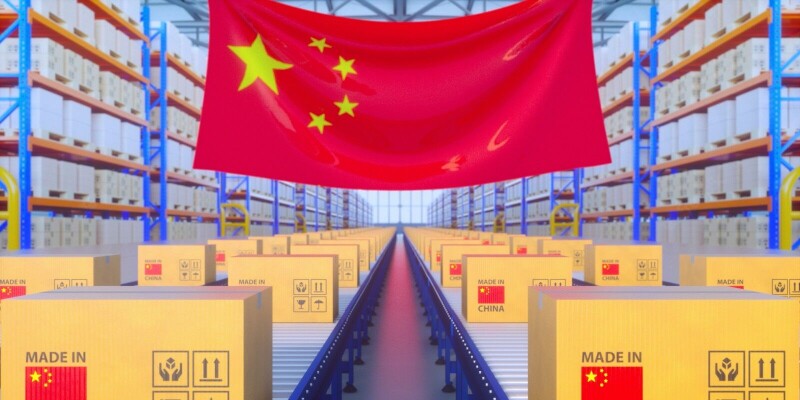
PLUS: Brake pedals break on Huawei-made cars; North Korea named as source of Binance hack; and more!
Google has revealed some of its Asian customers – almost certainly Chinese e-tailers – are buying fewer ads.
Speaking on Alphabet’s Q3 earnings call last week, chief business officer Philipp Schindler addressed the slowdown in ad sales growth with the following remark: “In retail, some of our APAC advertisers were impacted by the EU eliminating its de minimis exemption.”
That’s a reference to the European Union’s changes to import duties, which saw the bloc introduce a temporary €3 customs duty for every consignment valued at under €150 imported from outside the EU.
REG AD
The EU previously operated the de minimis exemption that Schindler referred to, meaning it collected no import duty on almost 5.9 billion low-value items shipped to the continent in 2025 alone. The new regime aims to protect European retailers from cheap imports.
REG AD
A great many of those items came from Chinese e-tail giants – the likes of Temu, Shein, and Alibaba – who are thought to account for perhaps ten percent of advertising revenue at Google and Meta.
EU policy has therefore contributed to slower growth at Google.
Huawei’s brake pedals reportedly break
Huawei’s automotive efforts appear to have driven it into a cul de sac of controversy.
The Chinese tech giant works with a company called Anhui Jianghuai Automobile Group Co. (JAC) under the Harmony Intelligent Mobility Alliance, which aims to produce intelligent cars.
The flagship model produced by Huawei and JAC is a luxury EV called the Maextro V800, which when tested by Chinese automotive review site Dongchedi produced a rather terrifying fault: the brake pedal bracket broke when drivers exerted maximum force during tests to assess the car's ability to decelerate suddenly at 100 km/h.
The site’s drivers were still able to stop the car, but rather more slowly than is optimal.
Within days of the review site posting its findings, reports of its work started to disappear from the internet, according to China Digital Times, a US-based outlet that says it publishes independent news on Chinese affairs.
REG AD
Even some opinion pieces that called for further assessment of the car’s safety disappeared, giving rise to theories that Beijing is displeased with negative coverage of its technology champions and automotive industry.
North Korea named as Binance hacker
The USA’s Federal Bureau of Investigation (FBI) on Saturday named North Korea’s elite cybercrime crew “TraderTraitor” as the source of last week’s attack on cryptocurrency exchange Binance.
Cyber-defense company TRM also reached the same conclusion. Its analysts last week declared they have “high confidence” that “on and off-chain intelligence” suggest TraderTraitor did the deed.
“On the evening of October 29, billions of dollars in crypto began leaving wallets belonging to Binance,” TRM’s analysts wrote. “Within minutes, Binance wallets on the XRP Ledger, Ethereum, Bitcoin, Tron, Solana and four other networks had sent their balances to addresses controlled by a single attacker. A second wave around 23:05 UTC reached Binance wallets on Avalanche and Polygon.”
TRM thinks Trader Traitor started its raid 36 hours before the theft. “The attacker's operator wallet received three small withdrawals from Tornado Cash, a service that obscures where crypto comes from, starting the morning of October 28,” TRM wrote. “Early on October 29, the operator deployed a first piece of code for the attack and tested it on two wallets. Later that day, it rehearsed the final version on a third wallet, then routed the test funds back to itself. Four hours after that rehearsal, the same code was installed on a Binance hot wallet.”
Binance first said the cause of the incident was a single compromised laptop. It has since detected “additional points of breach” but has not offered additional information while it investigates the matter. The crypto exchange continues to reassure users that its platform is safe and that it will make good any losses.
North Korea steals cryptocurrency to fund its government, especially its belligerent defense efforts.
REG AD
Samsung posts monster profit
Samsung last week delivered the monster profits it promised early in October.
The Korean giant announced record Q3 revenue of ₩195.3 trillion ($146.2 billion ) and operating profit of ₩107 trillion ($80 billion).
Samsung’s DS division, which covers all its chipmaking efforts, earned over 99 percent of that operating profit and $110 billion of the company’s revenue.
The company said its foundry business “experienced a notable revenue and earnings improvement on HBM base-die sales growth” and expects it will notch up “double-digit revenue growth and continued earnings improvement on new mobile products, mass production ramp-up of 4nm NPUs, and expanded memory product sales” in its next quarterly report.
“In 2027, the Business will aim for revenue growth led by 4nm and 2nm advanced nodes based on strong AI and HPC demand. It also expects to strengthen its global supply capabilities with the commencement of operations at its new fab in Taylor, Texas,” the company said.
That last item is welcome news as the reason Samsung and other memory-makers are making so much money is shortages mean they can inflate prices. More factories coming online may help to ease price pressures.
Fast-charging batteries set for takeoff
Dr Rachid Yazami, the scientist who developed the graphite anode that made lithium-ion batteries mainstream, has shown off a new battery design that can achieve 70 percent charge in under four minutes.
In tests of its lithium iron phosphate (LFP) battery cell, Dr Yazami’s startup KVI was able to go from 10 percent to 70 percent charge in 3.7 minutes, and to full charge in seven minutes, using “Non-Linear Voltammetry (NLV)” technology that he says “uses a proprietary, stepwise voltage-controlled approach” that “allows the current to respond to the battery’s changing electrochemical characteristics” during charging.
“The challenge is not simply to push more electricity into a battery in less time,” Dr Yazami said. “It is to understand how the battery responds during charging and use that information to deliver energy more effectively.”
Japanese company SkyDrive, which hopes to manufacture electric-powered flying vehicles, has signed up to test the tech. ®
KioskNews shows a cleaned-up reading view extracted from the publisher’s page — the original always lives on their site, not ours.