Does a clear freezie taste as sweet? The foods going colourless because ‘it’s better for you’
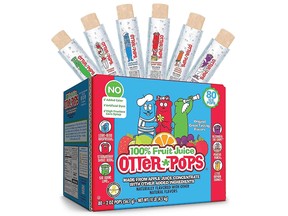
Do grape-flavoured freezies need to be purple? And must the nacho cheese dust left on your fingertips be quite so flaming orange? Some food and beverage companies are betting not, dropping the colourings altogether in a bid to remove artificial food dyes.
Sign In or Create an Account
As consumers’ priorities shift and regulatory scrutiny rises in the United States, the food and beverage industry is moving away from synthetic dyes. According to a March 2026 survey from Consumer Reports, roughly 72 per cent of adults are at least somewhat concerned about the use of artificial food dyes, which research has linked to health issues including allergies and hyperactivity.
Synthetic food dyes serve a purely cosmetic purpose, and eliminating them is a step in the right direction, experts told National Post. Swapping synthetic food dyes for natural ones is proving challenging for the food and beverage industry. Natural tints made from algae, minerals and plants can be costly and less shelf-stable, causing some companies to move in a different, tintless direction.

Join Laura Brehaut on a weekly food adventure with mouth-watering reads delivered Fridays.
By signing up you consent to receive the above newsletter from Postmedia Network Inc.
A welcome email is on its way. If you don't see it, please check your junk folder.
The next issue of Cook This will soon be in your inbox.
We encountered an issue signing you up. Please try again
PepsiCo Inc. went “completely colourless” last year with its Simply NKD line of Cheetos and Doritos, reformulated without artificial flavours or dyes. Promising the “same intensity,” the new products generated US$3 million in sales in their first month in stores, RTI International told Food Dive, citing Circana data. Other companies are following. Jel Sert, the maker of Otter Pops, Fla-Vor-Ice and Kool Pops, for instance, reportedly plans to remove all colourings from its treats by early 2028. Colourless Otter Pops made with apple juice concentrate are already on the market.
Matt Ingemi, Jel Sert’s chief strategy officer, told Bloomberg that given the challenges of natural dyes, the company will drop tints altogether and use colourful images on packaging to convey flavour. “We’ll make it fun.”
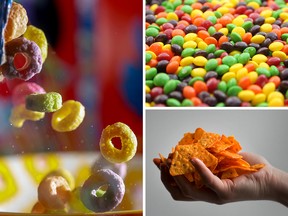
Yu Ma, a professor of marketing at McGill University, says this approach makes sense in a crowded retail environment, where brands want to stand out as much as possible from the competition. “Without colour, you’re losing that punch in attracting people’s attention, and they don’t want to lose that,” says Ma.
Consumer acceptance of colourless foods and drinks depends on the type of product, says David Soberman, a professor of marketing and the Canadian National Chair of Strategic Marketing at the University of Toronto. For foods such as freezies, which tend to be consumed directly from the casing, leaning into vibrant packaging “is very effective” at getting around the issue of a colourless product. “The more steps there are between taking the product out of the package and consumption, the less effective it is.”
Something like pop, on the other hand, that’s drunk straight from the can or bottle but also dispensed from soda fountains and served at restaurants and bars, risks losing its identity along with its distinctive hue. “Each context is different, and so you can actually assess the challenge that the marketer has based on the actual steps that a person goes through to consume the product,” says Soberman.
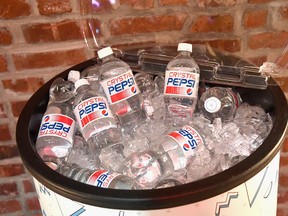
In our health-conscious era, consumers might link bright colours with ultra-processed foods, and avoid them as a result, adds Ma. Colourless products could be considered “more natural” or “better for you.” Attitudes were different in 1992, when Crystal Pepsi hit store shelves. Ma discusses the clear cola in his marketing class as “a classic example of a new product failure.” It was gone by the end of 1994. “I feel like there is a much better chance for a product like Crystal Pepsi to succeed today than 30 years ago.”
Many different factors influence how people perceive foods, from their appearance to how they feel in our hands. “I’m pretty sure when you have two products, even if they have the same formula — one with colour, one without — people are going to tell you they taste different. Sensory input comes from multi-dimensions,” says Ma.
Consumers also have expectations of certain products based on colour, from children’s cereal to snacks. People might associate the bright yellow of nacho chips with intense flavour. Pale ones could be considered defective, unless brands make it clear it’s intended.
Whether or not going colourless would help or hurt food brands also depends on the type of brand.
“If it’s positioned toward health-conscious consumers, going colourless might actually signal it’s authentic. It has purity. It’s natural,” says Ma. “Maybe (consumers) are even willing to pay a higher price for that. But for something we consume just out of habit, for enjoyment, maybe for those products, I feel like people will resist the change.”
The U.S. Food & Drug Administration is tracking the progress of the food companies that have pledged to remove synthetic food dyes by the end of 2027. Along with the commonly cited snack foods, there are also less expected items, such as the milk, cheese and yogurt provided to schools through national breakfast and lunch programs.
Soberman views the move away from artificial dyes — and toward making processed foods more natural — as positive.
“Up until now, the main things that people have looked at when they are assessing the nutritional value of food — they’ve looked at sugar content. They’ve looked at salt content. They’ve looked at fat content. They’ve looked at caloric content. But this is actually another dimension that we’re using to look at the nutritional value of foods, so I think it’s a step in the right direction.”
Emma Allen-Vercoe, a professor in the University of Guelph’s Department of Molecular and Cellular Biology, whose research has found that commonly used food dyes can harm the gut microbiome, is concerned about the types of foods that contain artificial food dyes — some of which are common lunchbox additions.
If given the choice between going colourless and adding artificial dyes, dropping the tints altogether is “the right choice,” says Allen-Vercoe. Beyond candy, chips and cake, “I’m also noticing it in things like yogurts and cheese strings and things like that, which we tend to give our kids as a healthy snack.”
Allen-Vercoe has been studying the human gut microbiome for nearly 20 years. Her research has shown that azo food dyes, a class of synthetic colourings commonly used in food, medicines and cosmetics, can break down in the gut, creating potentially toxic byproducts. She describes gut microbes as “an unseen force in your body,” and compares their metabolic power to that of the liver.
“I like to think that we’re living in more enlightened times now, and I’m glad that the consumer power is translating into this kind of pressure. And while we’re at it, why stop with food dyes?” says Allen-Vercoe, highlighting other artificial substances that research has found damaging to the microbiome, such as sweeteners, emulsifiers and thickeners.
Our website is the place for the latest breaking news, exclusive scoops, longreads and provocative commentary. Please bookmark nationalpost.com and sign up for our cookbook and recipe newsletter, Cook This, here.
Join the Conversation
This website uses cookies to personalize your content (including ads), and allows us to analyze our traffic. Read more about cookies here. By continuing to use our site, you agree to our Terms of Use and Privacy Policy.
KioskNews shows a cleaned-up reading view extracted from the publisher’s page — the original always lives on their site, not ours.