US Jews continued to back Democrats in midterms amid generational chasm on Israel — poll

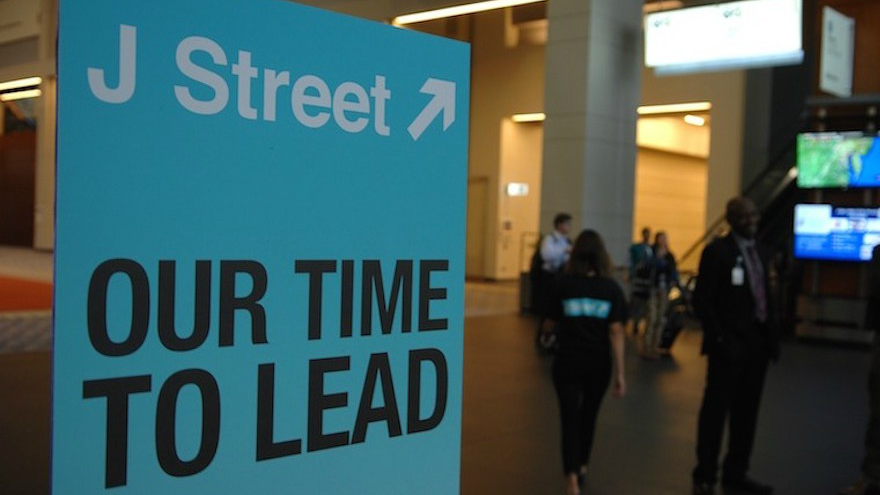
American Jews remained overwhelmingly supportive of Democrats in Tuesday’s US midterm election, according to a poll commissioned by the dovish J Street lobby, belying predictions that Democratic candidates’ criticism of Israel would cause some Jewish voters to switch parties.
The debates over Israel, the poll found, were splitting the US Jewish community. Published Thursday, it demonstrated low levels of support for Israel among younger voters, while older voters continued backing the state.
Seventy-two percent of Jewish voters supported Democratic congressional candidates in the US midterm election, exactly the same as in the previous election in 2024, the poll said. Meanwhile, 26% voted Republican, versus 24% two years earlier — a difference within the survey’s margin of error.
0:00 / 0:00
Promoted: American Technion Society

The poll was released following this week’s Democratic sweep of the House of Representatives and the Senate, in which voters overall shifted to the party by a significant margin. The election saw a crop of new US lawmakers who accuse Israel of genocide — and, in some cases, have spoken out against Jewish statehood — win races in the House and Senate.
Their victories came as public opinion of Israel has dramatically sunk in the US, especially among Democrats, and as voters expressed anger about the Iran war, which the US and Israel launched jointly in February.
Get The Times of Israel's Daily Edition by email and never miss our top stories
By signing up, you agree to the terms
Overall, US President Donald Trump’s favorability was low among Jewish Americans of all age groups, with 77% having unfavorable views of the president. The poll also found that US Jews had a low opinion of Prime Minister Benjamin Netanyahu, with 72% holding an unfavorable view.
Orthodox Jews (65%) had a favorable view of Trump, and also were the only Jewish group to vote majority Republican in the midterms, according to the poll.
“American Jews remain a core Democratic constituency with firmly held political beliefs and values, and their voting behavior has remained remarkably consistent despite the emergence of controversial issues each election cycle,” said GBAO Strategies founding president Jim Gerstein, whose firm conducted the poll.
“Conventional wisdom about the impact of Jewish concerns over antisemitism and what it means to support Israel often misses the mark on how Jews process these issues in America’s political context,” he continued. “The reality is that Jews express nuanced thinking on these issues that is frequently missing in the extensive media coverage of the Jewish community.”
The study, conducted between October 28 and November 3, surveyed 800 self-identified Jewish voters and has a margin of error of 3.5%.
Nearly half of young Jewish voters sympathize more with Palestinians
The poll revealed massive age gaps regarding Israel.
Asked where their sympathies lie in the Israeli-Palestinian conflict, overall, 39% of American Jews said they sympathize more with Israelis, 38% with both, and 23% with Palestinians.
However, 49% of respondents aged 18-34 sympathize more with Palestinians, compared to just 20% with Israelis, and 31% with both.
The statistics are almost completely reversed among the 50-64 age group, in which 53% said they were more sympathetic to Israelis and only 9% to Palestinians, while 38% were sympathetic to both.
Overall, a large majority of American Jews disagree with unconditional support for Israel. Thirty percent back unconditional support, 39% back conditional support “consistent with US interests and values,” and 31% want to pull military support and accuse Israel of committing genocide in Gaza.
Among 18- 34-year-olds, 60% agree with the statement that Israel has committed genocide in Gaza and say the US should end military support of the country.
Only 25% of that group back conditional support, and only 15% back unconditional support. Members of the 65+ age group were the most in favor of unconditional support for Israel, with 49% of respondents choosing that option.
A clear majority of Jewish voters (76%) in the latest poll also back sanctions against violent Israeli settlers in the West Bank, as well as the ministers who “aid and abet” the violence.

The J Street poll asked whether Super PAC spending by the group’s rival, the pro-Israel lobby AIPAC, against candidates who criticize Israel increases antisemitism in the US. Sixty-six percent said it does.
While most respondents (48%) said those AIPAC-funded ads would make no difference to their vote, more said the organization’s advertising (39%) would make them less likely to vote for a candidate than more likely (13%).
Eighty percent of Jewish voters also believe Israel’s actions in Gaza and the West Bank increase antisemitism in the US, according to the poll.
Most respondents (60%) said that organizations that condemn harsh criticism of Israel as antisemitic are exploiting concerns over antisemitism to defend Israel’s unpopular policies.
14% cite Israel as key issue in elections; 21% cite antisemitism
Jewish American voters listed the future of democracy as their top issue in the 2026 midterm election, with antisemitism ranked third, according to the survey.
It found that 44% of respondents named the future of democracy as a key issue, and the second-ranked issue was the cost of living, at 34%. Meanwhile, 21% named antisemitism (the third-most-popular response) and 14% cited Israel (the fifth-most-popular).
Your next read: ToI Editors' Picks

LIMITED TIME OFFER: Join The Times of Israel Community today and you'll receive a physical book of your choice, carefully curated by our editors.
Choose between two must-reads: When We See You Again by Rachel Goldberg-Polin, a searing portrait of a mother’s grief and strength following unthinkable tragedy;
Or Out of the Sky: Heroism and Rebirth in Nazi Europe by Matti Friedman, the gripping and surprising tale of a forgotten moment during World War II.
As a Community member, you’ll also enjoy our DocuNation series of outstanding Israeli documentary films, an ad-free experience of our site and podcasts, commenting privileges, and more.
CHOOSE YOUR BOOK CHOOSE YOUR BOOK Already a member? Sign in to stop seeing this
KioskNews shows a cleaned-up reading view extracted from the publisher’s page — the original always lives on their site, not ours.