A kill switch for epilepsy? China cuts seizures by 92.6% in first human chemogenetic trial

For people living with refractory epilepsy, the brain is like a city that can suffer a blackout any time lightning strikes.
Without warning, an abnormal neural discharge can sweep through the intracranial circuits, leaving behind convulsions, loss of consciousness and years of lingering panic.
Around one-third of epilepsy patients worldwide are completely unresponsive to existing medications, while traditional craniotomy resection surgery often carries the risk of irreversible neurological deficits.
Faced with this hurdle, a neuroscience and clinical surgery team from China chose another path.
Rather than resecting the diseased brain tissue, they quietly installed a “molecular switch” into those out-of-control neurons through genetic engineering and used a tiny tablet originally intended for the treatment of schizophrenia as the key, locking them out at the very moment a discharge was about to erupt.
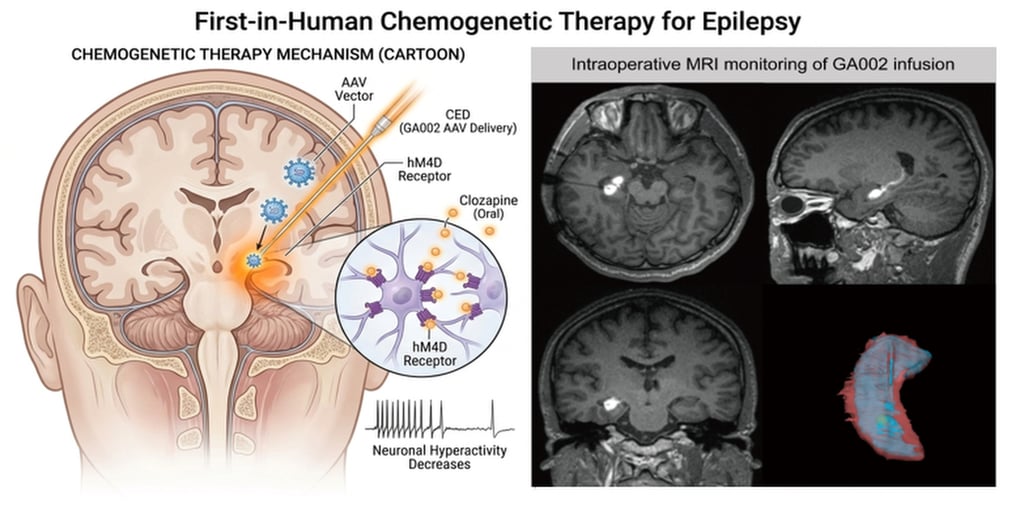
Early trial results show the approach could dramatically reduce – and in some cases eliminate – seizures in epilepsy patients.
The research findings, representing the world’s first-in-human clinical trial of “chemogenetic neuromodulation”, were published online on November 4 and in the November 5 issue of the New England Journal of Medicine (NEJM) as a letter.
“In this study, we found evidence for the preliminary feasibility and safety of MRI-guided intrahippocampal GA002 viral vector delivery with low-dose oral clozapine activation,” Zhao Guoguang wrote in the paper. Zhao is the president of Xuanwu Hospital of Capital Medical University and director of the National Centre for Neurological Diseases of China.
Three men aged 28 to 37 years with refractory medial temporal lobe epilepsy and hippocampal sclerosis took part in the trial.
Can Hong Kong become a new centre for frontier medicine?
They had a confirmed diagnosis of epilepsy for 10 to 25 years, were resistant to at least two anti-seizure medications and had not previously undergone epilepsy surgery.
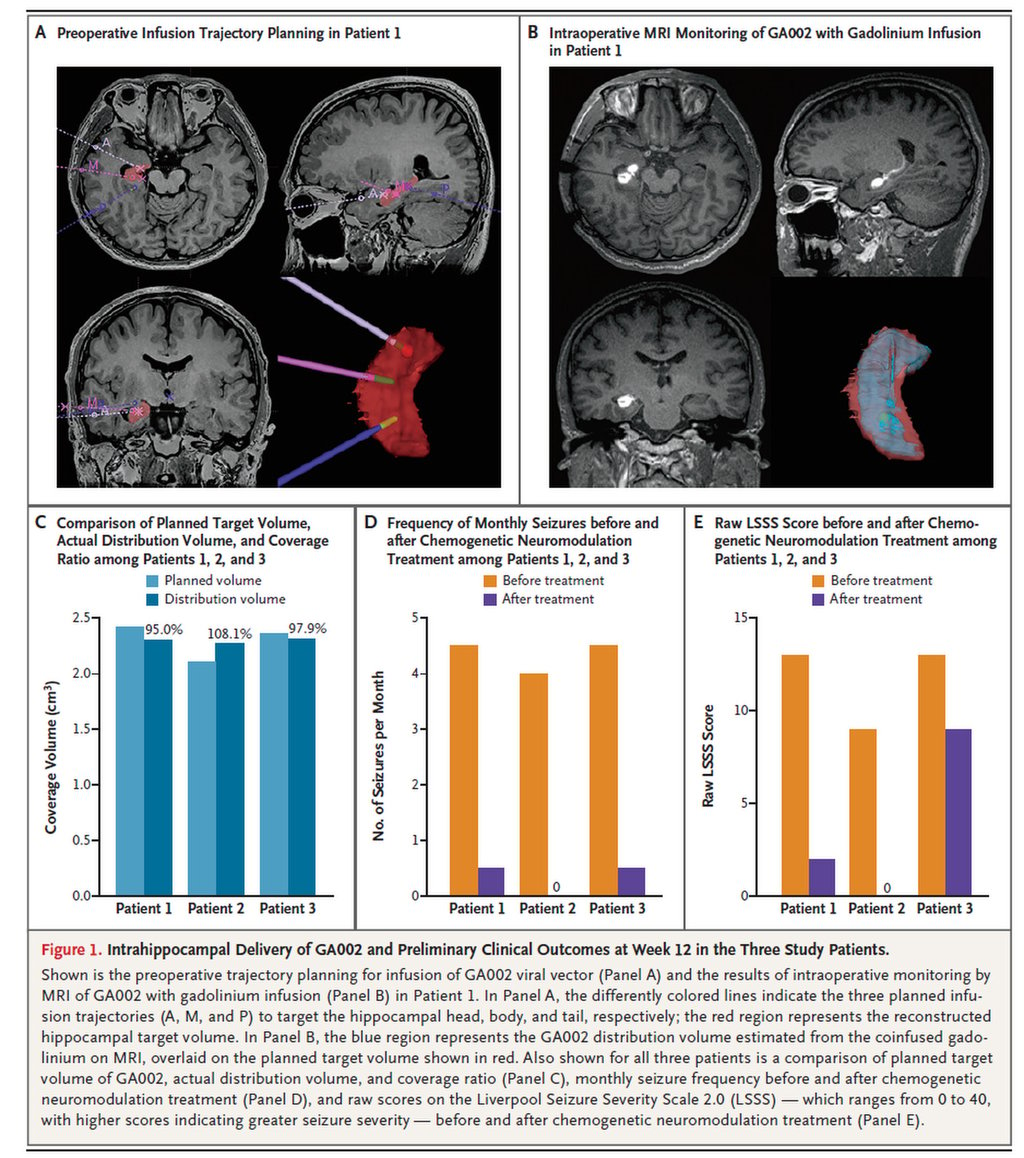
Under magnetic resonance imaging guidance, the surgeon infused 0.5-1ml of GA002 injection into the hippocampal lesion areas of these patients’ brains.
The hippocampus, a seahorse-shaped region of the brain, is mainly responsible for forming new memories, processing spatial information and regulating emotions.
Repeated seizures damage the neurons in this region, leading to hippocampal sclerosis. The sclerotic hippocampus in turn further exacerbates the seizures.
Once the virus in the GA002 injection is inside the patient’s body, it causes the neurons surrounding the lesion to express an artificial receptor called hM4D, which belongs to a class known as Designer Receptors Exclusively Activated by Designer Drugs (Dreadds).
Once patients are stable after surgery, they are given clozapine, a drug previously used to treat schizophrenia.
Clozapine can act on hM4D, halting the abnormal electrical discharges in the patient’s brain and stopping the epileptic seizure.
Ordinary acetylcholine – the brain’s own signalling molecule – cannot activate this artificial receptor.
“Inhibitory receptors are akin to installing a specific switch on the lesion and the accompanying ligand drug is the button that controls this ‘switch’,” Zhao said at the launch meeting for the phase 1/2 clinical study of GA002, held at Xuanwu Hospital in Beijing in July, according to a report by Health News.
“The ‘switch’ is normally in the off state. When a seizure is about to occur, taking a small oral dose of medication can immediately press the button to activate the ‘switch’, ‘shutting off’ the abnormal discharges from the lesion and achieving precise regulation of refractory epilepsy.”
After surgery, the patients continued their previous antiepileptic medication while starting oral clozapine after a two-week post-operative observation period.
At the two-month post-operative follow-up, compared with the baseline data from two months before surgery, the average seizure frequency of the three subjects decreased by 92.6 per cent. The first patient’s average number of monthly episodes decreased from 4.5 to 0.5, while the second patient’s dropped from four to zero, and the third patient’s fell from 4.5 to 0.5.
Long-term follow-up showed the treatment benefits persisted. The first patient was tracked for 12 months, while the other two were followed for eight months. The first two suffered no further seizures as treatment continued.
The third patient experienced two breakthrough seizures due to an unplanned interruption of clozapine, but after resuming the medication, their seizures were immediately controlled and no further seizures occurred during follow-up.
All adverse events in the three volunteer patients were mild or moderate.
“These findings offer initial proof of concept for chemogenetic neuromodulation in patients with drug-resistant epilepsy and warrant further evaluation in larger studies,” Zhao said in the paper.
The South China Morning Post has contacted Zhao for comment.
KioskNews shows a cleaned-up reading view extracted from the publisher’s page — the original always lives on their site, not ours.