China charges veteran nuclear expert Gu Jun with taking ‘huge’ bribes
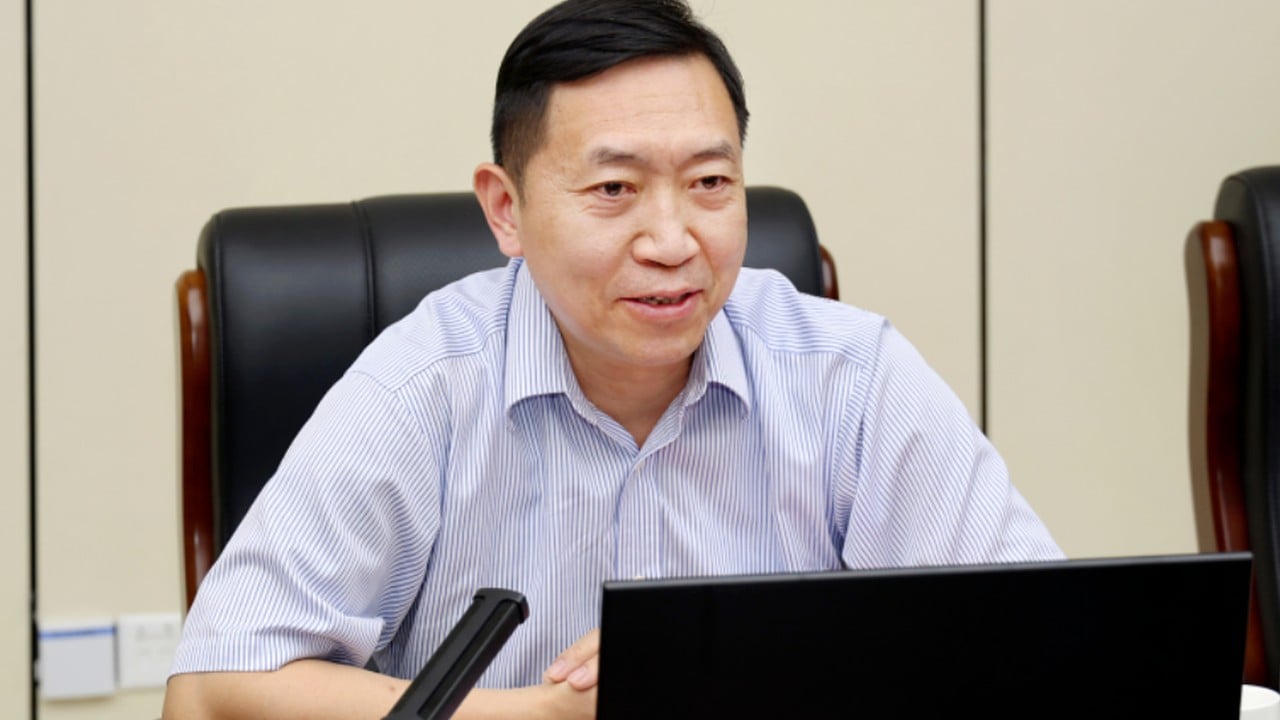
China has charged a former senior nuclear industry executive with bribery, marking the latest downfall in its sweeping anti-corruption crackdown targeting the military and defence sectors.
Gu Jun, former general manager of state-owned giant China National Nuclear Corporation (CNNC), will stand trial for accepting illegal payments, the Supreme People’s Procuratorate in Beijing announced on Tuesday.
Gu is accused of long abusing his position in the nuclear power sector to secure favours for others, in exchange for bribes described by prosecutors as “especially huge”.
Gu, 63, spent more than four decades in the nuclear sector, including serving as CNNC general manager from 2018 to 2024. CNNC’s operations span the military nuclear industry, civilian nuclear power development and nuclear engineering construction.
He was placed under investigation in January by the Central Commission for Discipline Inspection, the Communist Party’s top anti-corruption watchdog. In July, he was expelled from the party.
In announcing his expulsion, the commission accused Gu of accepting large sums of money and valuables in exchange for influencing staff recruitment and helping others “secure project contracts, equipment procurement deals and fund disbursements”.
He was also accused of trading power for sex.
Gu’s career was closely intertwined with the development of China’s nuclear power industry.
In 1983, aged just 20, he became one of China’s first nuclear reactor operators after joining the Qinshan Nuclear Power Plant in Zhejiang province, China’s first nuclear station.
Gu spent 21 years at the plant, rising through the ranks to lead his team in completing many major nuclear energy projects. In 2005, he helped lay the groundwork for the Sanmen Nuclear Power Plant, also in Zhejiang and China’s first domestically developed, third-generation nuclear power project.
He worked at Sanmen until 2011 and subsequently rose to the senior management ranks of the industry.
However, after stepping down as CNNC general manager in 2024, Gu vanished from public view until authorities announced in January that he was under investigation.
Meanwhile, his senior colleagues and industry peers have also been swept up in the political fallout.
Yu Jianfeng, a former CNNC chairman and an alternate member of the party’s decision-making Central Committee, had his expulsion confirmed at the committee’s fifth plenum last month.
Yu, who had also been removed from his post in 2024, was among six senior executives from state-owned defence enterprises whose party expulsions were announced at the plenum.
Also expelled from the National People’s Congress was Liu Cangli, former president of the China Academy of Engineering Physics, an institution responsible for nuclear weapons research and production.
The defence and military sectors have become a major focus of China’s anti-corruption campaign since former defence minister Li Shangfu was placed under investigation in 2023. Li previously headed the Equipment Development Department of the Central Military Commission, China’s top command body chaired by President Xi Jinping.
In May, Li received a suspended death sentence after being found guilty of corruption.
According to a CNNC-affiliated think tank, China had 59 operational nuclear power units connected to the grid as of 2025, ranking second globally behind the United States with 94.
KioskNews shows a cleaned-up reading view extracted from the publisher’s page — the original always lives on their site, not ours.