117-year-old woman's cells shocked scientists: Biologically much younger
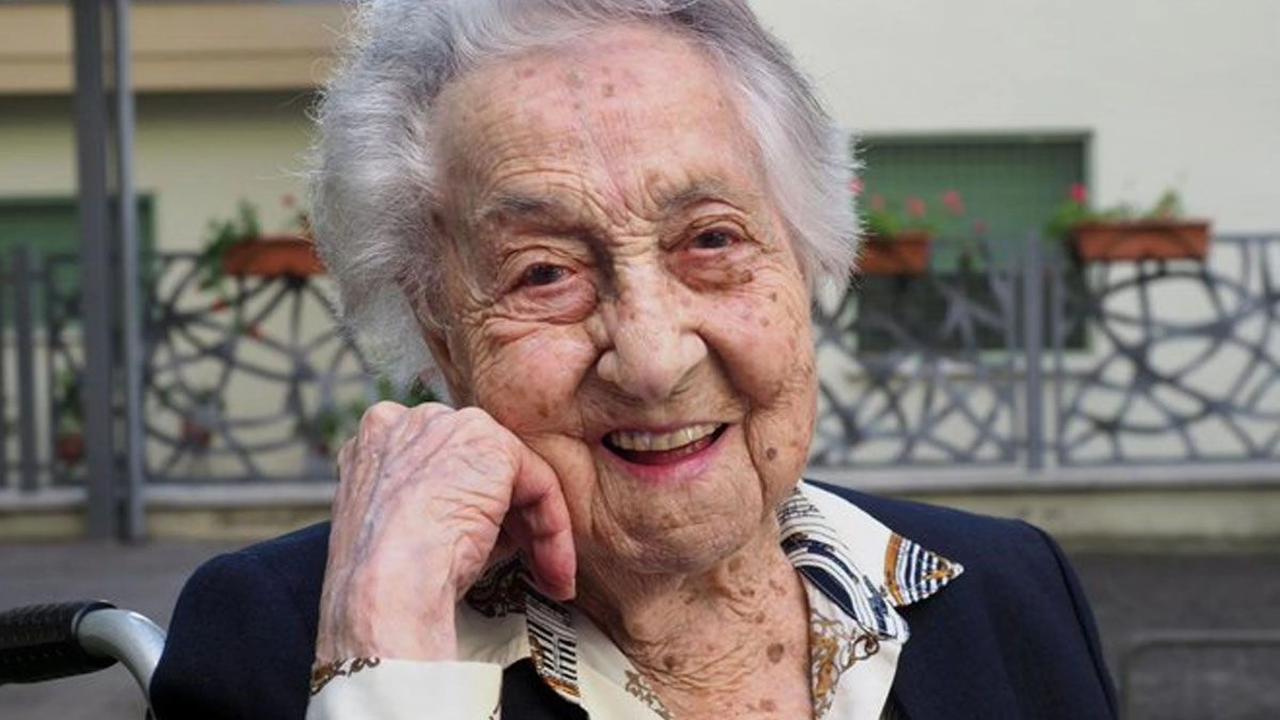
María Branyas Morera lived to 117 and became the world’s oldest verified living person before her death in 2024.
When María Branyas Morera turned 117, there was more than a birthday cake marking the occasion. Scientists were also looking closely at what was happening inside her body.Branyas, who became the world’s oldest verified living person in January 2023, had spent more than a century experiencing events that reshaped modern history.
Born in San Francisco in 1907 to Spanish parents, she later moved to Catalonia, where she lived for most of her life.
She survived two world wars, the Spanish Civil War and Covid-19, which she contracted at the age of 113.Before her death on August 19, 2024, at 117 years and 168 days, Branyas agreed to become an unusually detailed scientific case study. Researchers collected samples of her blood, saliva, urine and stool and examined her biology at several levels.What they found was not a simple picture of a body that had somehow avoided ageing.Instead, her cells carried unmistakable signs of extreme old age - including very short telomeres and an ageing immune system - while other biological markers looked considerably younger than her chronological age.The findings, published in Cell Reports Medicine in September 2025, offer scientists an unusual glimpse into the biology of extreme longevity.
Her cells did not behave entirely like those of a 117-year-old
One of the most striking findings came from so-called epigenetic clocks.
These are biological tools that estimate a person’s biological age by examining chemical changes associated with gene regulation. Unlike chronological age, which simply counts the years since birth, biological age attempts to capture something about how quickly the body appears to be ageing.When researchers applied several epigenetic clocks to Branyas’s samples, her biological age was substantially lower than the 117 years written on her identity documents.
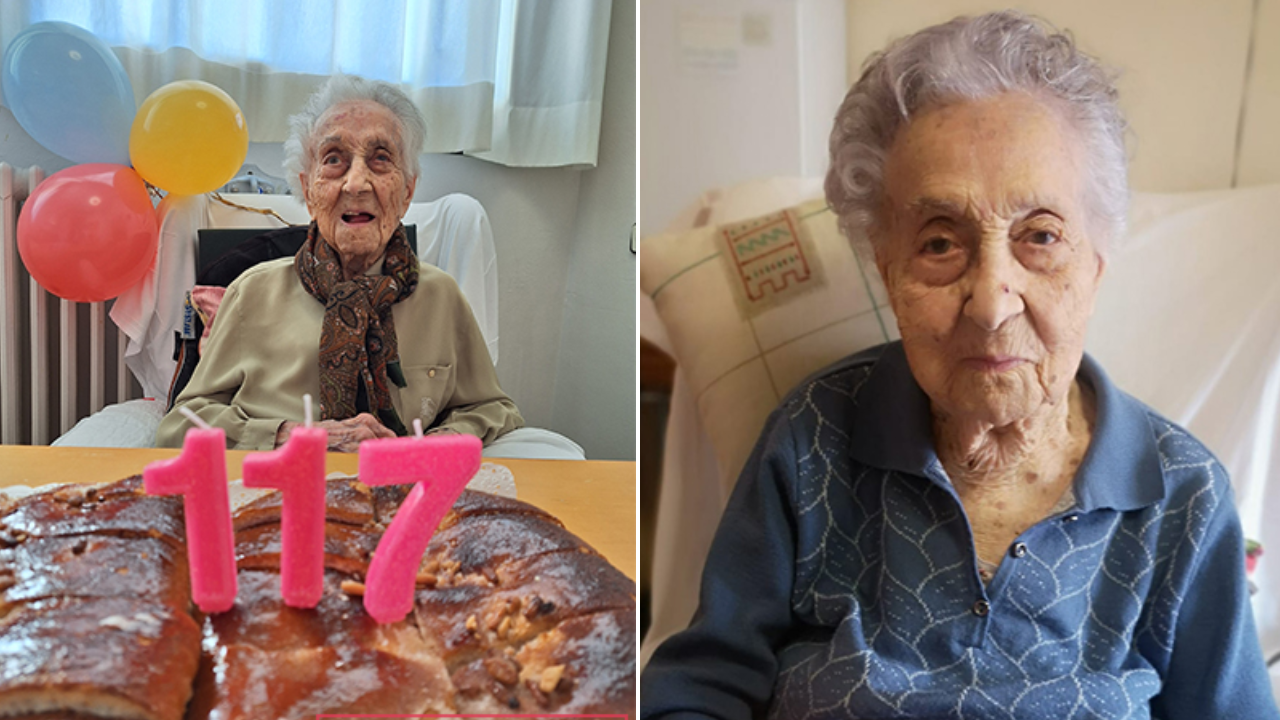
Scientists studied blood, saliva, urine and stool samples from María Branyas to understand extreme longevity.
The researchers reported that, depending on the tissue and method used, the clocks consistently failed to place her at an age anywhere near 116 or 117. Reporting on the study described the average estimate as roughly two decades younger than her chronological age.That does not mean that Branyas’s entire body was literally “20 years younger”. Biological-age clocks are estimates based on molecular patterns, and different clocks can produce different results.But the discrepancy was significant enough to suggest that some aspects of her ageing had proceeded differently from what would normally be expected.As study researcher Eloy Santos-Pujol explained to El País, none of the epigenetic clocks used by the team predicted that the woman whose samples they were examining was 116 years old.
Yet her cells also carried unmistakable signs of old age
There was an apparent contradiction.Branyas had biological features associated with youth and healthy ageing, but her body also showed molecular signatures of extreme old age.Her telomeres, the protective structures at the ends of chromosomes, were exceptionally short.Telomeres generally become shorter as cells divide. Their shortening is one of the biological features associated with ageing, although telomere length is only one part of the ageing process and cannot by itself determine how long someone will live.Researchers also found changes in her blood-forming system and immune cells associated with advanced age. She had clonal haematopoiesis, a condition in which certain blood-cell clones carrying acquired genetic mutations expand over time.
Some of these mutations are associated with blood cancers and other age-related diseases.Her immune system, therefore, was not behaving like that of a young person.This is what makes her case particularly interesting. Extreme longevity did not appear to mean that every biological system in her body had simply remained young.Instead, very old and comparatively youthful features existed side by side.Dr Manel Esteller, who led the research, described the distinction to The Guardian as being able to separate “being old from being sick”.
So what may have protected her?
The researchers identified several features that may have helped Branyas remain relatively healthy despite her extreme age.Her genome contained rare genetic variants that may have offered protection against diseases affecting the cardiovascular and nervous systems. Researchers also found features associated with efficient fat and cholesterol metabolism.Her inflammatory profile was another notable feature.Chronic, low-level inflammation tends to increase with age and is associated with several age-related diseases. Branyas, however, had relatively low levels of inflammatory markers, which researchers believe may have helped protect her from some of the diseases commonly seen in later life.The study also found signs of a relatively healthy metabolic profile, including favourable cholesterol characteristics and an absence of some of the metabolic problems frequently associated with ageing.But genes were not the whole story.
Researchers found that some of Branyas’s biological-age markers appeared considerably younger than her chronological age.
Her gut bacteria looked unusually young
The researchers also examined Branyas’s microbiome - the community of microorganisms living in her body, particularly in her gut.Her gut microbiota contained abundant Bifidobacterium, bacteria commonly associated with a healthy intestinal environment.Earlier reports on the research described aspects of her gut microbiome as resembling that of a much younger person.This does not mean that having Bifidobacterium, or eating yoghurt, can make a person live to 117.
The study involved one exceptional individual and cannot establish that any single food or bacterium caused her longevity.Still, her diet was consistent with several characteristics generally associated with healthier ageing.Branyas reportedly ate yoghurt regularly and followed a broadly Mediterranean-style diet. She did not smoke or drink alcohol and was not overweight.She also maintained close relationships with family and friends.In other words, the picture emerging from her case was not of a magical longevity gene working alone. It was a combination of inherited biology, metabolism, immune function, lifestyle and possibly the gut microbiome.
The researchers studied much more than her DNA
The study is unusual because scientists did not stop at genome sequencing.They used a multi-omics approach, examining several layers of biology: the genome, gene activity, proteins, metabolites, microbiome and epigenome.This allowed them to look at both the genetic instructions themselves and what those instructions were doing inside the body.The result was a more complicated picture of ageing.Some markers said: this is an extremely old body.Others suggested: this body has avoided many of the diseases normally associated with extreme old age.That distinction may be one of the most important lessons from Branyas’s case.Scientists have long asked why some people reach 100 while remaining relatively healthy, whereas others develop serious age-related diseases much earlier.
Supercentenarians - people who live beyond 110 - are particularly valuable for this research because they represent an extreme end of human longevity.But there is an important limitation.This is essentially an extraordinarily detailed study of one person. Branyas’s biology cannot be treated as a universal formula for living longer. Researchers need to study many more supercentenarians to determine which findings are genuinely associated with exceptional longevity and which are simply unique characteristics of one individual.
She may have shown that ageing and illness are not the same thing
Perhaps the most intriguing message from Branyas’s cells is not that she had somehow escaped ageing.She had not.Her short telomeres, altered immune system and blood-cell mutations showed that her body had experienced the biological wear associated with extreme age.What she appeared to have done exceptionally well was remain protected from many of the diseases that usually accompany that ageing.That is an important shift in how scientists think about longevity.The goal may not ultimately be to stop ageing altogether. Instead, researchers are increasingly interested in understanding why some people can experience the biological changes of very advanced age while delaying - or avoiding - the diseases that make old age frail.Branyas offered scientists a rare opportunity to study that difference while she was alive and, through the samples she agreed to provide, after her death.Her genes may have given her an unusually favourable starting point. Her lifestyle may have reinforced those advantages. Her immune system, metabolism and gut microbiome may have contributed further protection.But her cells also carried the unmistakable fingerprints of 117 years.That is what makes her story scientifically valuable: she did not appear to have stopped ageing. She appeared to have aged in a way that allowed her to remain remarkably healthy for an exceptionally long time.
KioskNews shows a cleaned-up reading view extracted from the publisher’s page — the original always lives on their site, not ours.