Can Xi-Trump talks at Apec turn China’s pledge to buy 200 Boeing jets into firm orders?
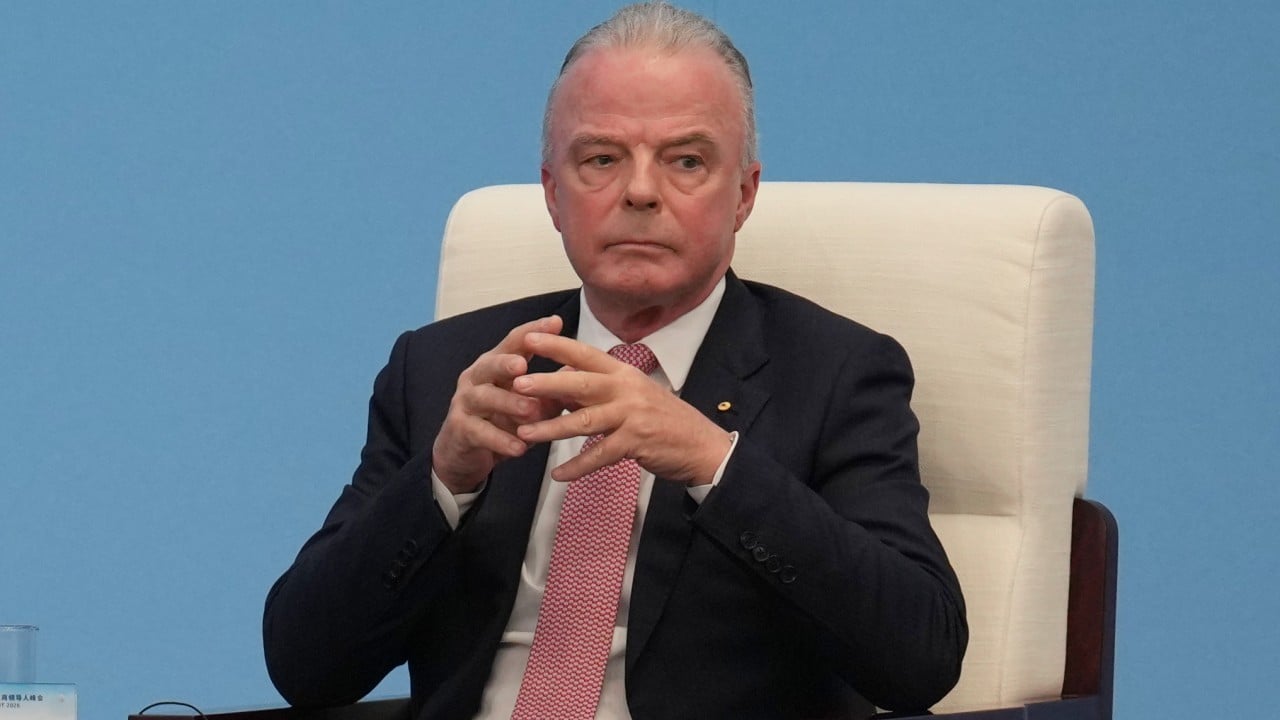
China’s expanding air links, a proposed Asia-Pacific free-trade agreement and an expected meeting between the US and Chinese presidents are creating a more favourable backdrop for regional business, a top Boeing executive said. But he offered no update on China’s pledge to buy the company’s aircraft.
“Over the last 10 years, airlines within Apec economies have established 5,000 city-to-city links, with a third of them in Asia and almost every one includes a Chinese city,” said Brendan Nelson, president of Boeing Global, at the Apec CEO Summit in Shenzhen on Tuesday.
He pointed to rising demand for air travel in China on the back of the country’s growing middle class, describing the changes as a “revolution”. The event he addressed brought together business leaders from 115 Fortune Global 500 companies ahead of the Apec leaders’ summit on Wednesday and Thursday.
Nelson, who oversees global strategy and operations outside the United States, cited routes linking Chinese cities to destinations across the Pacific and elsewhere on the continent.
“Hainan Airlines does a flight from Beijing to Mexico City. China Southern flies from Guangzhou to Port Moresby in Papua New Guinea. These are a reflection of the connectivity being achieved and the proud role that [Boeing airliners] play in it,” he said.
Nelson also revealed that he had discussed with senior Chinese ministers how Boeing could help deepen China’s connections with the rest of the world, though he stopped short of addressing the country’s plans to buy aircraft from the American firm.
In May, China agreed to buy at least 200 Boeing aircraft following a meeting between President Xi Jinping and US President Donald Trump in Beijing. The pledge raised hopes that Boeing could regain market share in the world’s second-largest aviation market following a decade-long drought, but progress has since appeared to stall with no orders finalised.
There is anticipation that the two countries could make progress on business deals when Xi and Trump sit down for talks in Shenzhen – and Nelson underscored the significance of the two leaders meeting for the third time this year.
“One of the great achievements, if you’re sitting here looking at the sea of men and women from 21 Apec economies in a world of disorder, is when the presidents of the US and China meet,” he told the event. “That, in itself, is a significant achievement here in Shenzhen.”
Nelson added that a proposed free-trade area spanning the Pacific could support business. “Air cargo, driven in part by AI and e-commerce in a broader FTA, has and will allow us to navigate geopolitical challenges,” he said.
Beijing is pushing to establish an action framework for the long-discussed Free Trade Area of the Asia-Pacific (FTAAP), which first appeared on the agenda in 2006. Asia-Pacific Economic Cooperation members are negotiating a statement that could be agreed at this week’s leaders’ meeting.
Wang Jian, a retired fleet management chief engineer at China Southern’s bases in Guangzhou and Zhuhai, said Boeing would be hoping that China’s hosting of Apec could reduce trade frictions to bolster its prospects.
“Trade disputes have a knock-on impact on high-profile jet purchases between China and the US, which are usually used as bargaining chips. A senior Boeing executive attending Apec in China ahead of Xi-Trump talks is a good sign, even if no specific order has been finalised yet,” he said.
For the 200-jet pledge to become binding contracts, Wang said central procurement agencies, including the Civil Aviation Administration of China, would need to allocate slots across major airlines. He assessed that Boeing was still involved in a “complex, multistep order conversion and allocation process”.
In September, US Trade Representative Jamieson Greer suggested China was in the process of placing firm orders for 150 Boeing planes. However, Boeing CEO Kelly Ortberg said specific allocations would be announced by individual Chinese carriers at their own pace, rather than as a single group order.
The last time China placed a major Boeing order came in 2017 during Trump’s visit to Beijing. Since then, trade tensions and geopolitical frictions have left the aerospace giant’s business in China on the tarmac.
By contrast, European aircraft manufacturer Airbus has since gained orders in the world’s second-largest economy, while China’s domestically developed C919 passenger jet has been in commercial service since 2023.
KioskNews shows a cleaned-up reading view extracted from the publisher’s page — the original always lives on their site, not ours.