Country diary: The changing face of stubble fields, those shortcuts of my youth | Nicola Chester
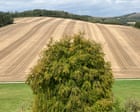
Stubble fields, those post-harvest acres of short straws, seem to be lasting longer into the season, as farmers respond to changing practices. I have a wistful attachment to stubble fields: for so long a kind of temporary commons where, for a few redundant weeks before autumn or winter ploughing, you could shortcut across them, the dew-filled straws flicking water up the inside of your legs. But today, stubble fields aren’t all equal.
Below Cleve Hill Down, a tractor is drilling winter wheat directly into bare seedbed between the stubble. Regularly sprayed with herbicide, it is free of weeds or any green – a pale-gold spread of machine-knitted tweed. A hundred years ago, the stubble would be left, full of weeds, birds and insects, until midwinter ploughing, allowing frosts to break down the clods.
The next field over, on another traditional farm, is another piece of arable history. Just over 30 years ago, it was the last stubble field to be burned in Berkshire; burning killed pernicious weeds, but a lot else besides. Many farmers had already given up the polluting practice when it was banned in 1993. Today, the stubble here remains while a cash crop of winter wheat begins to germinate – better for soil structure than ploughing. But, being otherwise bare, it’s at risk of erosion from wind and rain, having already been baked to death, and holds no value for wildlife.
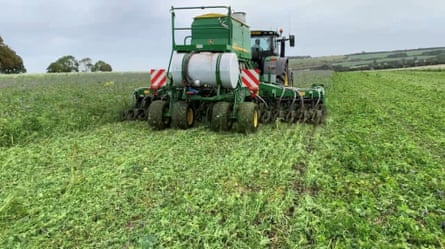
Over the hill at Wexcombe, the Hosier family are farming regeneratively to improve soil health rather than deplete it. Even to the untrained eye, their stubble looks different, the standing straws almost lost among the lush, green leaves – it’s a rarity in this landscape. George Hosier takes time to explain that the stubble was drilled in August with a cover crop – fodder radish, phacelia, buckwheat, clover, vetches – while the combine was still in the field, harvesting wheat planted last winter. It’s what he delightfully calls a “five-minute fallow field”.
Some are beginning to flower now, their roots feeding, covering and protecting the soil. Wexcombe’s outdoor-living cows will graze some over winter (fodder they might dream about) before spring barley is planted around April. All that time, the soil – a living, complex resource – will be replenishing, and providing shelter and food for wildlife.
KioskNews shows a cleaned-up reading view extracted from the publisher’s page — the original always lives on their site, not ours.