How is the cryptic painted frog settling in to its new Pulau Ubin home? It’s a singing success
SINGAPORE – When the male Cryptic Painted Frog (Nyctixalus crypticus) serenades potential mates, it does so with a soft, musical chuckle echoing from the tree hollows.
Volunteers tracking this unique call have found that calling activity strongly correlates with egg count, suggesting its potential as an indicator for reproductive activity and establishing that sound tracking is an effective, non-invasive indicator of breeding.
The nocturnal amphibian has successfully established a breeding population on Pulau Ubin since its introduction in 2024.
“I thought conservation had to be done in academia, that it required so much experience. Having this opportunity made me realise conservation is actually far more accessible than I expected.” said student volunteer Lim Hui En, 22, an undergraduate in the Asian School of the Environment who was part of the project.
Bioacoustics, the study of animal sounds, is an important tool for biologists to locate and differentiate one species from another. Sound can be the best way of taking stock of shy and elusive creatures like frogs.
In Singapore, five youth volunteers did a six-month monitoring project to track the breeding patterns of the frog on Pulau Ubin. They placed 21 artificial breeding containers across the site alongside audio recorders and motion-detection cameras to observe the species’ calling activity and egg counts.
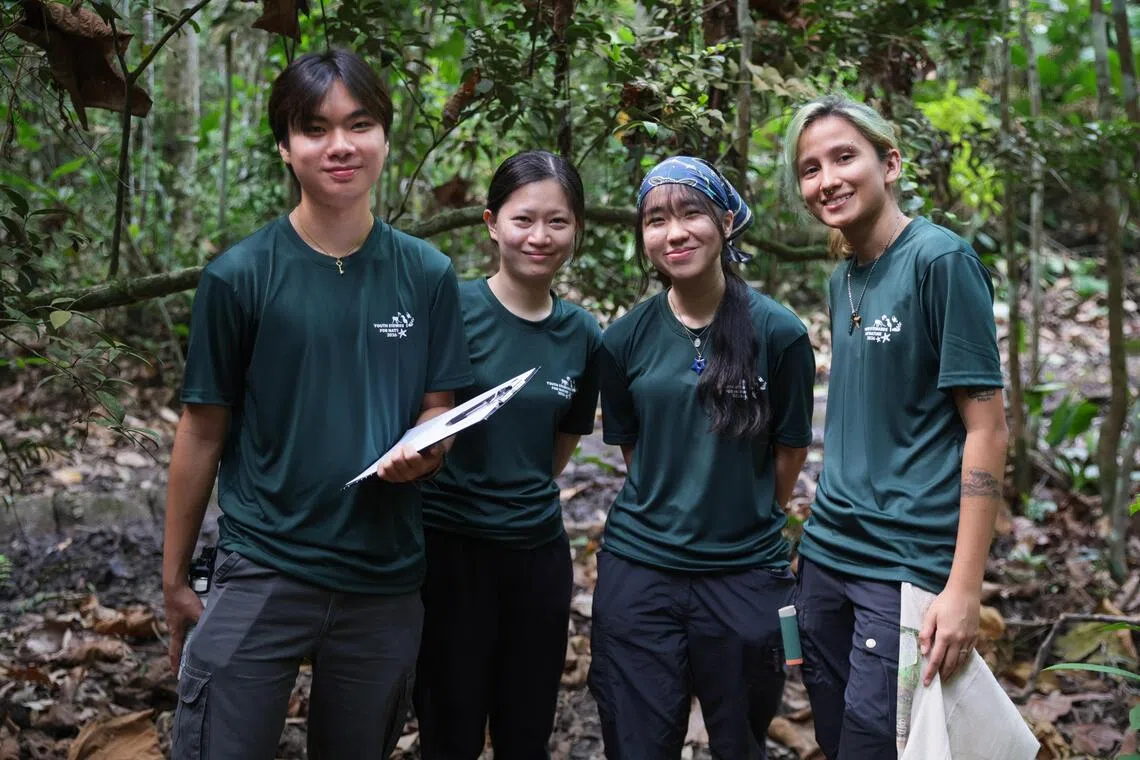
(From left) Keon Lim, Lim Hui En, Rachel Tan and Mila Natalia Swyny did a six-month monitoring project to track the breeding patterns of the frog on Pulau Ubin.
ST PHOTO: GIN TAY
Apart from Lim, the project, conducted under the Youth Stewards for Nature (YSN) programme, was carried out by student researchers Mila Natalia Swyny, Keon Lim, Rachel Tan and Shiyang Zhao.
Passionate about wildlife conservation, they worked alongside National Parks Board (NParks) conservation manager Leroy Alphonso to deploy non-invasive acoustic equipment to assess how the species is doing in its new habitat.
Formerly known as the Cinnamon Bush Frog, the Cryptic Painted Frog is native to Singapore and was historically confined to mainland primary rainforests within the Bukit Timah and Central Catchment Nature reserves.
It is listed as “Vulnerable” in the Singapore Red Data Book and “Near Threatened” on the International Union for Conservation of Nature (IUCN) Red List. Adults grow to about 4cm in length, featuring bright orange or reddish-brown colouration with small white spots.
The frog is an arboreal species found in the low vegetation of primary forests, mostly feeding on small insects and arthropods.
It plays a vital role in Singapore’s biodiversity conservation by acting as a natural indicator of ecosystem health – as its sensitive skin easily absorbs pollution, its presence and mating calls signifies when forest habitats are clean and thriving.
Habitat degradation, limited natural breeding microhabitats, and extreme weather changes pose primary threats to the species.
“As a threatened native species largely concentrated in mainland nature reserves, establishing populations in different locations helps reduce the risk of the species being affected by a single event, such as habitat disturbance, disease, or extreme weather changes,” Alphonso said.
To boost the population, NParks introduced tadpoles and adult frogs from mainland reserves to Pulau Ubin in batches between June 2024 and July 2025.
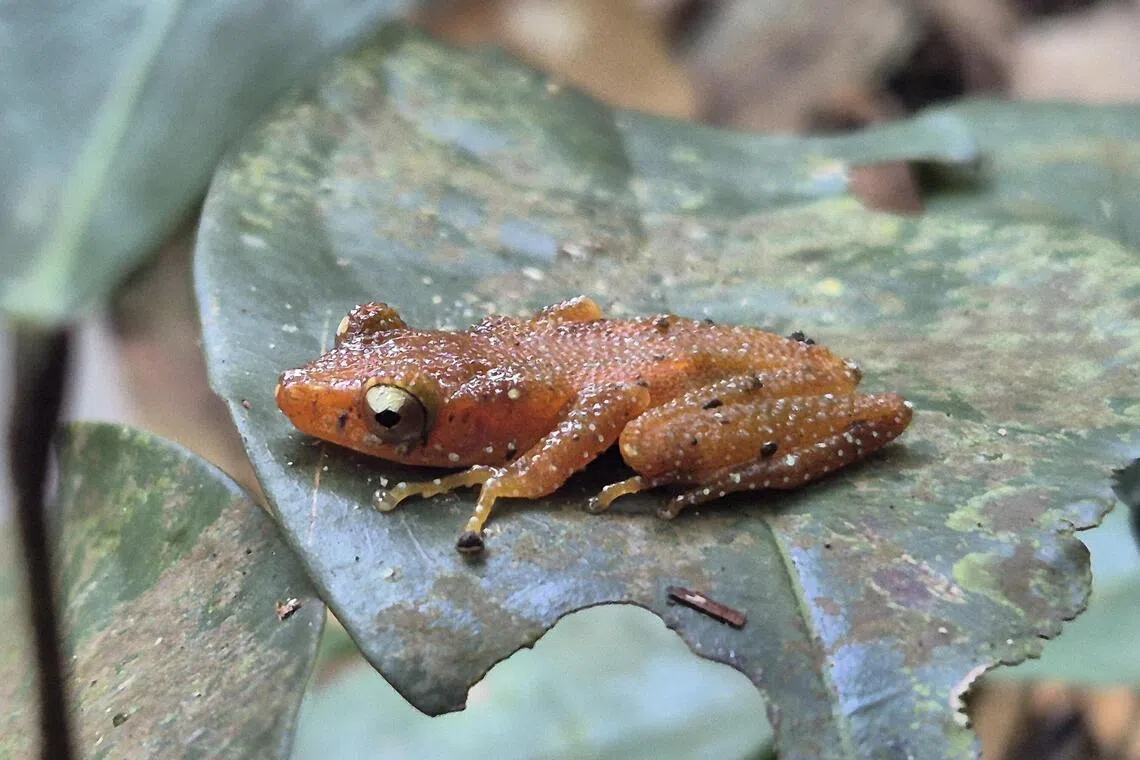
The Cryptic Painted Frog captured up close.
PHOTO: NPARKS
As the arboreal frogs breed in water-filled tree cavities – a feature rare in Pulau Ubin’s secondary forests – NParks installed 21 artificial phytotelmata (water-filled plastic containers) fitted with internal PVC pipes and sticks to provide necessary egg-laying surfaces.
To track the rare, night-active frogs without disturbing them, the YSN team set up four sound recorders stationed about 8m-11m apart across the western survey site, with motion-detection camera traps to verify any animal interference.
Each week, the students visited the site with NParks staff to retrieve micro-SD card recordings and inspect all 21 containers for breeding activity.
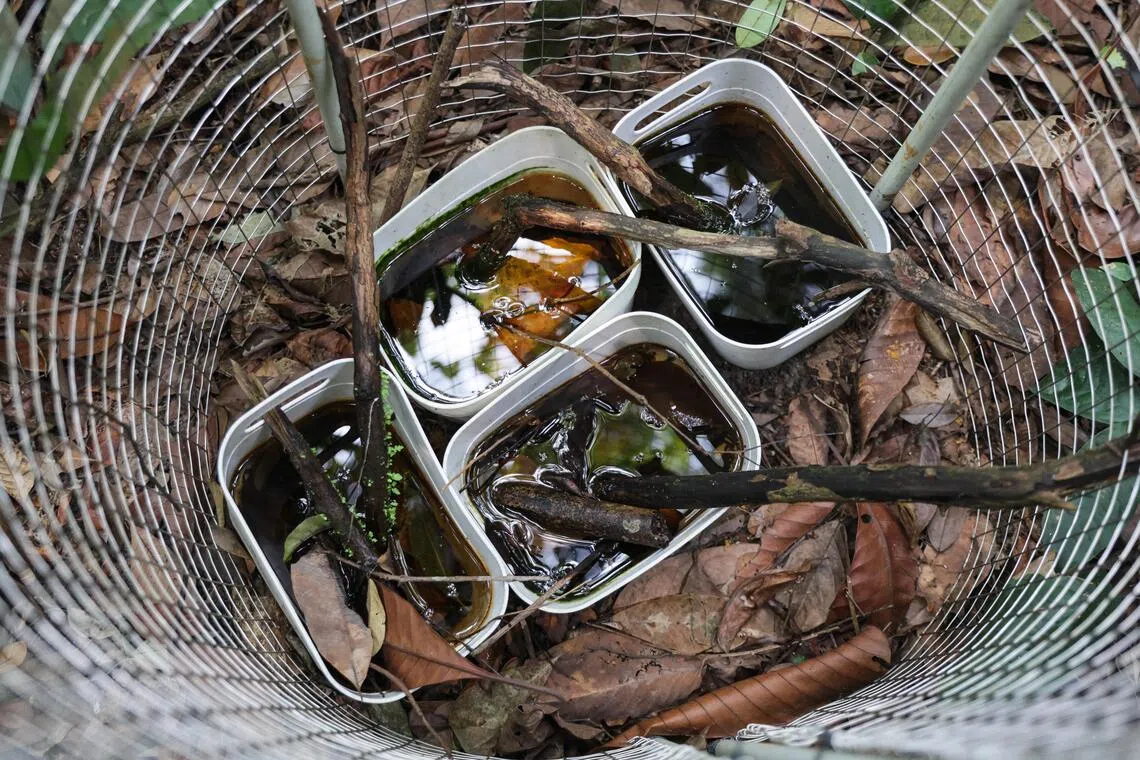
One site of the artificial phytotelmata – plastic containers filled with water – surrounded with protective wires.
ST PHOTO: GIN TAY
The recorded audio was analysed using specialised bioacoustics software Kaleidoscope to visualise sound frequencies.
Alphonso trained the students using reference spectrograms provided by the Herpetological Society of Singapore and organised night walks to familiarise them with wild calls.
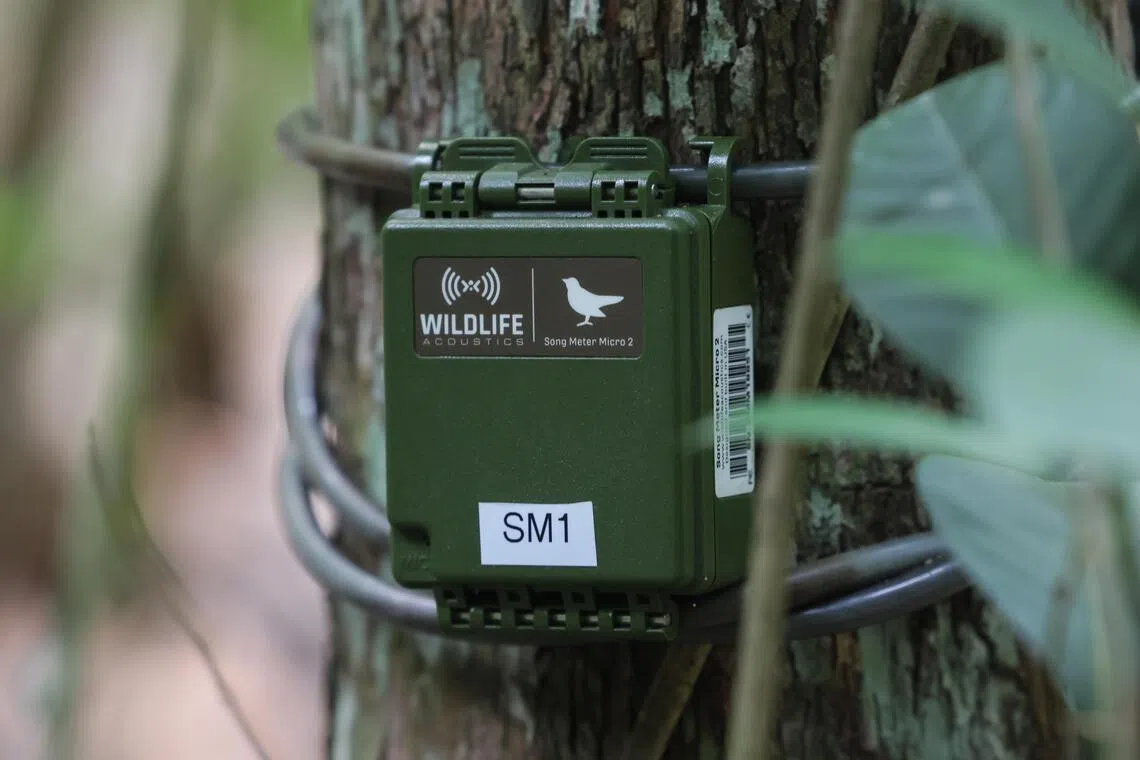
One of the four audio recorders at the site.
ST PHOTO: GIN TAY
“The software provided a clear spectrogram showing distinct frequencies of different animals such as birds, lizards, and insects,” said team member Tan.
“The call of the Cryptic Painted Frog usually has a frequency of 2 to 4 kHz, which makes it easier to identify on the spectrogram.”
The frog’s call is a sharp, distinct high-pitched chirp that echoes through the canopy.
During physical checks, the team looked for distinct features taught during their training.
“Cryptic Painted Frogs do not lay their eggs in the water; instead, the eggs are usually found above the water on branches or on the sides of artificial phytotelma,” explained team member Lim. “The eggs look like chia seeds encased in a clear outer gel with a black dot in the centre. The tadpoles look like stingrays, with flat bodies and eyes located on top of their heads.”
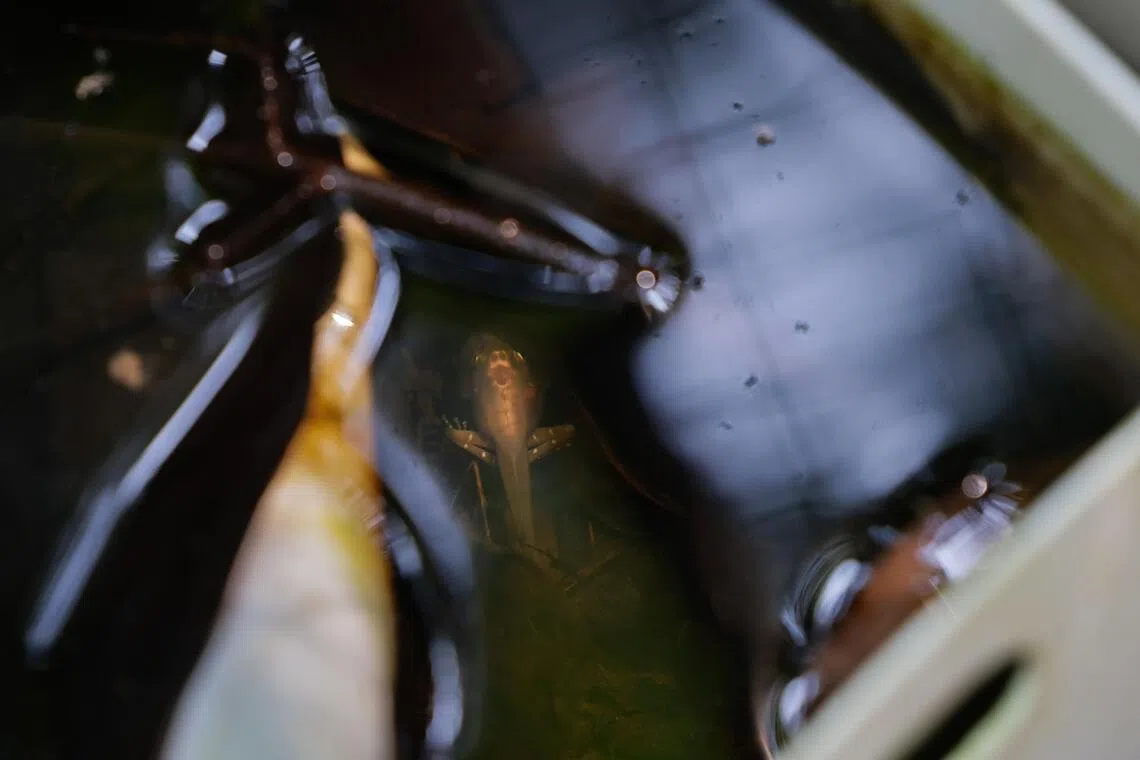
A tadpole spotted in one of the artificial phytotelmata.
ST PHOTO: GIN TAY
According to the team, calling activity was found to be more closely tied to rainfall and humidity than air temperature, with egg counts reaching a peak of 37 eggs during the week of July 13, 2026.
NParks said that direct youth involvement in research bridges the gap between public awareness and hands-on conservation work.
“When youth take on an active role – collecting data, identifying patterns, and grappling with scientific uncertainty – they develop a deeper understanding of conservation,” said Alphonso.
“It helps build the next generation of practitioners who understand not just why we protect wildlife, but how.”
KioskNews shows a cleaned-up reading view extracted from the publisher’s page — the original always lives on their site, not ours.