ANC election losses could weaken South Africa's anti-Israel stance
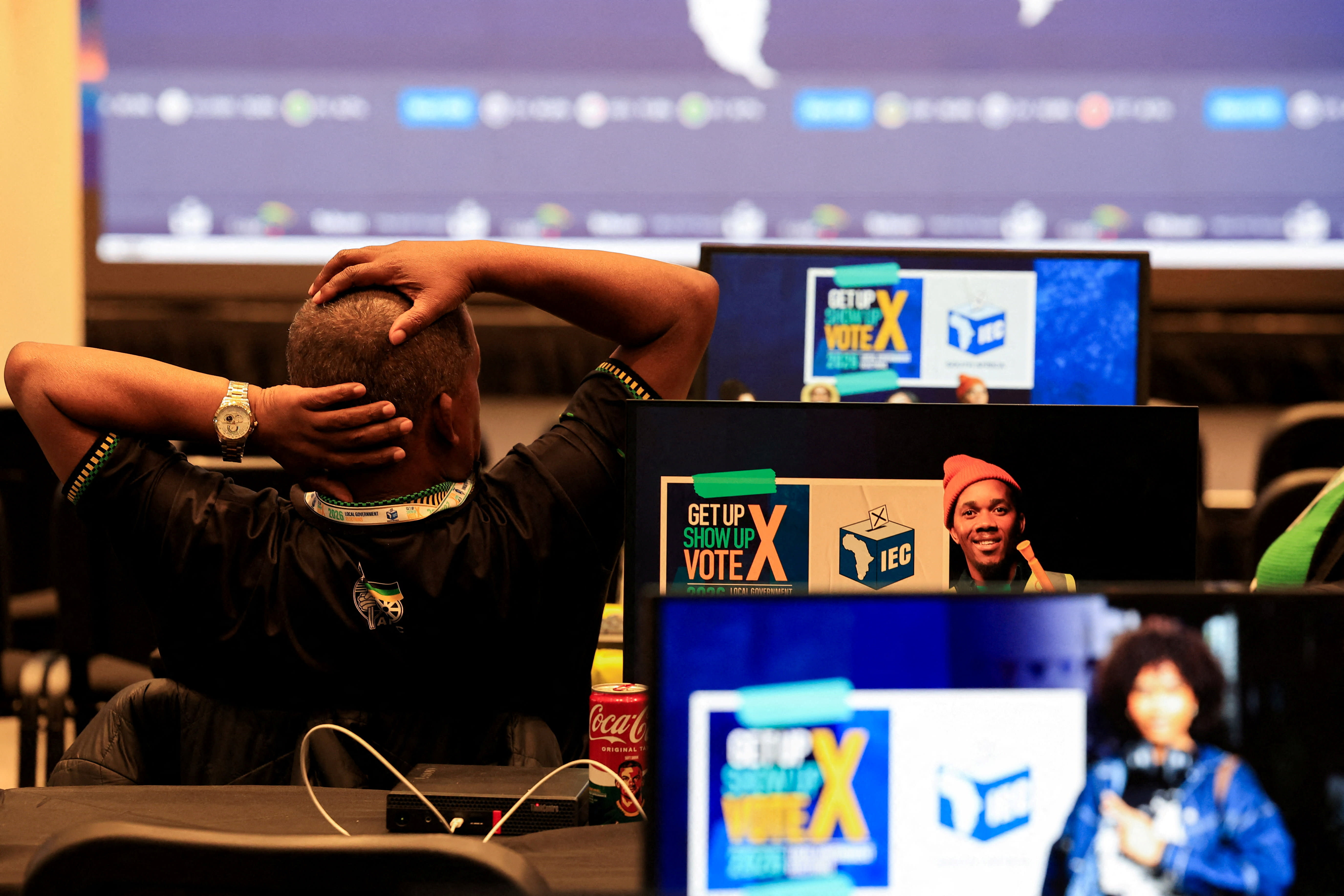
South Africa's municipal election is unlikely to produce an immediate shift in the country's policy toward Israel, but the African National Congress's (ANC) declining electoral dominance could make it increasingly difficult for the party to maintain its diplomatic position without facing challenges from its coalition partners, Jason Halfon told The Jerusalem Post.
Halfon is a South African based in Israel who previously held leadership positions in the Democratic Alliance party and is a graduate of its Young Leaders and, more recently, Catalyst programs.
The November 4 local elections saw the ANC suffer significant losses, with its share of the national proportional representation vote falling to approximately 30.9%, down from 45.6% in 2021. The Democratic Alliance (DA) received approximately 24.7%, up from 21.7%, while the uMkhonto weSizwe (MK) Party received approximately 9.8%.
Halfon argued that the results should not be viewed solely in the context of the ANC's declining popularity, but also as evidence of the growing fragmentation of political power in South Africa.
Seven of South Africa's eight metropolitan municipalities are heading toward coalition negotiations, with no party securing an outright majority.
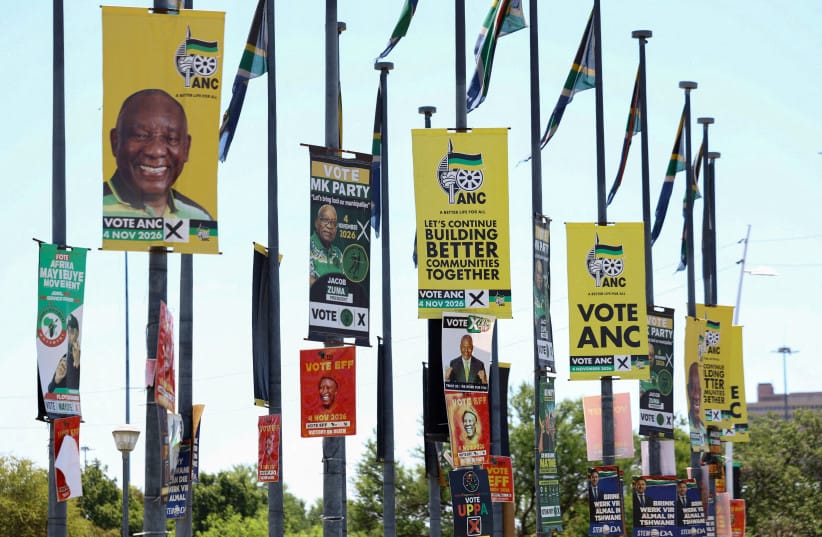
Although the election does not directly affect the composition of South Africa's national government, the results could have implications for the balance of power within the governing coalition, particularly as parties prepare for the next national elections.
Halfon told the Post that the losses also carry organizational consequences for the ANC itself. Municipal control has long functioned as a key source of party revenue through contributions from public representatives and as a vehicle for local patronage networks. Losing council seats and executive positions reduces both income streams and the party’s ability to direct appointments and procurement, he opined.
Halfon noted that the full impact of these losses is likely to become clearer in the period leading up to the ANC’s 2027 elective conference, when internal mobilization and branch-level resources become decisive.
How ANC losses could shift foreign policy
Municipal councils do not determine South Africa's diplomatic policy, as the Presidency, the Department of International Relations and Cooperation (DIRCO), and the national executive remain the principal centers of foreign-policy decision-making.
Nevertheless, the results could strengthen the political standing of parties seeking to challenge ANC policies, particularly the DA, which participates in the national Government of National Unity (GNU).
Halfon said the DA remains the largest non-ANC party in the GNU and is essential to its parliamentary majority. While alternative partners exist on paper, any sustained turn toward parties that themselves emerged from ANC fractures would risk accelerating further splits.
This structural position, he argued, creates "latent leverage" that could be exercised through contestation of key appointments, demands for formal coordination on major foreign-policy decisions, and the linking of municipal coalition negotiations to broader governance issues.
For Israel, the question is whether this redistribution of political power could eventually translate into a more pragmatic South African foreign policy.
Halfon thinks it could, but "indirectly, and only over time."
While foreign policy is not decided in municipal chambers, the "diffusion of power across major councils changes the internal balance inside the GNU," he explained.
"Single-party dominance of diplomatic posture becomes harder to maintain when coalition partners control significant local executive authority and can link national cooperation to broader governance demands."
While Halfon said a shift would not produce sudden alignment with Israel, he suggested that the results could eventually encourage a "gradual move toward greater pragmatism." This could mean prioritizing economic and technological interests such as water management, agriculture, and municipal innovation in South Africa's relationship with Israel, rather than allowing ideological considerations to dominate diplomatic decision-making.
Halfon noted that South Africa’s large Christian population also gives practical weight to the cost of restricted travel and pilgrimage links.
"These factors create space for recalibration if non-ANC parties consistently use their municipal and national leverage to demand it," he noted.
South Africa's ICJ case against Israel
The ANC has historically made support for the Palestinian cause a central part of its foreign policy and political identity.
This position has become particularly well-known since December 2023, when South Africa brought a case against Israel before the International Court of Justice (ICJ), accusing it of violating the Genocide Convention through its military activity in Gaza. Israel has rejected the allegations and challenged the court's jurisdiction.
The case remains ongoing, with the ICJ setting November 22, 2027, as the deadline for South Africa's next written submission and May 22, 2029, for Israel's response. The court has not issued a final ruling on the genocide allegations.
Halfon said the ANC's support for the Palestinian cause remains "institutionally entrenched," even though the original framework that once contained it has largely eroded.
"Historically the ANC maintained a more complex position," he told the Post. "A disproportionate number of South African Jews, drawing on their own experience of persecution, played significant roles in the anti-apartheid struggle. Nelson Mandela explicitly recognized the legitimacy of Zionism as Jewish national self-determination while simultaneously supporting Palestinian aspirations. He saw no necessary contradiction."
According to Halfon, that balance began to narrow as the ANC transitioned from a liberation movement into South Africa's governing party.
"Today the position functions less as a carefully weighed principle and more as a source of elite cohesion, international signaling, and domestic distraction," he continued.
The ANC's claim of historical solidarity with liberation movements "has become harder to sustain on two practical grounds," Halfon added.
"First, consistency: Equivalent diplomatic energy and legal activism are not applied to other severe human-rights crises, including the mass internment of Uyghurs or the large-scale killing of Christians in parts of Africa. Selective application weakens the claim that the policy is driven by universal principle."
"Second, opportunity cost. South Africa faces collapsing municipal infrastructure, unreliable water and power, and high levels of violence. The expenditure of diplomatic capital and state resources on a distant conflict while basic services deteriorate is increasingly difficult to justify to voters who judge parties on local outcomes."
Halfon argued that, although support for the Palestinian cause remains deeply embedded within the ANC, "its political returns are diminishing relative to its costs."
The municipal election results could reinforce that pressure by demonstrating that voters want more focus on domestic governance issues, particularly infrastructure, service delivery and public safety. However, they do not necessarily indicate that voters are rejecting the ANC's position on Israel.
What the results mean for Israel and South Africa's Jewish community
For Israel and South Africa's Jewish community, Halfon said the results should primarily be seen as evidence that South African voters are judging parties on local delivery and accountability rather than international signaling.
"For Israel and the local Jewish community, the practical implication is straightforward," he said. "The era of unchallenged single-party control of diplomatic posture is ending. The quality of the coalitions that emerge, and the willingness of non-ANC parties to treat foreign policy as a legitimate area of negotiation rather than a reserved domain, will determine whether that change produces a more balanced and interest-driven approach."
"The municipal results themselves do not guarantee that outcome; they only make it possible," he concluded.
KioskNews shows a cleaned-up reading view extracted from the publisher’s page — the original always lives on their site, not ours.