The Boy Who Copied Code From A Book Now Teaches the World AI
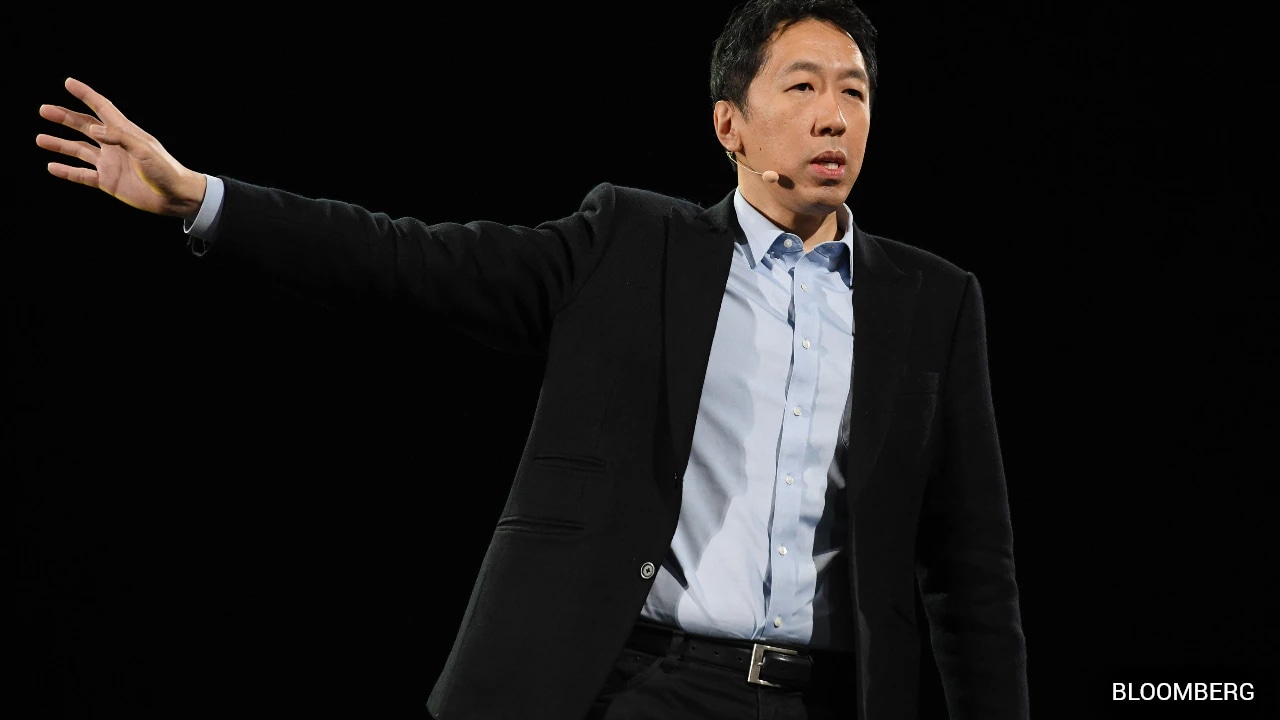
Long before AI chatbots became an everyday staple, a little boy in Hong Kong sat typing lines of code from a book into a small computer. He wasn't trying to change the world, at least back then. He just wanted to play a video game.
That boy was Andrew Ng. Decades later, he is one of the people who taught the world how machines learn. This week, he comes to New Delhi to speak at the NDTV World Summit 2026 on "AI at Scale: Building the Intelligence Economy."
Who Is Andrew Ng
Ng was born in London in 1976. His parents had both come from Hong Kong. His father was a doctor and his mother worked in arts administration. The family moved back to Hong Kong when he was small, and to Singapore in 1984.
According to Ng's own account, he started coding at five or six, typing in BASIC programs from a book just to play simple games. It was as a teenager that his father gave him books on expert systems and neural networks; and the idea that a computer could be taught to show intelligence made a lasting impression on him.
He graduated from Raffles Institution in Singapore in 1992, then studied at Carnegie Mellon, MIT and Berkeley, where he earned his PhD in 2002. While he was at MIT, he built the first publicly available search engine for research papers.
Ng joined Stanford University as an assistant professor in the Department of Computer Science, with a courtesy appointment in the Department of Electrical Engineering in 2002.
The Teacher
At Stanford, Ng's machine learning (ML) class became a big hit with students. But he wanted to take it beyond the university. So in 2011, he put the course online, making it available to anyone who wanted to learn. More than 100,000 people signed up.
That was a glimpse into how many people were hungry to learn about machine learning, even if they couldn't get into a Stanford classroom. A year later, Ng teamed up with fellow Stanford professor Daphne Koller to start Coursera, bringing university courses to people all around the world. He remains the company's chairman.
The Builder
Ng's next major leap happened at Google. During a casual chat with Google engineer Jeff Dean, Ng mentioned that his Stanford students were getting surprisingly strong results with neural networks. Dean was of the opinion that if small networks worked, Google should build massive ones.
That's the conversation that germinated Google Brain, the project that pushed deep learning into the mainstream.
Its most famous breakthrough was around cat videos. Researchers fed a massive neural network millions of unlabeled YouTube videos and let it run. Without any human prompting or instructions, the AI taught itself to recognize cats. It was a eureka moment that showed what machine learning could pull off when given enough data and computing power.
By 2014, Ng moved on to become chief scientist at Baidu, where he stayed until 2017. Since then, he's launched DeepLearning.AI to keep technical education accessible, established the AI Fund to back promising AI startups, and stepped in as executive chairman of LandingAI. He joined Amazon's board in 2024, landed on TIME's inaugural list of the most influential people in AI, and recently launched AI Aspire to help enterprises turn experimental AI projects into real-world business tools.
Rubbisher of AI Doomers
Ng rubbishes doom-and-gloom narratives around AI and he strongly believes AI must not stay locked inside research labs. Oftentimes he compares AI to electricity as a foundational utility that will quietly transform virtually every industry and touch every human life.
He is also very vocal about how people should adapt to AI. Many pundits now, including the likes of tech mogul Elon Musk, suggest that kids should stop learning to code because AI can write software. Ng calls it some of the worst career advice ever handed out.
Through the AI Fund, Ng preaches that coding isn't just a technical skill for engineers anymore. He believes it's a fundamental literacy that everyone - from CFOs to front-desk receptionists - can use to automate their work and solve daily problems.
That grounded, practical vision is what Andrew Ng is bringing to the stage at the NDTV World Summit in New Delhi
AlSO READ | Swami Sarvapriyananda: The Monk Whose Wisdom AI Labs Seek
KioskNews shows a cleaned-up reading view extracted from the publisher’s page — the original always lives on their site, not ours.