Brics opposes unilateral trade steps like EU carbon border tax
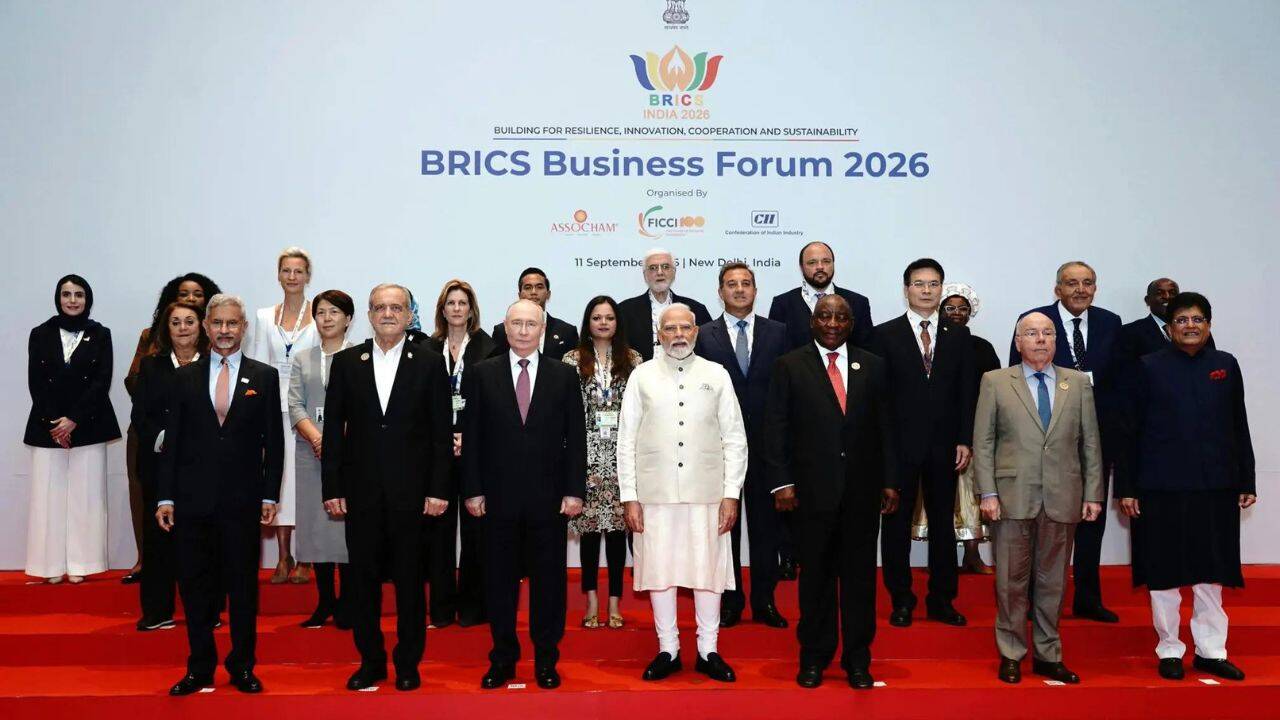
PM Modi in a family photo with other leaders at Brics Business Forum 2026. (ANI)
NEW DELHI: Brics nations Saturday opposed unilateral trade measures such as EU’s carbon border adjustment mechanism (CBAM), saying such measures undermine efforts by developing countries aimed at addressing the adverse impacts of climate change.Though they recognised the need to reduce greenhouse gas emissions to meet climate goals, the grouping’s members sought to delink any unilateral punitive action from achieving a common goal and pitched for energy security for all based on a pragmatic approach where “fossil fuel”, they said, will still play an important role in the world’s energy mix”, particularly for emerging markets and developing economies, in addition to renewable sources and nuclear.CBAM, which entered its operational regime on Jan 1, is a tool to put a price, through imposing a border tax, on carbon-intensive goods, like iron and steel, aluminium and cement, that are entering the 27 EU nations.Though BRICS nations opposed the proposal from the time it was conceived, arguing that the unilateral move placed an additional burden on businesses in developing economies due to embedded emissions in their products, they made their points a part of New Delhi Declaration calling it “punitive, discriminatory and protectionist measures that are not in line with international law”.
Without any attempt to dilute their respective efforts to meet climate action goals under the Paris Agreement, the nations called for greater actions based on equity and the UN’s principle of common but differentiated responsibilities and respective capabilities, in light of different national circumstances.
They also highlighted the need to enhance energy security by ensuring energy market stability and maintaining undisrupted flows of energy from diverse sources including fossil fuels.
Incidentally, four of the BRICS group countries such as Russia, Saudi Arabia, Iran and UAE are among the major global exporters of fossil fuel.Sending a positive signal ahead of COP31, scheduled to take place in Turkey in Nov, they called on all countries to uphold their commitment to maintain and scale up efforts to combat climate change, and expressed their confidence in multilateralism to address the global challenge.
KioskNews shows a cleaned-up reading view extracted from the publisher’s page — the original always lives on their site, not ours.