Bombs, food shortages and missing staff: ‘Wartime normality’ at Ukraine’s restaurants
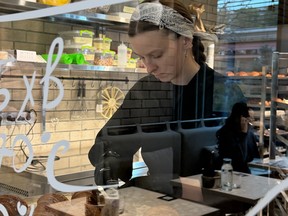
Russia has turned Ukraine’s entire food system into a target. Its missiles and drones have struck at supermarkets, food warehouses, farms and distribution routes It is estimated that as much as 90 per cent of the system that enables Ukrainians to buy food has been destroyed.
Sign In or Create an Account
Last year, although thousands of new food businesses opened, more than 10,000 restaurants around Ukraine closed their doors, unable to keep going against a constant backdrop of attacks, energy blackouts, rising prices and an acute shortage of staff. There are fewer customers too, and as incomes fall, they are spending less. For the first time since 2022, there are significant shortages of basic products like butter and cream, forcing restaurants to focus on essentials.
Little wonder that in wartime Ukraine, food has become part of the resistance.
While the streets echo to the frequent sound of explosions, going out for a meal might seem like an unattainable luxury. “Sometimes it feels completely deluded,” says culinary researcher and writer Nadiia Noskova. “I mean, the world is on fire, and here we are serving up fancy dishes. But this is what Ukrainian service is all about. The products might not be available, the big supermarkets and suppliers are being targeted every week, and it’s a massive challenge to keep going. But people are still managing to provide great food and service.”
Noskova is one of the judges in Ukraine’s prestigious Salt Awards, which celebrate the best of the country’s restaurants, cafes and bars. This November will be the first time the awards have been held since the start of the full-scale war: The organizers decided there was no point waiting for some mythical ‘better times’ to come along. “We simply can’t just put everything on hold,” Noskova says.
But four and a half years into the war, the act of doing business is becoming more difficult. In the last few months, Russia has sharply ramped up its attacks, hitting shopping malls and pedestrian streets in the heart of city centres not just at night, but increasingly during the day.
Stanislav Zavertailo, who runs the highly acclaimed Honey group of high-end patisseries and bakery cafes with his wife Anya, is one of the country’s most dynamic food entrepreneurs. At one of his sites in the historic centre of Kyiv recently, the cafe was still showcasing tempting displays of eclairs, intricately layered meringue cakes and filled pastries, but it was not as busy as usual. The surrounding streets were closed off by barriers, while a large armoured vehicle was parked a few yards away. A couple of weeks earlier, a Russian drone had slammed into the headquarters of Ukraine’s Security Service in the middle of the morning. The shock wave from the blast shattered the windows at the nearby Zavertailo cafe, scattering debris across the patio and inside the store. Most of the staff and customers had managed to scramble for shelter, although one woman who had been injured was taken to hospital.
“On the day of the explosion we started to clean up the cafe. We spent all night cleaning, covered up the broken windows and the next day we were ready to open up again,” Zavertailo says. “Of course, it is crazy to open straight up after an explosion. But this is business. The bank won’t come to me tomorrow and say I don’t have to pay them anything or suggest some discount. It’s really tough.”
Four of his sites have been damaged by attacks, including his flagship Honey Cafe in Kyiv’s Olympiskiy district. The impact of two ballistic missiles in August 2025 brought down walls, ceilings and ripped up the very fabric of the building. They managed to re-open part of the cafe just a couple of days later, with some temporary tables and chairs at the back, and swathes of plastic wrap covering up the badly damaged facade. The total repair job took six months: they had to completely disassemble the front of the building and rebuild the structure from the inside. It cost Zavertailo the equivalent of $280,000 Canadian dollars, which came from his own funds.
“We are a family business, and we’ve invested our own money. When drones or missiles destroy our cafe, we have to use that same family money to rebuild it. You can only do your best. You can’t work some kind of miracle.”
Some food arrives, including one of the viral poppyseed-stuffed croissants for which Zavertailo has become famous. “For us, it’s about creating something really new. It’s about Ukrainian cuisine, but we are making it innovative and modern. We want to give people a cool product.” His cafes have gone all out to celebrate the ingredient: as well as the croissant, they serve up a selection box of special rolls, mixing them up with sour cherries, apple and cinnamon, and blackcurrant jam. “Now, if you come to our cafe and don’t try something with poppyseeds, it isn’t normal.”
All the culinary innovation happens in a large production site they call the Manufactory: a warren of rooms devoted to different products from ice creams to panettone. But maintaining this level of creativity means hiring and keeping their team. Many of Zavertailo’s young employees left after a new law allowed young men aged 18-24 to leave the country. Then there were the increasing strikes on Kyiv.
“I think of the soldiers fighting for our independence who worked for our company. One of them made ice cream... One of them was a manager — Denys, he was killed.
“Seven people left in one week because of the attacks. Five girls told me they really wanted to keep working here, but after the explosions hit our manufactory, they wanted to go to a safer part of western Ukraine,” Zavertailo says.
“I think of the soldiers fighting for our independence who worked for our company. One of them made ice cream. One of them made the bread. One of them was a manager — Denys, he was killed. And Oleksii, one of our waiters, he was also killed.” Another man, who had been a baker in the manufactory, is missing, presumed captured. He pauses, visibly upset. “How is this our reality?”
But if life in Kyiv has begun to feel like a frontline city, the southeastern city of Zaporizhzhia has been living with this kind of wartime reality for years. Igor and Mariya Gempel run three restaurants in a city that lies just 30 kilometres from the frontline.
“We have had over four years of this,” Igor Gempel says. “Four years of every day, missiles, drones, and bombs. We have forgotten that real life is somewhere out there.” They had switched careers from insurance and running sports clubs nine years ago to open their first restaurant, Bull, Butcher and Wine, on a tree-lined street in the city centre. It has signed T-shirts displayed on the back wall, one from Ukrainian President Volodymyr Zelenskyy. Regular customers to the meat restaurant are given their own steak knives with their names engraved on the blade. The restaurant has been shortlisted for this year’s Salt Awards.
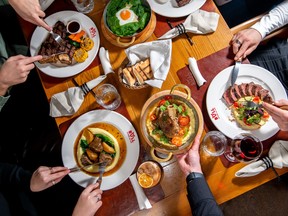
They work with local producers and farmers to track down the best ingredients and wine they can find. And they have done everything possible to hang onto their staff.
“Even before the war we had problems finding people, and each year it gets harder and harder. But our head chef has been with us from the start. And others who began working with us as waiters now have managerial positions in our other restaurants. So, we offer them an opportunity to climb the career ladder and show that being a waiter isn’t just a temporary job”.
In the last few months it’s become harder to get hold of even the most basic supplies. Attacks on delivery hubs and railway infrastructure have restricted the flow of goods into the city, while Zaporizhzhia’s only branch of the Metro cash and carry, where Gempel bought a lot of his products, was one of the many supermarkets to be destroyed.
“No matter what, we continue to work because we give our guests a feeling of safety and tranquility. During blackouts we run our generators for 12 hours a day. Our guests can sit in a safe and warm place, with the lights on and other people around. Our staff try to make it as comfortable and cozy as possible. Maybe it is like the last place on earth — Paradise Lost. It is our wartime normality.”
Gempel orders some food, the vegetarian option in a meat restaurant, which turns out to be an excellent plate of grilled vegetables with green hummus and generous slices of homemade bread. On their special lunch menu, there are two courses for about $5. It allows the chef to experiment with contemporary Ukrainian cuisine and get feedback from customers, he says.
We have to keep on working, keep creating. Or we would just go home, close the door and cry,
The Gempels’ newest restaurant, It Cafe, opened in 2025. The roof of the building had been damaged in a recent drone strike, but the cafe itself was immaculate, decked out in red, white and green tiles for the colours of the Italian flag. The young head chef, Oksana, had been a contestant on the Ukrainian version of Masterchef, where she showed off her skills making pasta and pizza dough.
“We have to keep on working, keep creating. Or we would just go home, close the door and cry,” Gempel said, then began telling a joke. “I have a friend who always says, thank God I live in Zaporizhzhia, so I never have to bother about planning my future.” Mariya Gempel agreed: “This is how we survive. Without a sense of humour, life would be even more difficult. So we are both laughing, and crying at the same time.”
In a sign of the increasingly precarious times, the original venue for the Salt Awards was damaged in one of the missile strikes on Kyiv, forcing the ceremony to be moved to a safer site in the western city of Lviv. The organizers insisted the show must go on.
“Every generation of Ukrainians has had to deal with something that forced them to adapt, come up with solutions and find ways not just to survive, but to actually live their live,” says Nadiia Noskova. “It is deeply ingrained in all of us. We keep going, no matter what.”
Felicity Spector is a journalist and author who writes about food and war in Ukraine.
Join the Conversation
This website uses cookies to personalize your content (including ads), and allows us to analyze our traffic. Read more about cookies here. By continuing to use our site, you agree to our Terms of Use and Privacy Policy.
KioskNews shows a cleaned-up reading view extracted from the publisher’s page — the original always lives on their site, not ours.