5,600 delayed bags, 330 stalled flights prompt THAI apology
THAI executives who are unwilling to address the issues should consider resigning, says minister
Thai Airways International’s (THAI) mishandling of passenger luggage and flight delays caused by flooding have severely damaged Thailand’s image and undermined confidence in its tourism sector, Tourism and Sports Minister Surasak Phancharoenworakul said on Tuesday.
Although flooding prevented some staff from commuting normally, the primary cause of the disruption was the airline’s lack of operational readiness and management preparedness, Mr Surasak said.
The minister added that he had personally encountered the problems while returning to Thailand from Japan on a Thai Airways flight.
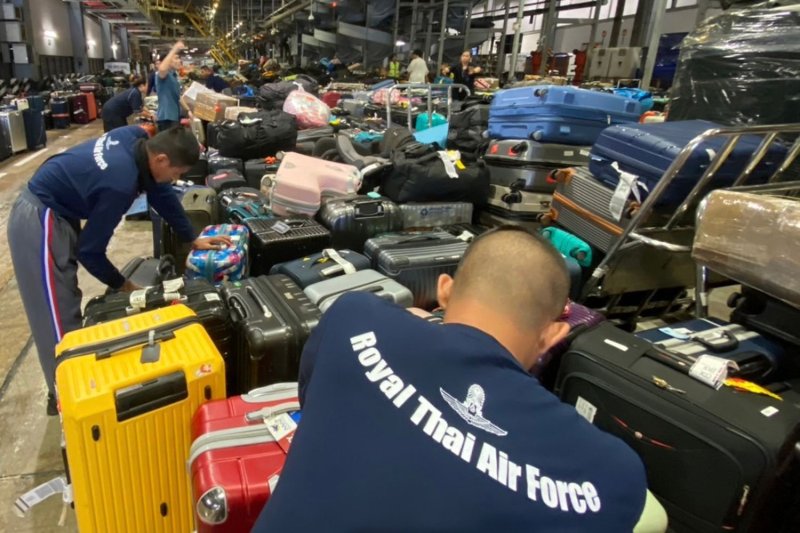
Torrential rain and flooding in Bangkok over the weekend caused delays involving about 5,600 pieces of luggage and 330 Thai Airways flights, after hundreds of employees were stranded at home and unable to report to work at the country’s two main international airports, Suvarnabhumi and Don Mueang.
The flag carrier said on Tuesday that it aimed to clear the baggage backlog within three days. It had also ordered a 30% reduction in daily flights to allow operations to reset and improve punctuality. A compensation claim process has been opened for affected passengers.
Thai Airways chief apologises
Thai Airways chief executive Chai Eamsiri said the airline’s initial impact assessment had been inaccurate. Flooding prevented about 300 ground staff and specialised personnel from reporting to work, he said during a press conference, while apologising to passengers for the inconvenience.
The airline has about 500 ground staff but was short of 200 to 300 workers during the disruption. Its normal schedule of around 110 flights a day was cut by 30% to help manage the remaining flights and improve on-time performance after almost all flights were delayed, Mr Chai said.
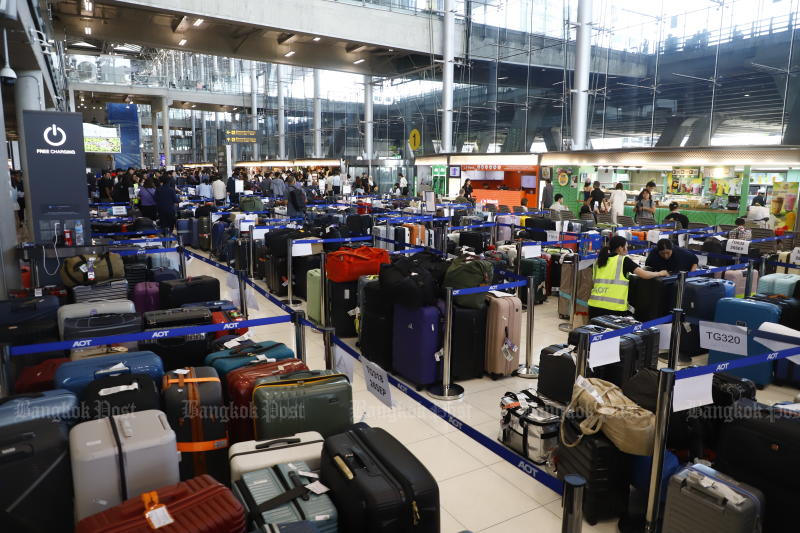
Luggage piled up on the second floor of Suvarnabhumi airport’s passenger terminal after overflowing the conveyor belts on Tuesday. (Photo: Nutthawat Wichieanbut)
Mr Surasak said the problems may have stemmed from the airline assigning staff to serve other carriers under its ground-handling contracts to avoid contractual penalties. This, he said, resulted in the most severe delays affecting Thai Airways' own passengers.
He also criticised the airline for failing to take proactive action despite receiving offers of assistance from several agencies. The national carrier did not provide food or accommodation for military personnel deployed by the Defence Ministry to help clear the baggage backlog, forcing the soldiers to return to their units for meals.
"Every agency tried to step in and help, yet there was no positive response or cooperation from Thai Airways," Mr Surasak said. "I believe Thai Airways executives need to adopt a more proactive approach.
If they feel their term is ending and are unwilling to resolve these issues, they should consider resigning so that others who are truly committed can step in to manage the situation."
Thai Airways brought in three other delivery providers, including Thailand Post and its existing service provider, to help distribute baggage. Airports of Thailand (AOT) assisted with space allocation, while the Royal Thai Air Force, the Defence Ministry and Thai Airways’ headquarters staff provided additional personnel.
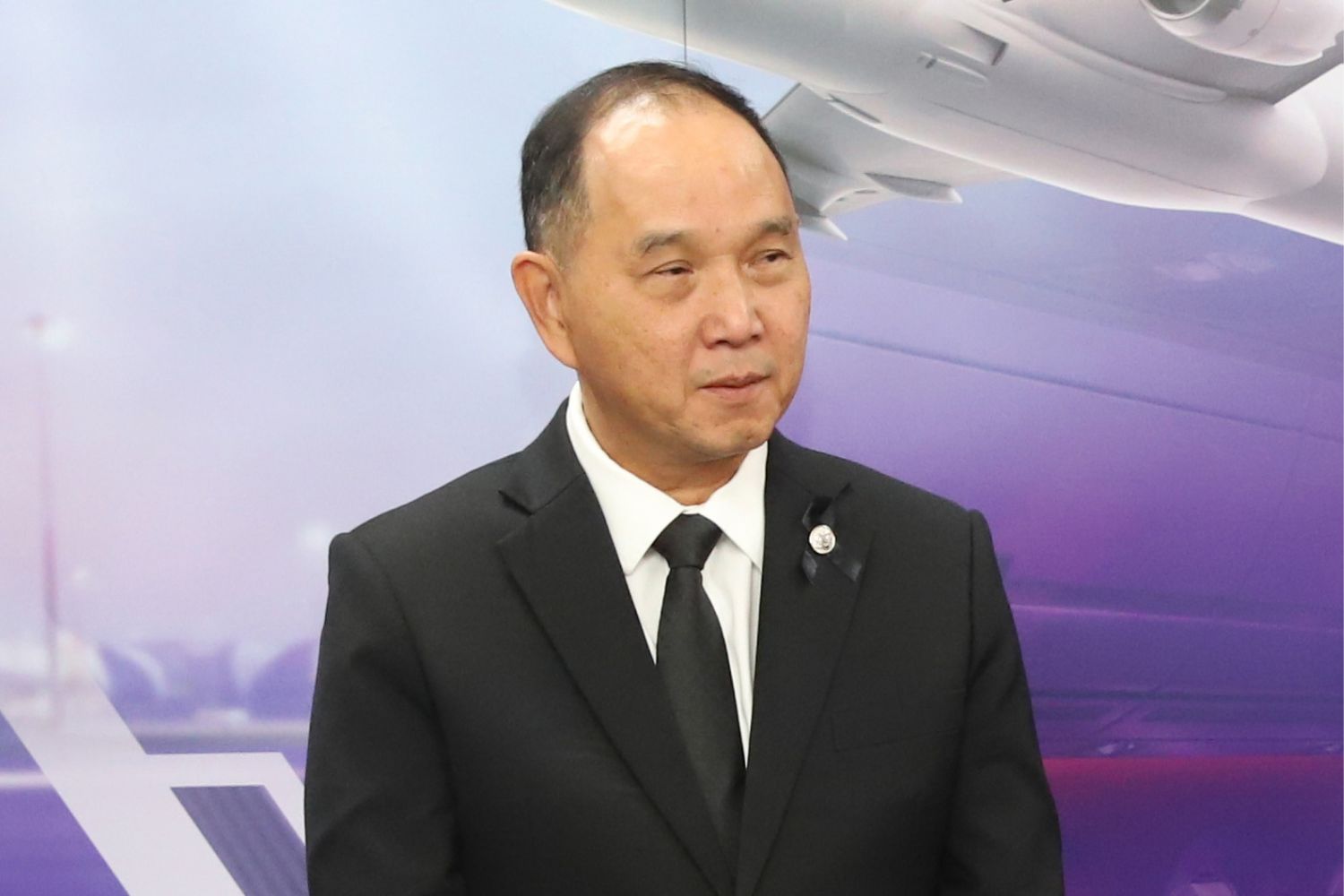
Chai: Initial assessment had not been accurate
Deputy Transport Minister Siripong Angkasakulkiat issued a blunt warning.
“If Thai Airways chooses not to look after its passengers, the business repercussions and damage will ultimately rebound on the company itself,” he said.
KioskNews shows a cleaned-up reading view extracted from the publisher’s page — the original always lives on their site, not ours.