An eBay find brings postwar Taiwan into focus
A US collector has found rare photos and films documenting Tao life and Taiwan’s fight against malaria. The collection is now being digitized
By Steven Crook / Contributing Reporter
Like many who’ve been bitten by the collecting bug, Michael Jacobson regularly browses the auction site eBay, in case something interesting turns up.
In early 2024, Jacobson — for most of his working life a county official in the US state of Washington — noticed a new listing of three items, one of which he recognized as a fish-preparation plate from Taiwan’s Orchid Island (蘭嶼, Lanyu).
Jacobson, a frequent visitor to Taiwan since 1986, quickly snapped them up. He then learned from the seller that she was actually helping an elderly neighbor downsize, and that he had other heirlooms he was keen to get rid of.
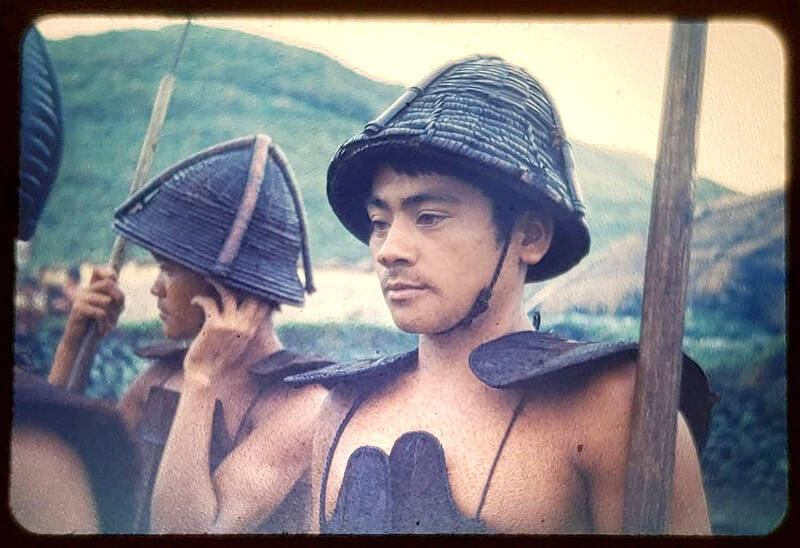
A young Tao man on Orchid Island in 1953.
Photo courtesy of Donald J. Pletsch Collection at TNNUA and Tseng Ghi-hsien, TNNUA
That man’s connection to Taiwan was unusual. As a preschooler, he lived in Pingtung County with his parents and sisters. His father, American entomologist Donald J. Pletsch (1912-2000), had been stationed there in the early 1950s as part of a malaria control program.
After purchasing traditional garments made and worn by Orchid Island’s indigenous Tao people, woven protective helmets and coconut bark vests, as well as rare pottery bowls, Jacobson was offered and accepted three movie reels, as well as 970 color photographic slides the elder Pletsch took around Taiwan between 1950 and 1990.
When Jacobson spoke to members of the Taiwanese community this month in Seattle, he found out that a 101-year-old retired doctor surnamed Chen (陳) who’d worked with Pletsch in the 1950s — and who appears in several of the American’s photos — now lives in the Seattle area.
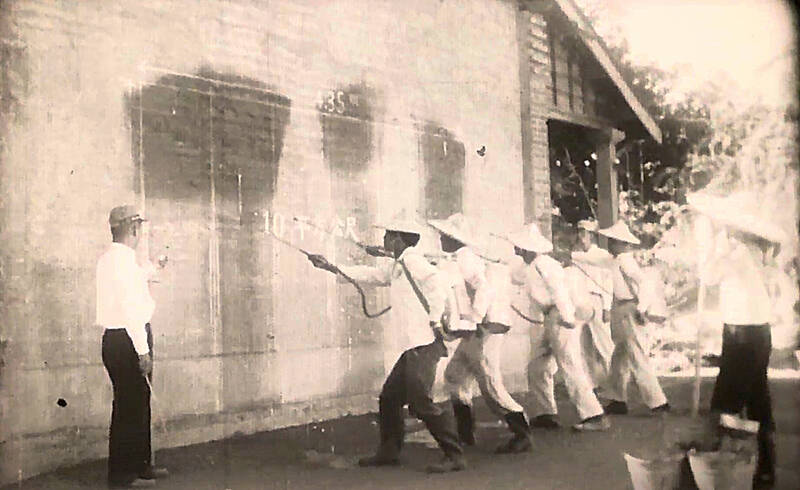
Public health technicians are taught how to spray DDT in a malaria-education film now being restored at Tainan National University of the Arts.
HISTORICAL IMAGES
Jacobson also received several small field notebooks detailing travel expenses and the number, species and location of mosquitoes, by room, in houses that had been inspected.
“Once I’d bought the physical objects, the son was more than happy to give me the notebooks, the slides and the films. He was overjoyed that he’d found someone who appreciated them, that they’d get a ‘happy home,’” Jacobson recalls.
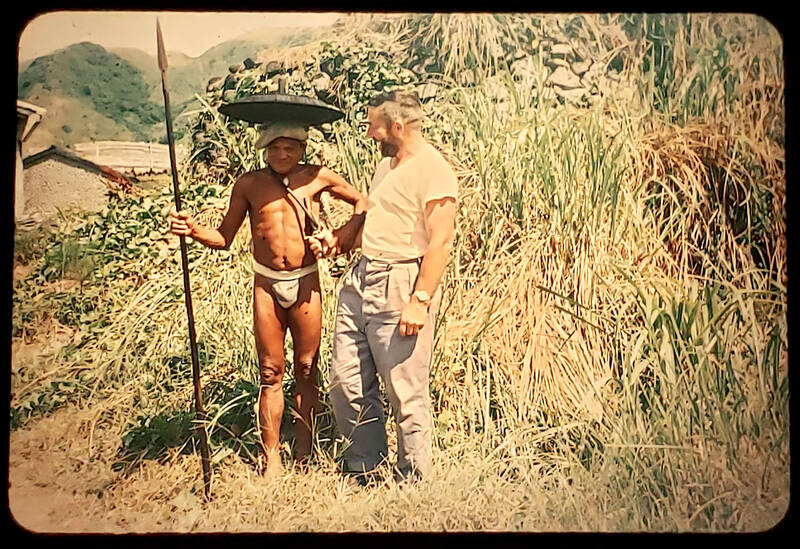
American entomologist Donald J. Pletsch, right, talks to a Tao man on Orchid Island in 1955.
He says he’s had a number of surprises in his 30-plus years of collecting, “but these films are perhaps the most unexpected find.”
Pletsch was based at the Taiwan Provincial Malaria Research Institute (TAMRI) in Pingtung County’s Chaojhou Township (潮州), which received funding from the WHO and the Rockefeller Foundation. He spent months on Orchid Island, however, and it was there that he took several of his most memorable pictures. They’re glimpses of a culture little touched by the outside world. At that time, many Tao men still wore armor-like garments they believed protected them from evil spirits. Most families lived in thatched-roof semi-underground houses known as vahay.
Other images show activities related to Pletsch’s work, such as spraying DDT (then hailed as a miracle insecticide, now mostly banned). Also depicted are fishing, religious rituals and other facets of Tao life.
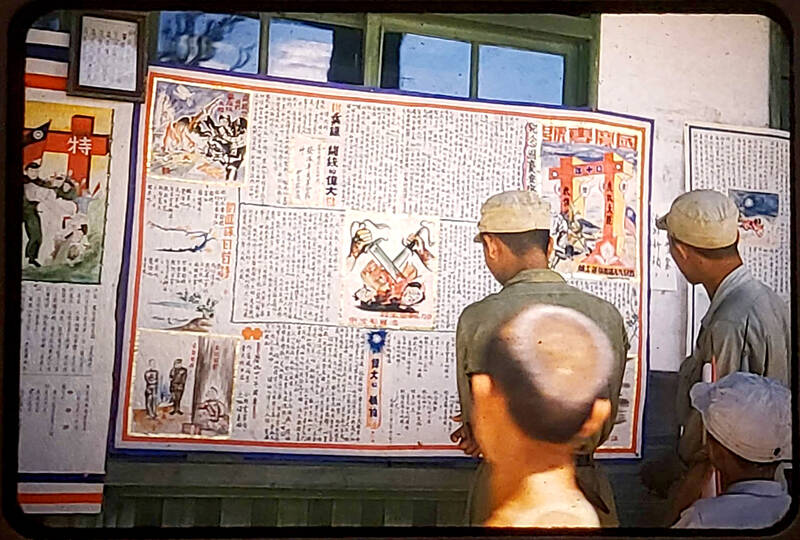
Students in Chaojhou, Pingtung County, read propaganda during the 1951’s Double Ten Day celebrations.
The entomologist also traveled with a 16mm movie camera, and around 50 minutes of silent color footage has survived. He filmed urban scenes in Taipei, farmscapes in Pingtung, bridal processions and street performers, as well as elements of the anti-malaria campaign.
A 16mm black-and-white sound reel that arrived with the Pletsch footage turned out to be a 20-minute malaria-education film produced by USAID sometime after 1961. In Jacobson’s opinion, it’s less interesting and somewhat propagandistic, but nonetheless a valuable artifact of its time.
It’s hardly surprising that these visual records of Taiwan decades ago have attracted academic interest.
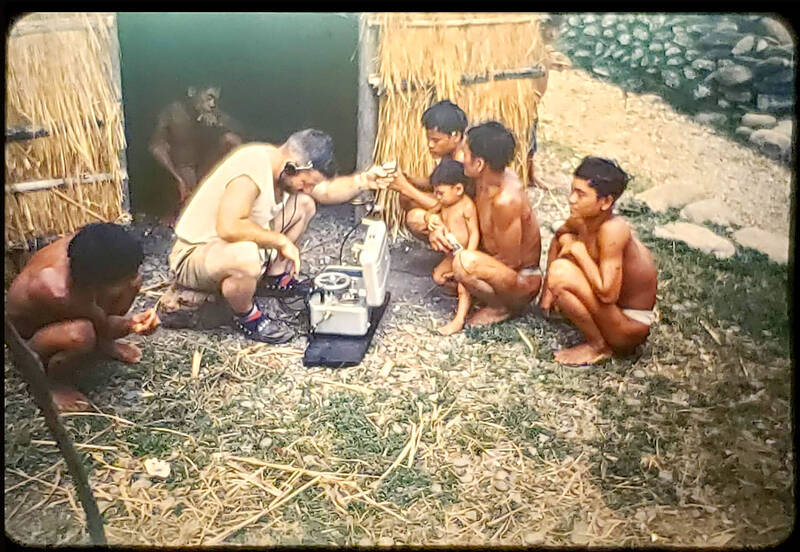
Donald J. Pletsch records Tao tribal songs during his 1955 visit to Orchid Island.
Saying they are “no doubt very important and precious documentation of early Taiwanese public health institutions,” Associate Professor Lee Yi-tze (李宜澤), chairman of National Dong Hwa University’s Department of Ethnic Relations, explains that the photos and reels have a threefold significance.
First, they are primary sources about how epidemic prevention efforts were conducted during the postwar period. Second, they’re “a historical testimony of the collaboration between US specialists and local officials.” Third, Lee says, they depict actual scenes of the public health practices in Taiwan during that era.
PRESERVATION AND DIGITIZATION
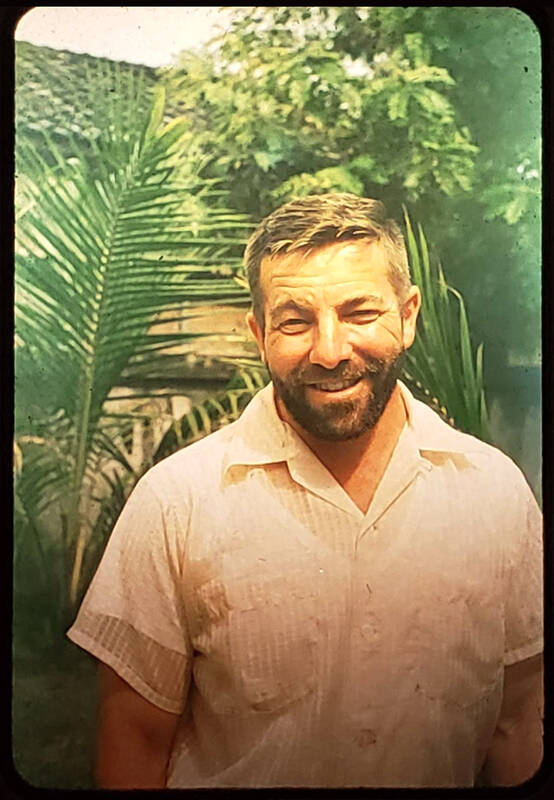
Donald J. Pletsch on Orchid Island in 1955.
“What started as a simple online purchase of a few cultural items became a quest to get these materials digitized and known to a broader audience,” says Jacobson.
The Taipei Economic and Cultural Office in Seattle put him in touch with Tainan National University of the Arts (TNNUA), to which Jacobson will formally donate the photos and movie footage on the morning of Dec. 2. The event, scheduled to begin at 10am, will be held on the first floor of TNNUA’s Audio-Visual Building. All are welcome.
A team led by Tseng Ghi-hsien (曾吉賢), an associate professor at TNNUA’s Graduate Institute of Documentary and Film Archiving, has already begun work on restoring and digitizing Pletsch’s footage and the educational film. As it happens, Tseng grew up in Chaojhou, just 200m from the site of TAMRI, and he remembers his father talking about the institute’s work.
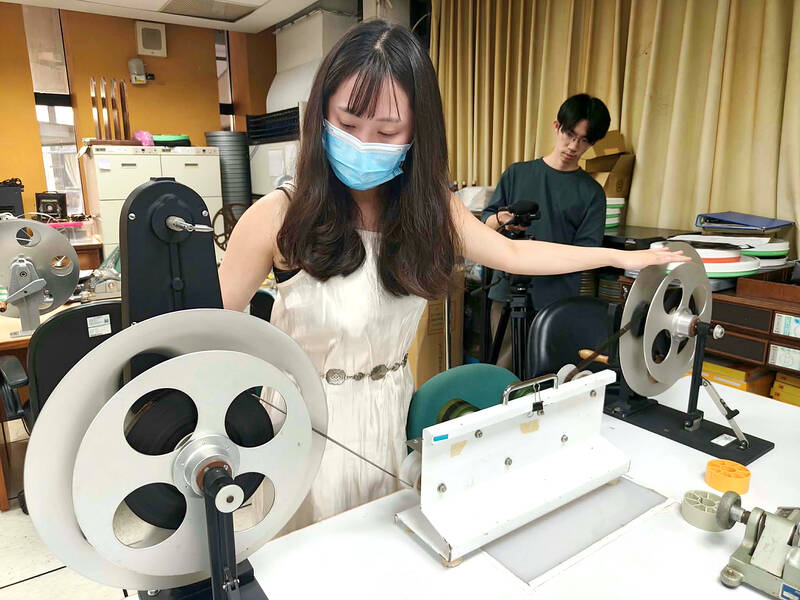
Despite funding issues, the Graduate Institute of Documentary and Film Archiving at Tainan National University of the Arts has restored a number of old Taiwanese films.
Photo courtesy of Tseng Ghi-hsien, TNNUA
The reemergence of the Pletsch reels “represents a significant discovery of postwar footage of southern Taiwan,” Tseng says.
Describing the material as “extremely important,” he notes that the entomologist traveled extensively, and that his footage covers topics beyond public health.
Recovering these films, he says, involves “meticulous manual cleaning and repair to ensure the best possible digitization results. Only then is an assessment made regarding the need for digital restoration.”
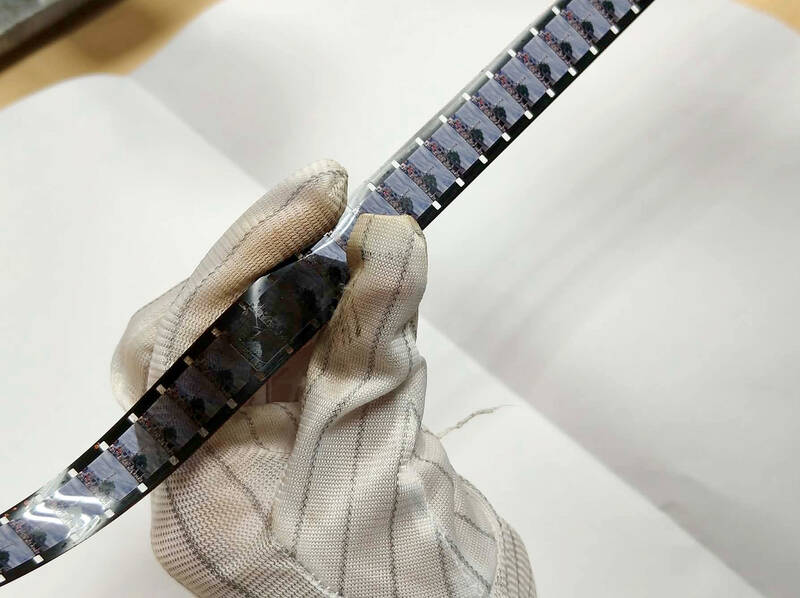
Film restoration is time consuming, labor intensive, and expensive, but the general public should be able to see parts of the Pletsch collection next year.
The process is expensive yet underfunded, Tseng laments. Cleaning supplies and labor aren’t cheap, and the climate-controlled warehouse storing the fragile films runs up steep power bills. Digitally restoring a 90-minute film can cost as much as NT$1.2 million.
“So far, national cultural institutions haven’t provided any funding for the preservation of Taiwan’s precious historical footage,” he says. Students do much of the work, and Tseng occasionally taps grants from external projects to hire specialists.
What happens after digitization has been completed isn’t certain. Experts will assess the materials, and discuss whether to establish a database, Tseng says.
“I believe that, in the first half of next year, we may have a historical video exhibition at the TAMRI site in Chaojhou. We hope graduate students will write papers, and perhaps interview the descendants of those involved in making the films, as well as Michael Jacobson and other connected individuals,” he says.
Steven Crook has been writing about travel, culture and business in Taiwan since 1996. He is the author of Taiwan: The Bradt Travel Guide and co-author of A Culinary History of Taipei: Beyond Pork and Ponlai.
KioskNews shows a cleaned-up reading view extracted from the publisher’s page — the original always lives on their site, not ours.