RMIT, partners convene over 550 experts to discuss youth wellbeing
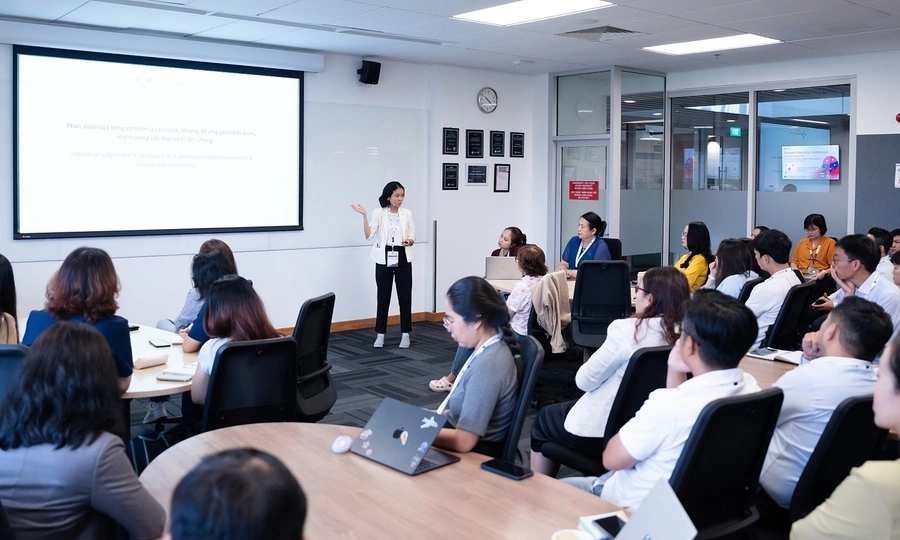
More than 550 educators, mental health professionals, social workers and medical practitioners from Vietnam and abroad gathered at the Vietnam Wellbeing & Safeguarding Summit 2026 to discuss support for children and young people.
Co-hosted by RMIT Vietnam, AmCham Vietnam, Saigon South International School (SSIS) and Learning Strategies, the three-day event on Oct. 8, 9 and 16, featured nearly 50 presentations and workshops in Ho Chi Minh City and Hanoi.
 |
|
Experts shared insights during a panel discussion at the Vietnam Wellbeing & Safeguarding Summit 2026 in Hanoi. Photo courtesy of RMIT |
The summit covered three areas: mental health and resilience, safeguarding practices, and neurodiversity. Sessions explored both practical and research-informed approaches to mental health concerns, online safety risks, and the varied learning and developmental needs of young people.
Michael Tower, Associate Director of Wellbeing and Counselling at RMIT Vietnam, said the summit aimed to strengthen the capacity of organizations and professionals to support mental health and respond to harmful behavior.
"The summit is an opportunity for professionals across Vietnam to learn from one another and strengthen practice to support children and families," he said.
"Multi-agency coordination and shared professional development benefits both the providers and clients."
Tower said support from sponsors and participating institutions also provided learning opportunities for professionals and university students studying psychology and social work.
This year's summit added neurodiversity as a dedicated theme alongside mental health and safeguarding, reflecting attention to the different ways children learn, communicate and develop.
Sessions covered autism, attention-deficit/hyperactivity disorder (ADHD) and other neurodevelopmental differences, including approaches to supporting students with varied learning needs.
 |
|
Participants joined a workshop at the Vietnam Wellbeing & Safeguarding Summit 2026 in Ho Chi Minh City. Photo courtesy of RMIT |
Tony Louw, founder and managing director of Learning Strategies, a Vietnam-based organization that has supported children and families with neurodevelopmental differences since 2008, said the addition of neurodiversity expanded the summit's scope.
"Introducing neurodiversity was a natural progression for the summit. We began with child safety and safeguarding, then expanded into mental health as we recognized how closely the two are connected," said Louw, who also served on the organizing committee.
"Neurodevelopmental differences, including autism, ADHD, and learning difficulties, add another important dimension."
Louw said children with neurodevelopmental differences may face greater mental health and safeguarding risks when their needs are misunderstood or inadequately supported.
"Recognizing how these three areas intersect is essential if we are to provide children with the comprehensive support they need," he said.
The summit also addressed issues affecting children and young adults in different educational settings.
In Hanoi, sessions examined dating violence among university students and child protection in digital environments. Discussions in Ho Chi Minh City examined emotional regulation and safeguarding practices in schools and other educational institutions.
Toan Le, School Counsellor and Deputy Designated Safeguarding Lead at the International School Ho Chi Minh City – American Academy (ISHCMC-AA), highlighted cooperation between families and schools.
"Parents and educators ultimately want the same thing: young people who feel safe, supported, and able to thrive," she said.
"When conversations are guided by empathy rather than judgment, families and schools are far more likely to find solutions together."
Le, a returning speaker at the summit, also discussed self-compassion among professionals working with children and families. She said recognizing their own emotional responses could help educators and counselors handle difficult conversations with parents more calmly.
"For professionals, practicing self-compassion helps us recognize our own emotional reactions, create space to respond rather than react, and remain compassionate and grounded, especially when navigating difficult conversations with parents," she said.
 |
|
Participants took part in a group discussion at the Vietnam Wellbeing & Safeguarding Summit 2026. Photo courtesy of RMIT |
First held in 2022 as a smaller professional initiative, the summit has developed into an annual forum in Ho Chi Minh City and Hanoi, bringing together Vietnamese and international specialists in education, healthcare and social services.
Organizers said the event aimed to encourage cooperation, professional development and the use of practices that support safer and more inclusive learning environments for children and young people in Vietnam.
KioskNews shows a cleaned-up reading view extracted from the publisher’s page — the original always lives on their site, not ours.