Noah Shack: Israeli election is Canada’s opportunity for a reset
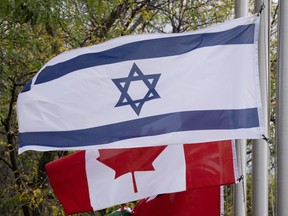
As Israelis await the formation of their next government following this week’s election, the Canadian government has an opportunity to rebuild trust and pursue a practical partnership with Israel rooted in shared strategic interests.
Sign In or Create an Account
The Canada-Israel relationship is larger than any government. It rests on nearly 80 years of diplomatic relations, 30 years of free trade and deep people-to-people ties.
For Jewish Canadians, this relationship has particular significance because Israel is deeply important to our history, culture and identity. That attachment to an ancestral homeland is not unique to our community. Across Canada, diaspora communities maintain deep connections to the countries from which their families and traditions originate.

Columnist Jesse Kline keeps you up to date with what’s happening in Israel and the effects of antisemitism on life here in Canada. Friday mornings.
By signing up you consent to receive the above newsletter from Postmedia Network Inc.
A welcome email is on its way. If you don't see it, please check your junk folder.
The next issue of Channel Israel will soon be in your inbox.
We encountered an issue signing you up. Please try again
Prime Minister Mark Carney captured this sentiment during a visit to Mayo, Ireland, in June, where his paternal grandfather was born. He opened his remarks saying, “it’s great to be back home,” reflecting on thousands of years of Irish history and civilization, and “the county that made my family.”
Carney spoke of the Irish immigrants who helped build Canada and make it a place where faith, language, heritage and tradition are not concessions to citizenship, but expressions of it, calling Canada “a country of kept threads.”
Reflecting on his grandparent’s immigration, the Prime Minister noted that Canada “didn’t require them to become something unrecognizable to themselves in order to belong.” Today, this foundational promise for all Canadians is under threat.
Just as Canadians of Irish descent take pride in their heritage and draw inspiration from the birthplace of their ancestors, Jewish Canadians do so with Israel. Yet, this identity that should be welcomed and celebrated is increasingly and uniquely becoming a source of suspicion, discrimination and violence.
A strong Canada-Israel relationship, like Canada’s relationship with Ireland and other countries with which Canadians share deep historical and cultural ties, affirms that Jewish Canadians holding onto this thread of their identity is entirely compatible with full and equal Canadian citizenship. This is perhaps more important now than ever before.
A renewed partnership would also advance the Government of Canada’s objectives internationally in contributing to peace in the Middle East and boosting resilience at home. In a world marked by rupture, Canada is seeking partnerships in trade, energy and security that strengthen our strategic autonomy. Prime Minister Carney has noted that this requires expanding influence in strategically important regions and prioritizing engagement over lecturing from afar – even when dealing with countries with which Canada has profound disagreements.
As the Prime Minister said in Turkey last week, “engagement is not approval.” This standard that guides Canada’s relations with Turkey, Qatar, India and other countries should apply to Israel as well.
Consistency is essential if Canada wants to be a credible and effective partner in advancing peace and security for Israelis and Palestinians alike. A functioning bilateral relationship gives the Canadian government access to Israeli decisionmakers and a direct channel to raise difficult questions.
By not engaging Israel’s next government, Canada would risk surrendering influence over decisions that directly affect regional peace and security. It also risks undermining its own efforts to support the institutions and conditions necessary for Palestinian statehood. Any future Palestinian state must be viable, accountable and capable of delivering stability, rather than becoming another failed state or terrorist state in the Middle East.
Against this backdrop, the lack of accountability following Palestinian Authority President Mahmoud Abbas’s reported agreement with Islamic Jihad and Hamas to postpone general elections is particularly concerning. If Palestinian leaders face no meaningful consequences for abandoning their commitments, what incentive do they have to implement the reforms Canada itself considers essential to lasting peace and stability?
The case for a reset extends beyond diplomatic influence.
Israel has built substantial partnerships in defence, intelligence, cybersecurity and advanced technology with countries that do not necessarily share its positions on every political issue, including its Arab neighbours. These relationships reinforce that disagreements need not prevent cooperation where strategic and economic interests align.
India and Israel are expanding cooperation in areas ranging from cybersecurity and defence to agricultural innovation, an area in which Canada is also deepening its ties with India. The United Arab Emirates has established free trade agreements with both Israel and Canada, illustrating the potential for shared economic interests to create opportunities across multiple partnerships.
Germany’s strategic partnership with Israel offers another relevant example. Their cooperation includes submarine technology and the production of Iron Dome components at a former Volkswagen plant. This experience has potential relevance for Canada’s Canadian Patrol Submarine Project and its new Defence Industrial Strategy.
Meanwhile in North America, Israel is working with Mexico to share expertise in water management and agricultural resilience, both critical to a country facing severe drought and growing pressure on its water resources.
Israel’s expertise in security, agriculture, energy and technology could help Canada strengthen its strategic autonomy while better protecting Canadians’ security and interests. As the Prime Minister has said, “part of the way we become a truly sovereign nation is to have a broad range of partnerships around the world.” Israel should be among them.
Join the Conversation
This website uses cookies to personalize your content (including ads), and allows us to analyze our traffic. Read more about cookies here. By continuing to use our site, you agree to our Terms of Use and Privacy Policy.
KioskNews shows a cleaned-up reading view extracted from the publisher’s page — the original always lives on their site, not ours.