‘Shakespeare was a Black woman’: the playwright’s under-recognized connection to Black culture

“William Shakespeare was a black woman.” In 1985, Maya Angelou spoke these words as part of a keynote speech at a convention in Cedar Rapids, Iowa.
There, she spoke of the role poetry played in her transition from muteness as a child and how she fantasized herself triumphantly delivering Portia’s speech from William Shakespeare’s The Merchant of Venice in front of her entire community at church. Though she never got the chance to perform that rendition, Angelou acknowledged her desire to deliver that rendition as part of a lifelong kinship with Shakespeare, a connection she continued to seek out throughout her life whenever she needed heartening or solace. In her eyes, Shakespeare wrote his emotionally desolate Sonnet 29 “for” her; how else could he have so aptly described the harsh realities of the Black feminine condition?
“Of course he wrote it for me,” Angelou declared. “Of course, he was a Black woman. I understand that. Nobody else understands it, but I know that William Shakespeare was a Black woman.”
Angelou would likely be proud to know that many other Black women – including Dr Patricia Akhimie, the director of the Folger Institute at the Folger Shakespeare Library in Washington DC – do understand. The Bard may not have been a Black woman in the literal sense, but his resonance and centuries-long rapport with Black culture is one area of study that Akhimie has spent her career examining.
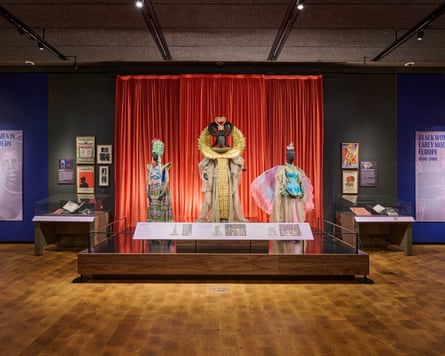
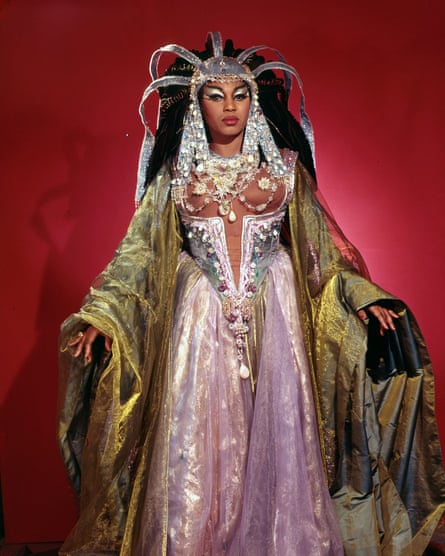
In the Folger’s newest exhibition To Hear Her Speak: Black Women and Shakespeare, curated by Akhimie, more than 400 years of Black women’s engagement with Shakespeare is collectively explored for the first time, illuminating the ways in which Black women have claimed and reimagined the works of Shakespeare through scholarship and craft. “It’s a performance [and theater] history but it’s also an intellectual history about Black women as writers and artists pulling from Shakespeare to do new and amazing things,” said Akhimie, speaking in a warm conversation in early October.
The history of Black women’s connection to Shakespeare is long, but not necessarily storied – To Hear Her Speak reveals just how far back that history goes and under how many layers it’s hidden. There’s likely no better place to begin such an investigation than at the Folger, home of the world’s largest Shakespeare collection.
The exhibit, which is the product of more than two years of research, is both immersive and interactive. It contains nearly 100 items including photographs, playbills, books, diaries, illustrations and costumes; there are video displays of notable Black actresses throughout history performing Shakespeare; and within a set replica of playwright Lorraine Hansberry’s living room (based on a 1959 Vogue photo spread of the writer in her New York City apartment), visitors can sit on the couch and watch a television set screening clips of Hansberry and other Black women discussing Shakespeare, or browse through the “library” of that same living room set, where there are shelves of books that serve as a mini-archive of writing related to Shakespeare and Black women’s artistic and intellectual endeavors.
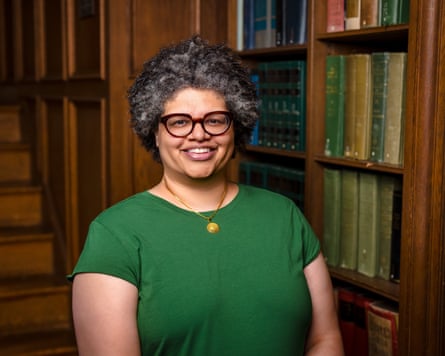
To Hear Her Speak also invites visitors to become participants through other immersive aspects such as writing activities throughout, its exhibit-themed playlist (hitting shuffle will play tracks from Aretha Franklin, Lauryn Hill, Billie Holliday, SZA and more), and its audioguide narrated by Bridgerton star, Shakespearean actor and exhibition chair Adjoa Andoh. The exhibition was designed to be a three-dimensional, multi-sensory experience that can appeal to all ages and its full-color exhibit catalog, created by the To Hear Her Speak research team, was intentionally made for both print and digital consumption for wide accessibility.
“It’s not about standing back and looking at something behind glass, but rather about what happens when inspiration strikes, and then you become the maker and the thinker and the dreamer,” said Akhimie.
To Hear Her Speak also builds on new research showing that Black women were very much a presence in Shakespeare’s world while also illustrating how they were represented (and misrepresented) by storytellers of the era, across different mediums. Part of Akhimie’s aim was to challenge that erasure. “[The exhibition’s story] starts with debunking a longstanding myth, which is that the London where [Shakespeare] lived and wrote his plays and where they were first performed was not a diverse place, when it really was,” Akhimie said.
Along with her research team, Akhimie quickly discovered that artefacts and records of Black women’s engagement with Shakespeare disappeared around the 18th and 19th centuries. “The obvious reason for that is because that is the time period that coincides with the height of the transatlantic slave trade, when Black women’s experiences are not being documented and preserved, and their humanity is being obscured,” said Akhimie. This time period is arguably one of the most crucial for the exhibition’s narrative, as the 18th and 19th centuries are when the transatlantic slave trade is concurrent with Shakespeare’s rise as an international figure representative of British culture and culture at large.
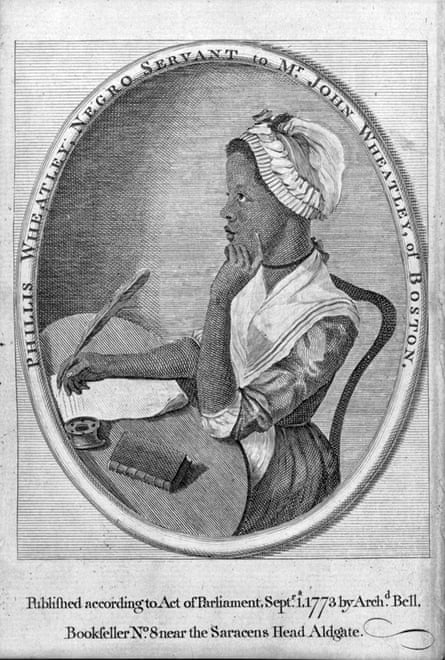
Through objects sourced from within the Folger’s collection and beyond, Akhimie and her research team managed to “tell a story about Shakespeare, sugar, and slavery”, filling the silences of history with materials such as a copy of Shakespeare’s First Folio purchased by a slave-owning British family, a record of the enslaved people forced to work on that family’s sugar plantation, a pair of sugar tongs and a tea caddy both emblazoned with Shakespeare’s bust, and a copybook created by Phillis Wheatley, the formerly enslaved first Black American poet.
To Hear Her Speak rallies the works of some of the most influential Black female luminaries in history in addition to Wheatley, Hansberry and Angelou, like Toni Morrison’s handwritten notes on her Shakespearean play Desdemona. The exhibition, which is named after Shakespeare’s Sonnet 130 (long speculated to be written about a Black woman by historians and literary scholars), amplifies the voices of prominent Black women who have wielded and wrought the words of Shakespeare in their careers to assert their own humanity, creativity and individual power.
Akhimie considers Black women’s consistent return to Shakespeare strategic, describing him as “a reliable partner” for Black female artists of any era to turn to for “inspiration and allyship”; as Angelou noted in her 1985 speech, Shakespeare is one of the most effective conduits for Black female self-expression.
“Shakespeare has cultural currency. Shakespeare is a voice that people listen to,” said Akhimie. “Time and again, over centuries, Black women who are themselves artists, thinkers, or educators know that linking yourself to Shakespeare, pulling Shakespeare in, referencing Shakespeare is a way to grab a hold of listeners in a world in which, often, your voice is not heard and is systematically marginalized. Shakespeare has power, and that has been true for all of [the] 400-year period that the exhibition covers.”
“[To Hear Her Speak] is not just a chance to share Black women’s voices,” she continues. “It’s also a chance to call people in and say: what can Shakespeare do for you? What will you do with this material to make new work, new ideas, tell new stories, and tell your story?”
-
To Hear Her Speak: Black Women and Shakespeare is on view at Folger Shakespeare Library in Washington DC, until 2 May 2027
KioskNews shows a cleaned-up reading view extracted from the publisher’s page — the original always lives on their site, not ours.