Unsung Heroes: How a Devadasi’s grandson became a voice for thousands of broken lives
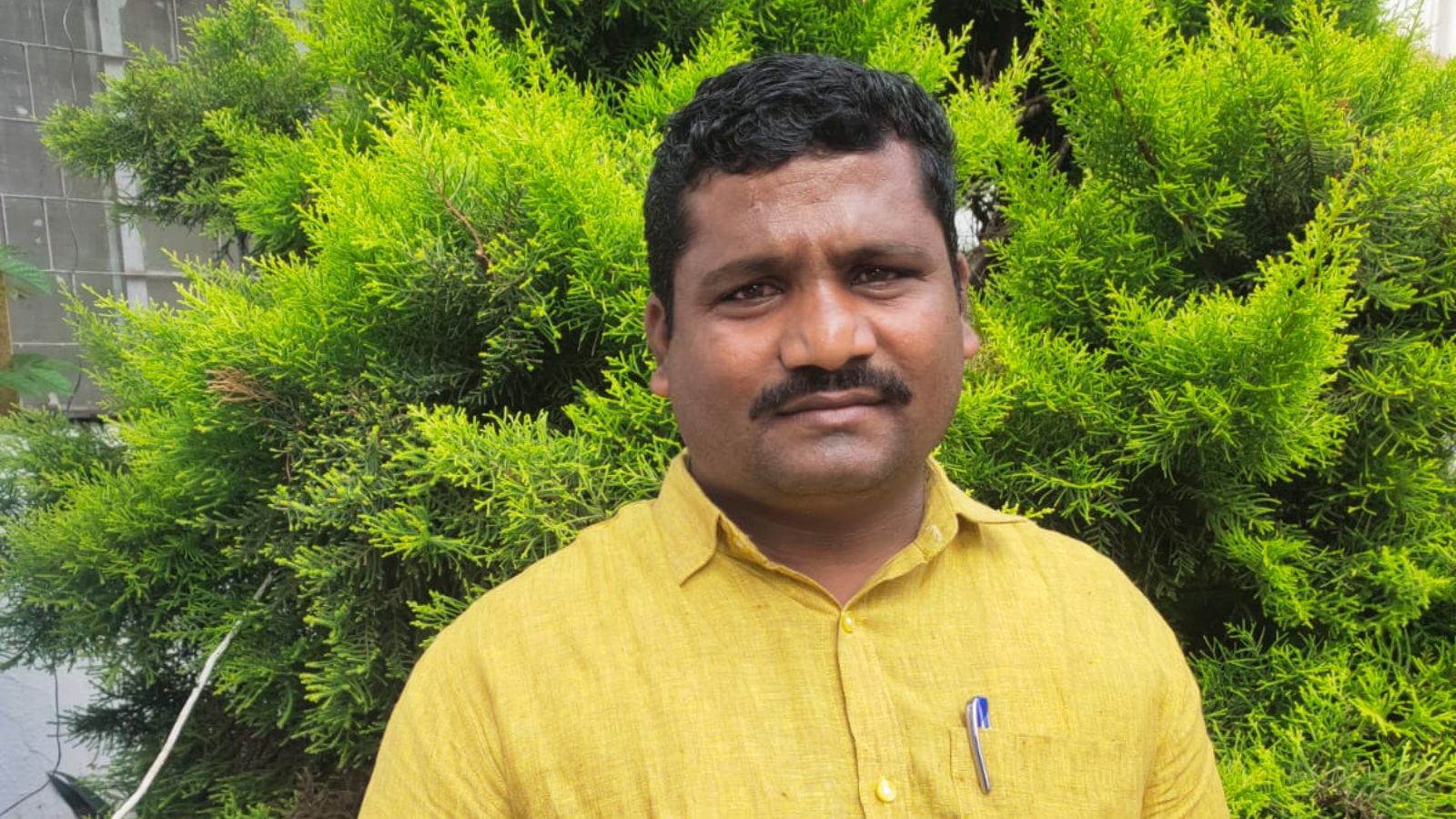
In Kushtagi taluk of Karnataka’s Koppal, a child grew up watching his family pay for a tradition the state had outlawed on paper. The grandson of a Devadasi, he saw women exploited, abandoned and left to fend for themselves, and children who went to school with the father’s column left blank. Today, the 38-year-old runs an organisation that was part of efforts to push the government to introduce a new policy to better a community abused for centuries.
Meet Chandalinga Kalalabandi, once a victim of the Devadasi system and now a crusader for families oppressed for several generations. Starting with documenting ground realities and registering the plight of the marginalised community, Chandalinga has worked with many organisations in Bengaluru to improve the living conditions of Devadasi families.
A legacy of exploitation and social stigma
The Devadasi system is a religious-social evil practice in which girls, typically from Dalit and other marginalised communities, are “dedicated” to a local deity, in a ritual similar to marriage. Once dedicated, a Devadasi cannot marry and is traditionally expected to serve the temple, perform ritual dance and music, and offer sexual services to patrons, often upper-caste men. In practice, it became a form of caste-based sexual exploitation, frequently driven by poverty, debt and superstition.
The practice is widespread in north Karnataka, in districts such as Belagavi, Koppal, Raichur, Ballari, Vijayanagara, Bagalkot and Dharwad. Many women face stigma, lack of legal paternity for their children, poverty, and vulnerability to trafficking and HIV. Though the Karnataka Devadasis (Prohibition of Dedication) Act, 1982 was enacted, it neither ended the tradition nor provided any relief to the families, and it continued to haunt later generations.
Chandalinga Kalalabandi comes from one such family. His grandmother was a third-generation Devadasi. “She was sexually exploited and eventually abandoned. I saw her ordeal at a young age, and a married Muslim man was her ‘husband’.”
While society and the government continued to condemn the Devadasi system, little changed on the ground, says Chandalinga. “If anyone becomes part of a Devadasi family, they are abandoned from that moment and have to deal with life on their own. Nobody gives them employment, a bride or a groom, and they are treated differently from the day they get their first vaccination,” he says.
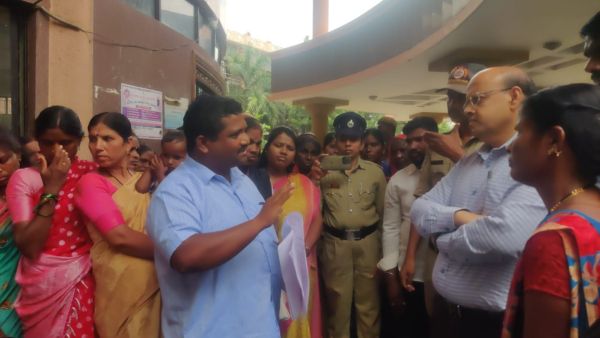 Chandalinga Kalalabandi is fighting for dignity and rehabilitation for marginalised families through grassroots activism and policy reform in Karnataka (Express photo/Special arrangement).
Grim realities and personal tragedies
Chandalinga, an SSLC pass-out, recalls the days that made him determined to bring Devadasi families into the mainstream. “It was not one event but a culmination of many incidents during my young days that made me dedicate my life to the betterment of these children,” he says.
Story continues below this ad
“Just put yourself in their shoes. As a 6- or 7-year-old child, you go to school, and your classmates or teachers ask your father’s name, and you don’t know it. How would you feel? I have seen some children quit school because of it. I have seen it in my area,” he says.
The brutality of the practice first hit Chandalinga when he saw his relative’s plight. “A distant relative of mine was a Devadasi, and she had three girls and one boy. Her daughter worked with me in Ballari in the 2000s. When her mother fell ill, she went back to her hometown to take care of her, but soon the young woman fell ill and died. To care for her mother, another daughter went to Bengaluru to earn money. But the mother became depressed and mentally unstable, and she started roaming the streets. Once, I visited her village and was shocked. This incident hit me very badly,” he says.
There was also an incident in Bidar, where a Devadasi was working in a landlord’s house around 2013. She had a 16-year-old daughter, who was sexually exploited by the same landlord, who was married and had children the girl’s age. While marriage was totally out of the question, the family begged him to give them a small piece of land where they could live. Offended by this, the girl was killed and buried, but the incident came to light only in 2016, says Chandalinga. “At this point, I was interacting with Devadasis and their children.”
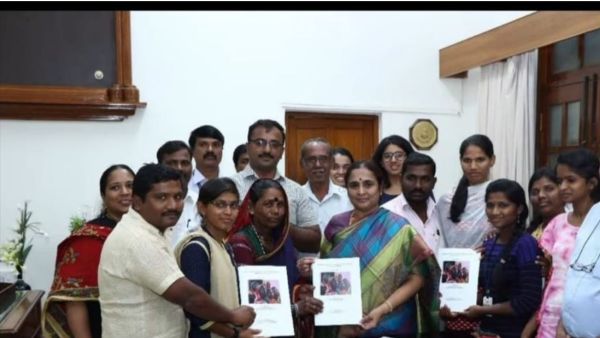 , Chandalinga Kalalabandi’s grass-root fight led to Karnataka’s historic 2025 Devadasi Prohibition, Relief, and Rehabilitation Act (Express photo/Special arrangement).
Mass marriages and legislative reform
By then, Chandalinga had started a new organisation, Vimukta Devadasi Mahila Vedike (VDMV), to better the oppressed class. While the issue was widespread in many parts of north Karnataka, Chandalinga made a move in 2018 that drew attention. His organisation held a mass marriage of 32 couples, children of Devadasis, something that had been only a distant dream until then.
Story continues below this ad
Chandalinga believes that the mass marriage at Kushtagi made the government think about the situation in the state. It gained not only media attention but also the government’s attention. The government then announced a survey of Devadasis, and the report found about 23,395 in the state. Chandalinga was appointed to the state survey committee.
The survey showed that 91.79 per cent of Devadasi women were illiterate. The committee also recommended providing incentives to Devadasis for up to three generations and taking steps to ensure that mentioning the father’s name is not mandatory in schools, colleges, and various application forms.
In August 2025, the government tabled the Karnataka Devadasi (Prevention, Prohibition, Relief and Rehabilitation) Bill, which both houses of the state legislature passed. It replaced the 1982 Act, completely outlaws the Devadasi system in all forms and also provides better relief and rehabilitation programmes.
The unfinished struggle
But Chandalinga’s job is not finished yet. While the government has announced special packages and ordered them, implementation is still pending. “It is a small, minority community. It has often been neglected. We need to keep pushing. As we speak, Devadasi children are getting Rs 5 lakh, but the housing scheme and others are still pending. We will continue to fight for it,” he says.
Story continues below this ad
Vijamma, who was forced into the Devadasi system at a young age by her mother, is now rehabilitated. She is one among 1,039 who have received land from the government. “I was as young as 12 when I was pushed into the Devadasi system. In fact, I did not know what it was. But now, with the efforts of Chandalinga and others, I have been able to get agricultural land where I grow cotton, and I also run a dairy business,” she says.
KioskNews shows a cleaned-up reading view extracted from the publisher’s page — the original always lives on their site, not ours.