Families of coma patients unable to access bank funds, Allahabad High Court flags legal void
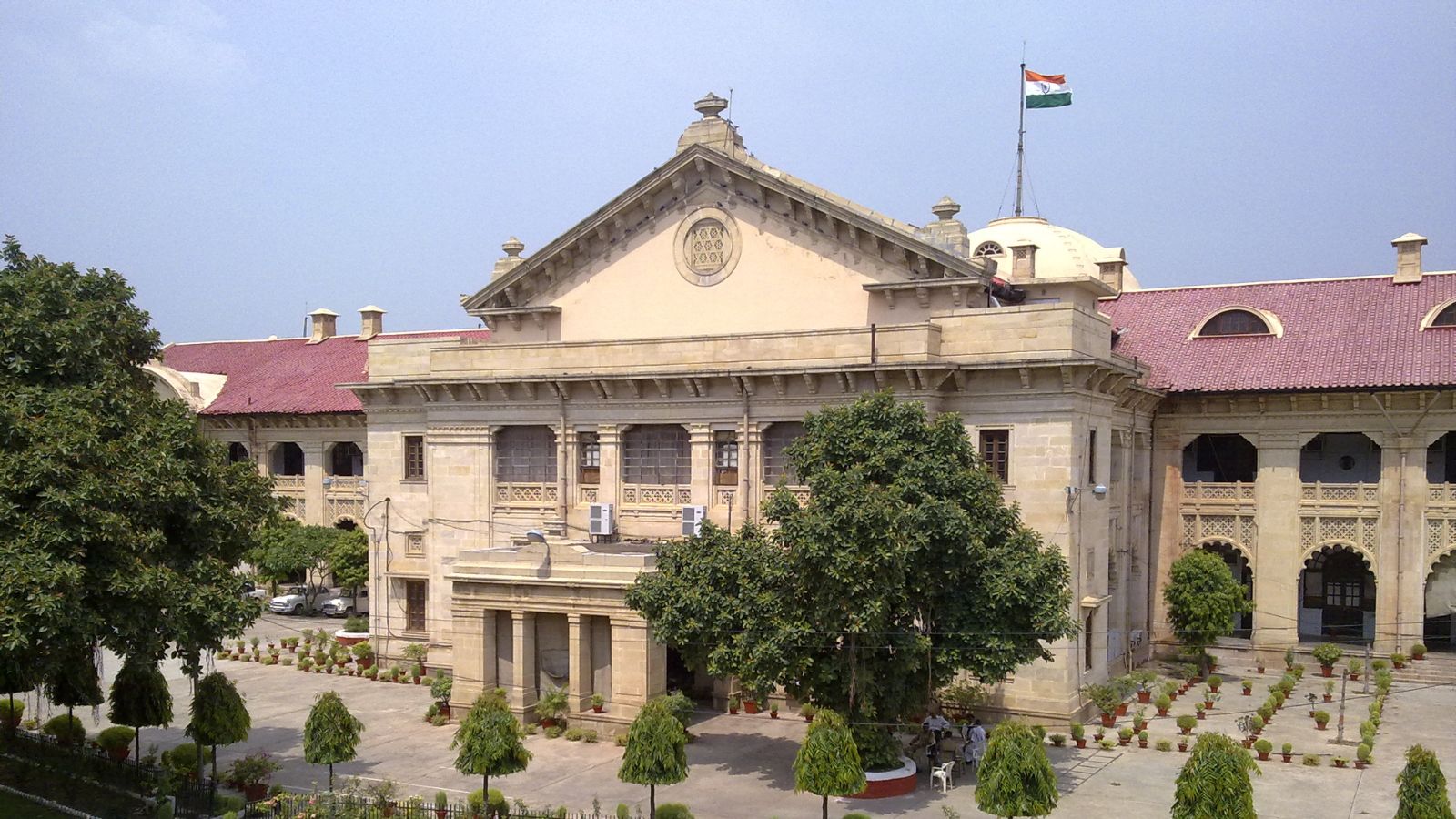
In July, Parveen Jahan had approached the Allahabad High Court seeking access to her comatose husband’s bank account. The family was going through financial hardship and needed money to pay for his medical expenses. But her husband died on October 8 while the petition remained pending.
Pulling up the Uttar Pradesh Chief Secretary for failing to comply with a 2020 judgment and implementing guidelines to help families in such situations, a division bench of Justices Ajit Kumar and Garima Prashad said: “It is indeed a matter of concern that a person who passes away in a state of coma, the dependents become absolutely remediless in a sense that they do not have necessary funds and source of finances to not only take care of the patient by meeting expenses of the hospital but even to manage the household.”
Why it matters
A comatose patient died while his wife’s plea to access his bank account remained pending since July. The UP government is yet to implement the High Court’s 2020 guidelines for appointing guardians to help families access the funds of patients in a coma.
The bench, which was hearing the matter the day the patient died, directed that the central government and Reserve Bank of India be impleaded as respondents.
“…. Some sort of legislation from the competent legislature or even guidelines… from the Reserve Bank of India regulating nationalised banks and subsidiary banks… for providing a necessary mechanism as to how money lying in the savings bank account of such patients can be released in favour of the dependents. The central government, therefore, has to come up with its stand on the issue in black and white. We also need the Reserve Bank of India to give its response…,” it said.
The next hearing is scheduled for November 6.
Jahan’s petition
Jahan had approached the court stating that her husband, Shamshad Ali, had slipped into a coma and finances were needed for further treatment and care. She sought to be declared his guardian so that she could withdraw money from his State Bank of India account at a branch in Kanpur.
Ali was at his son’s house in Gautam Buddh Nagar.
In August, the court directed the Chief Medical Officer (CMO) of Gautam Buddh Nagar to constitute a team of medical officers, including a neurologist, to examine Ali at the house and submit a report on his medical condition.
Story continues below this ad
The CMO subsequently reported that the account holder was in a coma and that his family was facing financial hardship.
During the August hearing, Jahan’s counsel cited a 2020 Allahabad High Court judgment in Uma Mittal and others v. Union of India and others. The counsel submitted that despite the guidelines and recommendations made by the court that year, no steps were taken to implement them.
What do the 2020 guidelines say?
The 2020 judgment addressed the lack of a specific legal provision for appointing guardians of people in a coma.
The Allahabad HC had drawn on a judgment of a division bench of the Kerala High Court, which had framed broad guidelines for appointing guardians of people in a comatose state.
Story continues below this ad
Finding those guidelines sound, the Allahabad High Court said they can be used as a framework for Uttar Pradesh until legislation could be enacted to specify how guardians should be appointed.
One of the key provisions stated that the guardian appointed should be the spouse or a child of the person in a coma.
The court, in that order, had also recommended to the Centre to consider enacting appropriate legislation as no remedy is provided in any statute for persons in a comatose/vegetative state unlike legislations for appointment of guardians for minors and persons with other disabilities.
Court flags repeated non-compliance
In its August order, while hearing Jahan’s petition, the bench had reproduced the 2020 guidelines and the Chief Secretary was directed to file an affidavit on what steps have been taken in compliance of it.
Story continues below this ad
When the matter came up in September, the bench did not receive any communication from the Chief Secretary on compliance.
The bench pointed to the repeated failure to implement court directions, stating that judgments laying down guidelines were often ignored unless coercive action was taken.
“We have found time and again that either the judgments carrying such guidelines are ignored unless coercive action is taken, or there is a show of following the guidelines for a small period of time, whereafter those bound by the guidelines lapse into inaction and violation again. Judgments of the Constitutional Courts laying down the law, issuing directions or guidelines, do not become stale, as if it were by passage of time,” it had said.
The Chief Secretary was then asked to file his own affidavit within three days, without fail, in compliance with the August order.
Story continues below this ad
In its October 8 order, the court noted that the Chief Secretary, in his affidavit, had sought more time, stating that enacting legislation would require a lengthy process involving the competent legislature. The court had also issued directions to the Centre, but its counsel said he had no instructions on the matter.
The bench said the state government could consider implementing the guidelines at its own level without waiting for legislation. It directed the Chief Secretary to present concrete and substantial steps taken to address the problem by the next hearing.
“… We make it clear that if the Chief Secretary does not come up with such a solution in black and white, he will have to appear in person before this Court on the next date fixed. The Reserve Bank of India and the Central Government will have to file their respective affidavits, failing which the court will be compelled to summon the officers responsible for both…,” the bench said.
KioskNews shows a cleaned-up reading view extracted from the publisher’s page — the original always lives on their site, not ours.