The Cherry Orchard review – Kristin Scott Thomas makes a modern matriarch in trad, earthy Chekhov

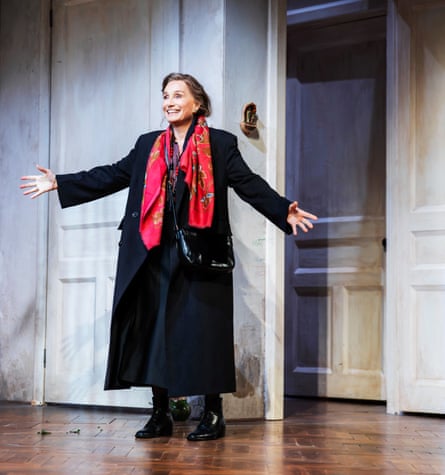
There have been several starry Madame Ranevskayas in recent times. The prodigal Russian landowner, returning to her beloved estate and cherry orchard, was searingly played by Nina Hoss in 2024 and less memorably by Helen Hunt this summer. Now here is Kristin Scott Thomas, who brings a hard-edged modernity that you believe in. She feels of our time, despite the references to dachas and peasants, and could be an upper-middle-class Chelsea mother or minister’s wife, stewing in regret and an unfulfilled life.
Ian Rickson’s elegantly directed production uses a plain-speaking new adaptation by Conor McPherson. The pair have previous form on Chekhov, from six years ago, when they brought a pitch-perfect version of Uncle Vanya to the West End. This too is handsome and engaging, the crumbling drawing room of Chloe Lamford’s set design bearing damp patches and a faded grandeur.
Despite Scott Thomas’s modernity, the production itself feels traditional. Chekhov called his final play a comedy, though it subsequently came to be described like his other dramas as tragicomic, and McPherson stays faithful to that original vision. There is much humour here, albeit with moments of wistfulness, and the script is adept at drawing out the dithering ridiculousness of this entitled aristocratic set. There is an earthy, sweary frankness too in how the characters speak.
Scott Thomas looks the part as the matriarch, wearing an emotional armour. Her performance is full of subtle inflection, biting her nails with worry, switching on the smiles and warmth as required. When she speaks of the death of her young son, drowned in the estate’s lake, you see her guilt and sadness being quickly hidden away.
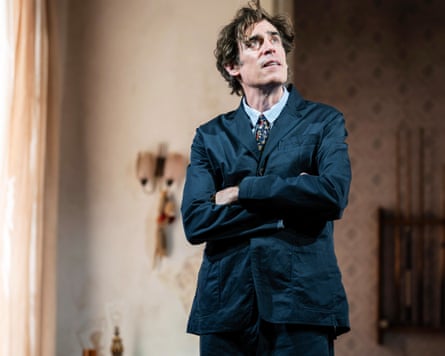
Stephen Mangan plays Lopakhin, the serf’s son who is still in milky-eyed awe of Ranevskaya, and draws out the social standing of his character. He is aware of his low estimation in the eyes of this family despite his self-made merchant status. He casts nervy glances to Ranevskaya who imperiously ignores his presence on first entry, and always stays something of an overgrown and intimidated schoolboy in the face of this family. It’s an interestingly powerless interpretation, though only half convincing.
The atmosphere of absurdity and pettiness works well, with endless witterings, funny moments and an atmosphere of languor. There is guitar playing too from clerk Yepikhodov (Shubham Saraf). Peter Wight brings pompous comedy as Ranevskaya’s brother, Gaev, and Ruby Bentall is strong as German governess, Sharlotta.
The cast, as an ensemble, work well together, each in their own world, yet casting glances over at the other. But some of the edges are softened, such as the fire of student and would-be revolutionary Trofimov (Jack Riddiford). You don’t feel much pathos for the set as a whole, and the drama never quite enters dark or tragic territory. The scene in which the family is faced with a begging peasant certainly confirms their cold entitlement and you register their sense of infringement as this stark outside reality enters their airbrushed world, but it doesn’t hit you emotionally.
There are other affecting moments though, the biggest from the plot line around adopted daughter, Varya (Vinette Robinson), and her wait for Lopakhin to propose. Her yearning, by the end, is palpable, as is her disappointment when she bears the pain of her family’s fall, along with his ascension. And when the servant Firs (Karl Johnson) is left behind, like a forgotten piece of furniture, you feel the carelessness with which Ranevskaya regards those deemed to be below her. It justifies the end to come for this old world order.
KioskNews shows a cleaned-up reading view extracted from the publisher’s page — the original always lives on their site, not ours.