10 Greatest Galactic Empires In Sci-Fi Books

Galaxy-spanning empires are a staple of literary sci-fi. Whether human or alien, these interstellar civilizations stretch across unfathomable distances, encompassing enough planets to make individual worlds seem almost insignificant. They provide the backdrops for some of the greatest science fiction stories ever written, turning struggles over succession, survival, and conquest into conflicts with consequences for trillions.
These grand galactic empires make ruling a single solar system look positively unambitious through their extraordinary scale, technological reach, and the imaginative detail authors pour into unique cultures and customs. Their influence can extend beyond galaxies into time itself, with the most advanced treating entire universes as engineering projects to demonstrate just how far literary sci-fi can push the idea of cosmic authoritarian power beyond simply measuring distance and the size of their populations.
The Sith Empire
The Star Wars: The Old Republic Novels (2010-2012)

Palpatine’s Empire may be synonymous with Star Wars, but it’s not the most powerful galactic empire the galaxy far, far away has ever known. Millennia earlier in the Star Wars: The Old Republic novels, the resurgent Sith Empire was a vast military establishment with a ruling order whose members treat betrayal as a legitimate route to promotion, and this brutality was eagerly extended to those it conquered. Its fleets and armies became an near-insurmountable threat to the Galactic Republic, while its Sith overlords wield the force in ways as powerful as they are terrifying. The result is a civilization whose threat to the galaxy was realistically only averted thanks to the Sith undermining themselves from within.
Domination is the organizing principle of the Sith Empire, with forced military service, slavery, and a hierarchy built on violent betrayal being defining features of its society. Its greatest strength is the concentration of resources behind Force users prepared to pursue power without restraint. Its greatest weakness is that those same rulers all ultimately serve their own interests rather than those of the Sith as a whole. That instability makes the Sith Empire fascinating: even at its most formidable, its survival always depended on ambitious monsters cooperating long enough to defeat their mutual enemies.
You can purchase Fatal Alliance by Sean Williams, the first book focusing on the Sith Empire in the Star Wars: Legends novel collection, here.
The Former Galactic Empire
Douglas Adams’ The Hitchhiker’s Guide To The Galaxy Series (1979-1992)

An interstellar empire wealthy enough to make personalized planets a viable luxury industry makes a refreshing break from the traditional sci-fi focus on domination and conquest. In Douglas Adams’The Hitchhiker’s Guide to the Galaxy series, the former Galactic Empire presided over an age of interstellar adventure and spectacular fortunes long before the events of the books. Eventually, its richest inhabitants found naturally occurring worlds didn't meet their luxury requirements. The planetary designers of Magrathea supplied the solution by manufacturing bespoke planets for the universe’s ultra-ultra-elite. Few fictional galactic civilizations make the end goal of their technological progress customer satisfaction, but then again, this is from the mind of Douglas Adams.
This hypercapitalist focus also explains why the Galactic Empire is, by the time Arthur Dent heads into the stars in the classic sci-fi novel The Hitchhiker's Guide to the Galaxy, the Former Galactic Empire. Magrathea became so successful that it accumulated the wealth of the galaxy, leaving economic devastation and a billion hungry worlds behind. Douglas Adams literally makes wealthy people demanding nicer surroundings the downfall of the universe’s most advanced civilization. However, beneath the obvious comedy is a strong argument that technological achievement offers no protection against greed causing a catastrophic economic imbalance.
You can purchase The Hitchhiker's Guide to the Galaxyby Douglas Adams here.
The Galactic Empire
Isaac Asimov’s Foundation Series (1951-1993)

Twenty-five million inhabited worlds is an impressively large piece of interstellar real estate, but the real achievement of the Galactic Empire in Isaac Asimov’s Foundation novels is keeping them functioning together. Governed from the capital planet of Trantor, this 12,000-year-old civilization has made galactic administration an undertaking that its citizens take for granted. That makes its decline, which is the central focus of the Foundation series, far more intriguing than another straightforward struggle against an evil ruler.
Imperial authority in the Foundation novels is deteriorating due to the passage of time. Distant territories are breaking away, technical expertise disappears across generations, and leaders mistake inherited authority for actual control with more and more frequency. Isaac Asimov makes bureaucracy, economics, and sustainability feel as consequential to the Galactic Empire’s fate as any military conflict. The result is one of literary sci-fi's most convincing imperial societies, one whose greatest achievement and fatal weakness are both its astonishing permanence.
You can purchase the first Foundation novel by Isaac Asimov here.
The Culture
Iain M. Banks’ Culture Series (1987-2012)

Most inhabitants of the Culture, the interstellar empire in Ian M. Banks’ novel series of the same name, have little reason to feel that they belong to a formidable galactic power. Their lives in a utopian post-scarcity society offer extraordinary freedom, abundance, and opportunities for pleasure, often aboard enormous ships or artificial habitats called Orbitals. Tens of trillions of biological and machine citizens participate in a civilization that has largely escaped strife and suffering. The Minds, immensely sophisticated artificial intelligences, sustain the infrastructure that makes this possible. It’s a galactic superpower that offers something surprisingly rare in science fiction: an appealing everyday existence.
However, the idyllic lives of the citizens of the Culture are sustained by some uncomfortable truths. Its ships possess devastating capabilities, while imperial agencies Contact and Special Circumstances intervene in other societies in ways that often contradict the peaceful and pacifist utopian philosophies of the Culture itself. Iain M. Banks uses this contradiction to explore the fact that improving the lives of one group often comes at the expense of another. The Culture may not be a conventional imperial government compared to other sci-fi galactic empires, yet its influence raises fascinating questions about power and consent in a society that isn't under a stereotypically authoritarian rule.
You can purchase Consider Phlebas, the first Culture novel by Iain M. Banks, here.
The Imperium Of Man
The Warhammer 40,000 Novels (1987-Present)

The combined might of a million worlds should guarantee humanity’s security, but in the Warhammer 40,000 universe they barely guarantee its survival. The Imperium of Man is a sprawling, brutally authoritarian civilization fighting so many wars that catastrophe has become an administrative routine. Its armies range from ordinary soldiers deployed in appalling numbers to genetically engineered Space Marines, supported by enormous warships literally kilometers long and walking war engines taller than any present-day skyscraper. Travel is only possible thanks to the God Emperor of Mankind, who is basically a corpse, maintaining a psychic beacon that helps navigators find their way through the Warp, the hell-like realm humanity must utilize to achieve faster-than-light travel.
Across scores of novels written by dozens of authors (alongside plenty of lore in the rulebooks for the Warhammer 40k tabletop game), this unique and zealous galactic empire is explored in unrivaled depth, and every corner contains some kind of harrowing or horrific existence for its citizens. Innovation attracts suspicion, religious obedience overrides reason, and entire populations can disappear beneath the demands of distant authorities. Exterminatus, the destruction of an entire planet, is seen as a reasonable response to even minor threats to Imperial stability. This combination of military strength and societal decay makes the Imperium of Man fascinating to read about, though definitely not a future civilization readers would actually want to be a part of.
You can purchase Xenos by Dan Abnett, an excellent entry point into the Warhammer 40,000 novels, here.
The Imperium
Frank Herbert’s Dune Series (1965-1985)

Controlling thousands of worlds wouldn’t be possible for the Imperium of the Dune novels without control of the substance that connects them. Intersellar travel in Frank Herbert’s vision of the distant future depends on spice melange, the precious resource that enables the Spacing Guild’s navigators to safely guide ships through the void. Since spice comes exclusively from Arrakis, this single inhospitable desert planet becomes the focal point of imperial power. The emperor may technically be the ruler of the galaxy, but his authority exists within a precarious arrangement of noble houses, commercial interests, and organizations capable of pursuing plans across generations.
That balance makes the Imperium one of literary science fiction’s richest galactic empires, especially since, unlike many counterparts elsewhere, its power is far from absolute. The Landsraad’s Great Houses collectively counter imperial military strength on multiple occasions, CHOAM binds wealth to political influence, and the Bene Gesserit manipulate bloodlines and succession behind the scenes. Advanced technology supports a social order built around hereditary privilege and personal loyalty that often feels more akin to medieval society in terms of its grand customs. This may seem contradictory, but Frank Herbert makes the idea that humanity has conquered the stars without escaping feudalism thoroughly convincing.
You can purchase the first Dune novel by Frank Herbert here.
Singer’s Civilization
Cixin Liu’s Remembrance Of Earth’s Past Trilogy (2008-2010)
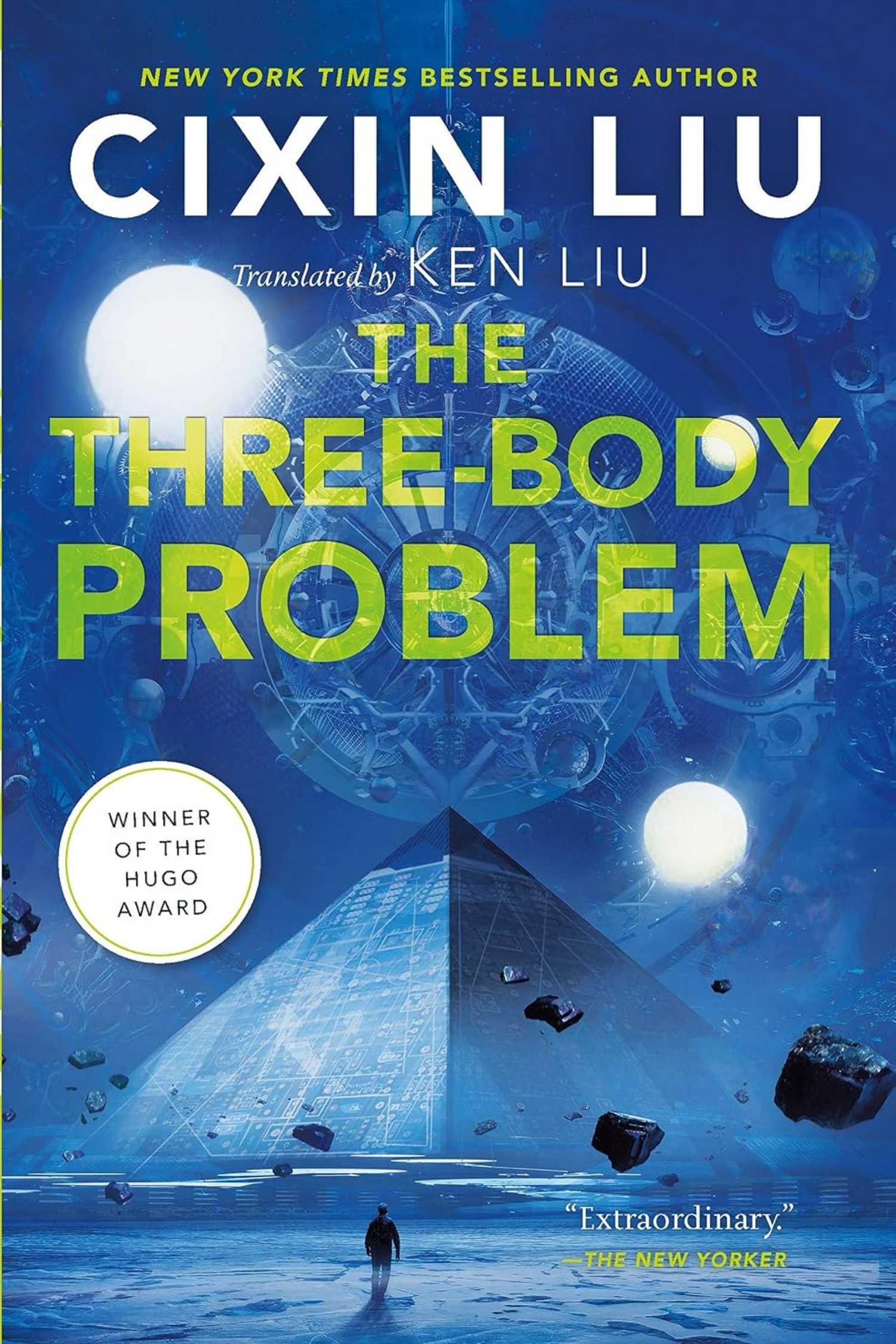
For many fictional galactic empires, destroying a solar system would be a defining historical event. In Death’s End, the third novel in Cixin Liu’s Remembrance of Earth’s Past trilogy, the society represented by the alien named Singer makes it resemble an ordinary work assignment. Singer occupies a minor position within a much larger cosmic struggle, yet has access to technology capable of erasing inhabited systems. That mismatch between personal importance and destructive authority is devastating, and gives a glimpse of just how powerful this hidden galactic empire truly is. Humanity’s survival depends on whether a distant functionary evaluates it as dangerous and worthy of disposal.
The dual-vector foil, an intergalactic superweapon the size of a credit card, embodies the horror of Cixin Liu’s fictional space empire’s technological reach. It initiates the collapse of three-dimensional space into two dimensions, causing mass destruction using structure of reality itself. More frightening still, dimensional warfare belongs to a wider history of civilizations degrading the universe in pursuit of survival. Liu reveals relatively little about Singer’s people, and that restraint works brilliantly. Their society feels enormous because its routine activities exceed humanity’s wildest military ambitions. The glimpse suggests an imperial power whose extraordinary intelligence has made the extermination of entire species efficient to the point that it’s a simple exercise in bureaucracy.
You can purchase The Three Body Problem, the first novel in Cixin Liu’s Remembrance Of Earth’s Past trilogy, here.
The Firstborn
Arthur C. Clarke’s Space Odyssey Series (1968-1997)

The black monoliths from the Space Odyssey novels are among sci-fi’s most recognizable artifacts, but they are among the most modest creations of the vast galactic empire that created them (1968-1997). Arthur C. Clarke’s Firstborn have progressed beyond biological bodies and machine vessels, becoming beings able to preserve thought within the structure of space. Their surviving devices like the monoliths continue experiments begun in the distant past, observing and influencing younger species across unfathomable stretches of time. Their civilization’s reach goes far beyond concepts like distance or the number of planets under their control. Their power is exerted through machinery capable of shaping evolutionary history while its makers have moved beyond any familiar form of life.
Their intervention in 1982’s 2010: Odyssey Two, the second book in the Space Odyssey series, is the perfect demonstration of just how powerful they truly are. In the novel, the Firstborn literally transform Jupiter into a star, demonstrating that almost nothing in the universe is beyond their ability to manipulate and change according to their mysterious designs. This is a key reason they’re fascinating. They have godlike power and have positioned themselves as the stewards of the galaxy, but their ultimate goals are forever unknown.
You can purchase 2001: A Space Odyssey, the first book in Arthur C. Clarke's Space Odyssey series, here.
The Xeelee
Stephen Baxter’s Xeelee Sequence (1991-2018)
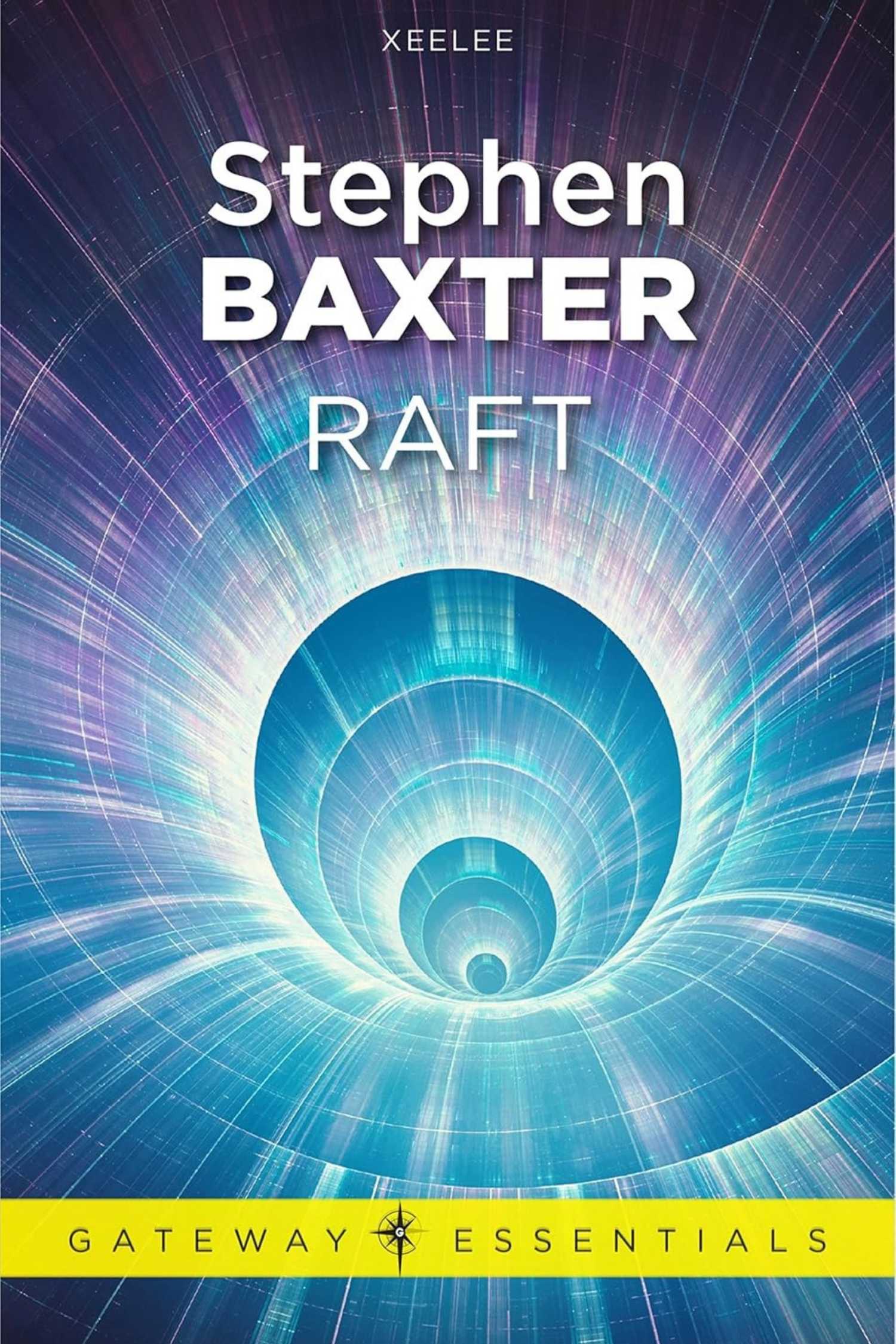
The chronology of the Xeelee makes the timelines of even the most long-lived galactic empires in literary sci-fi seem brief. Their activities reach back into the early universe, and time travel allows them to intervene in their own development. Author Stephen Baxter created a civilization for his Xeelee Sequence novels whose scale makes stellar engineering projects and conflicts that last for millions of years everyday practical concerns. It’s a level of universal power humanity simply isn’t ready to handle when the Xeelee are first encountered, and this disparity is key to why they’re so entertaining to read about. A war that consumes human civilization is, for the Xeelee, little more than a nuisance.
The Xeelee’s defining technological achievement, the Ring, gives that scale purpose. Constructed using cosmic strings, the Ring creates an escape route into other universes as the Xeelee face the photino birds, dark-matter life whose activities threaten the fabric of existence. Their supreme engineering projects may be jaw-dropping, but the reason for their construction make it clear that even an empire as advanced as the Xeelee isn’t without threats. It’s a creative sci-fi masterstroke from Stephen Baxter, as he’s created a near-omnipotent galactic empire that still has limitations. The Xeelee can manipulate spacetime and undertake construction on almost unimaginable scales, yet survival still requires ingenuity and sacrifice.
You can purchase Raft, the first novel in Stephen Bacter's Xeelee Sequence series, here.
The Downstreamers
Stephen Baxter’s Manifold Trilogy (1999-2002)

Conventional galactic conquest becomes almost irrelevant when a civilization can influence the existence of universes. The Downstreamers, humanity’s extraordinarily distant descendants in Stephen Baxter’s Manifold trilogy, operate on that scale, outshining even the author's Xeelee civilzation. Rather than invading distant planets or solar systems, the Downstreamers focus themselves on conquering their own history. While this is already an intriguing concept, the purpose of the Downstreamers efforts are even more fascinating.
This sci-fi empire has reached such an advanced stage that they’re now actively confronting the apparent limits imposed on life by the laws of physics. Stephen Baxter uses the Downstreamers to explore the possibility that intelligence might help bring about multiple realities and escape the limitations of existing within a single universe. They’re not a collection of unbeatable weapons or insurmountable military might to be fought against, but something akin to a force of nature. Few galactic empires in sci-fi novels operate at this kind of scale, or make humanity’s possible future feel so profoundly removed from its beginnings.
You can purchase Time, the first novel in Stephen Baxter's Manifold trilogy, here.
KioskNews shows a cleaned-up reading view extracted from the publisher’s page — the original always lives on their site, not ours.