Sheikh Hasina Alleges Rising Attacks On Minorities In Bangladesh, Calls For Harmony
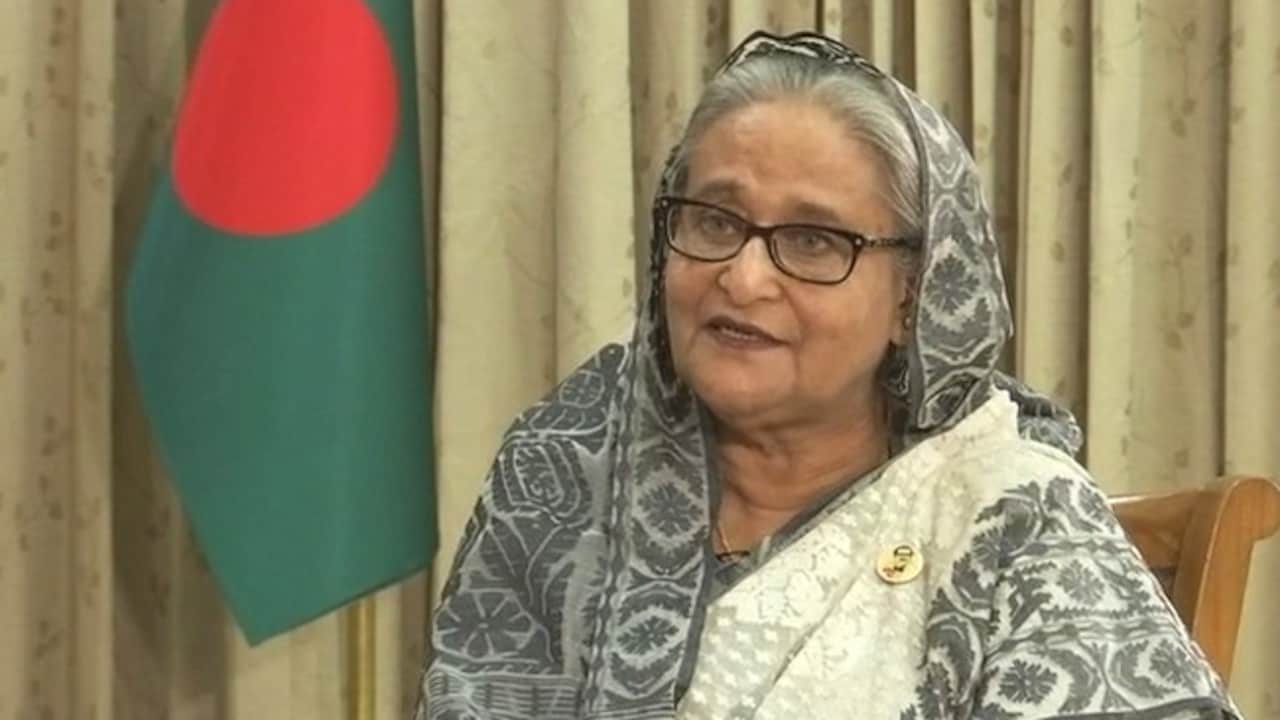
Former Bangladesh prime minister Sheikh Hasina has alleged that religious minorities in Bangladesh are facing growing insecurity and accused authorities of allowing a climate of impunity and political repression to persist.
In a message marking Sharadiya Durgotsav, Hasina, who was ousted as prime minister and is living in exile in New Delhi, said Hindu communities and other religious and ethnic minorities are living in fear in Bangladesh. She cited alleged killings, attacks on temples and homes, vandalism of idols, property seizures, extortion, violence against women and intimidation to bolster her point.
Hasina, who is the chief of the Awami League, called on leaders from her party, activists, supporters and citizens committed to the secular ideals of Bangladesh's Liberation War to stand alongside Hindu communities, protect communal harmony and resist provocation.
"Religion belongs to each individual, but festivals belong to all," Hasina said, reiterating her longstanding argument that Bangladesh's identity should be rooted in religious equality, human dignity and the freedom to practise one's faith.
Hasina said the insecurity experienced by minorities had intensified since August 5, 2024, when Bangladesh underwent a major political transition that led to the end of her government's tenure.
She also connected the alleged attacks on minorities with what she described as a systematic campaign against the Awami League. According to her message, party offices were vandalised, looted and set on fire, while the homes, businesses, agricultural land, livestock and other assets of party leaders and activists were targeted.
Hasina accused the interim administration led by Muhammad Yunus, which succeeded her, of allowing perpetrators of violence to escape accountability while pursuing politically motivated cases against Awami League members. She alleged that political repression and a culture of fear had continued under subsequent political arrangements as well.
These assertions were made in Hasina's message and were not independently substantiated. The statement did not include responses from the authorities or other parties named in her allegations.
Individual Cases
To underline her concerns over justice and minority protection, Hasina referred to several cases involving members of Bangladesh's Hindu community.
She questioned the handling of the killings of Ganapati Chakraborty, whom she described as a respected teacher from Rangpur, and Dipu Chandra Das of Bhaluka. She alleged that the investigation into Chakraborty's murder had lacked credibility and criticised the reported granting of bail to accused in the Das case.
Hasina also highlighted the case of Chinmoy Prabhu, a Hindu religious figure who, she said, had been detained on false charges and was permitted only five hours of parole to perform his mother's funeral rites. She described the episode as emblematic of the distress experienced by members of the Sanatan faith in Bangladesh.
Hasina sought to contrast the current situation, as she described it, with the commitments made by her Awami League government. She said the party had consistently supported non-communal politics and sought to ensure that people of all faiths could participate in public life with equal dignity.
She pointed to the Awami League's 2024 election manifesto, which promised the establishment of a National Minority Commission and the enactment of a Minority Protection Act. The proposed measures were intended to safeguard the lives, property, places of worship and dignity of religious and ethnic minorities, she said.
Appeals For Harmony
Hasina's message also carried an appeal for solidarity across religious communities. She urged Hindus not to feel isolated, insisting that Bangladesh belonged equally to citizens of every faith.
She invoked the ideals of Bangladesh's 1971 Liberation War and the secular vision associated with the country's founding leader, Sheikh Mujibur Rahman, arguing that religious identity should never determine a citizen's security, dignity or rights.
"The country belongs to all of us," was the central theme of her message, which called for a Bangladesh where religious festivals could be celebrated without fear and where the state guaranteed equal protection to every citizen.
Hasina concluded by wishing peace, well-being and prosperity to people across Bangladesh, particularly followers of the Sanatan faith celebrating Durgotsav.
KioskNews shows a cleaned-up reading view extracted from the publisher’s page — the original always lives on their site, not ours.