Ruto Targets 20pc Manufacturing Contribution to GDP by 2030, One Million Jobs
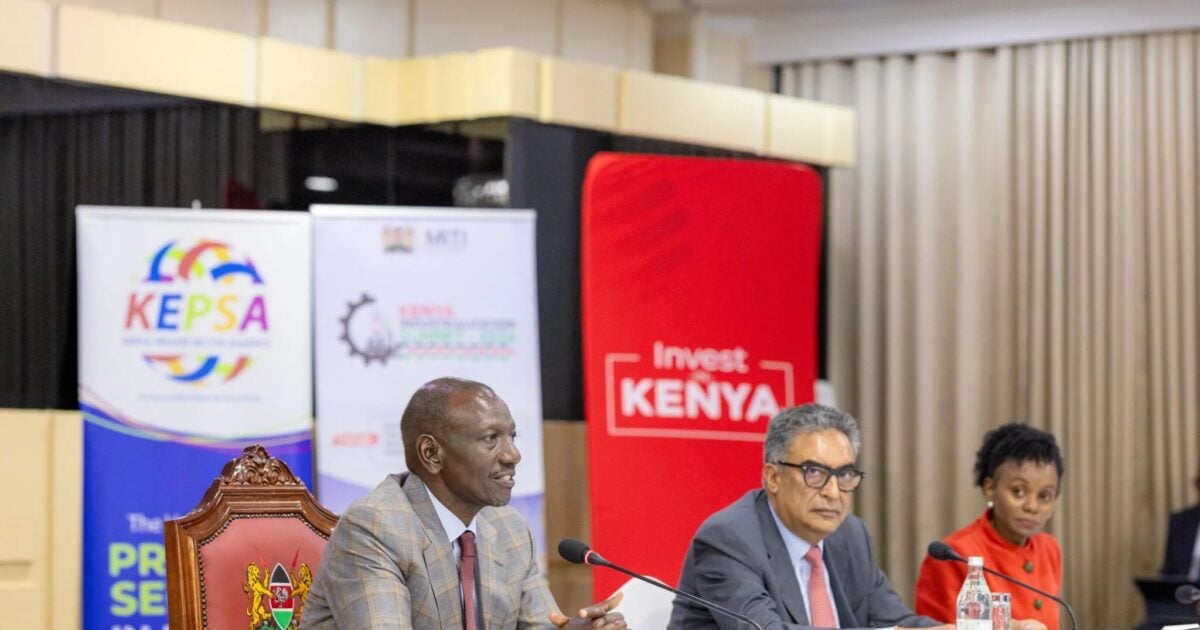
NAIROBI, Kenya, Nov 5 — President William Ruto has renewed his administration’s commitment to increase manufacturing’s contribution to Kenya’s Gross Domestic Product (GDP) to 20 per cent by 2030, targeting the creation of one million jobs through expanded local production and value addition.
Speaking at the Industrialisation Summit and Changamka Shopping Festival at the Kenyatta International Convention Centre (KICC) on Wednesday, Ruto said Kenya’s economic prosperity would depend on its ability to produce, process and export competitive goods rather than rely heavily on imported finished products.
He urged Kenyans to prioritise locally manufactured goods, saying increased domestic consumption would strengthen businesses, create employment and retain wealth within the economy.
“When we Buy Kenya, we Build Kenya,” he said, adding that every locally manufactured product creates opportunities for businesses, farmers and workers.
The President said his administration was pursuing reforms to transform Kenya from an exporter of raw materials into a producer of finished and value-added products capable of competing in regional and international markets.
However, he acknowledged that progress remained below expectations, with manufacturing growing by only 2 per cent in 2025 against overall economic growth of 4.6 per cent.
Manufacturing contributed 7.1 per cent to GDP in 2025, underscoring the scale of the transformation required to achieve the 2030 target.
“These figures remind us that the industrial transformation we seek must move faster,” he said.
Ruto identified the Affordable Housing Programme as a major driver of domestic manufacturing, saying it had created significant demand for locally produced construction materials.
He said 303,910 housing units were at various stages of completion across the 47 counties, generating markets for cement, steel, glass, tiles, timber, doors, windows and other construction products.
According to the President, 97 per cent of materials used in the programme are sourced locally, while Jua Kali artisans have secured contracts worth Sh61 billion.
“Previously, you could not talk about billions and Jua Kali in the same sentence,” he said, describing the programme as an example of how housing development could support industrial expansion.
The President also announced that the Government was in the final stages of establishing an Industrialisation Fund that would provide manufacturers with affordable credit at single-digit interest rates.
He said the facility would enable businesses to expand production, acquire modern technology and improve their competitiveness.
Through the Hustler Fund, Ruto said Sh98 billion had been advanced to small businesses without conventional collateral, with another Sh5 billion expected to be disbursed by the end of the year.
A further Sh10 billion has been provided through concessionary enterprise financing since July 2023.
The President cited reforms in the sugar industry, including the write-off of Sh117 billion in debts owed by State-owned sugar mills, enactment of the Sugar Act, restoration of the Kenya Sugar Board and leasing of four mills to private operators.
He said the interventions had enabled Kenya to exit the Common Market for Eastern and Southern Africa (COMESA) sugar safeguards after 24 years.
Cane deliveries increased by 36 per cent to 4.93 million tonnes in the first half of 2026, while sugar production reached a record 437,852 tonnes during the same period.
In the coffee sector, Ruto said the Coffee Cherry Advance Revolving Fund had advanced Sh15.07 billion to 684,000 farmers.
He added that earnings from unroasted coffee exports had increased to Sh52.1 billion in 2025, compared with Sh26.1 billion in 2021.
Ruto said industrialisation must be accompanied by investment in technical skills and stronger partnerships between training institutions and manufacturers.
He announced that the Government planned to provide 50,000 internship opportunities beginning January 2027 and challenged the private sector to offer an additional 50,000, bringing the target to 100,000 placements.
Companies that recruit interns and pay them stipends will be allowed to offset the expenses against their tax obligations, he said.
The President also announced a programme to train 600,000 young people, with plans to progressively increase the number to one million, to enable them to participate in Government procurement opportunities under the Access to Government Procurement Opportunities (AGPO) programme.
The initiative will provide virtual training at Government expense, alongside support in business registration and enterprise development.
AGPO reserves 30 per cent of Government procurement opportunities for youth, women and persons with disabilities, with the annual allocation estimated at KSh230 billion.
Beyond the domestic market, the President challenged Kenyan manufacturers to expand into regional and international markets to take advantage of growing trade opportunities.
“Do not think only of Nairobi. Think Kampala. Think Kigali. Think Kinshasa. Think Cairo,” he told manufacturers.
He also pointed to improvements in the country’s economic environment, citing the stability of the shilling, foreign exchange reserves and reductions in interest rates following 10 consecutive cuts to the Central Bank Rate.
Ruto said the value of companies listed on the Nairobi Securities Exchange had risen from Sh1.9 trillion at the end of 2024 to more than Sh4 trillion.
Foreign direct investment had also more than doubled from $1.5 billion in 2022 to $3.2 billion in 2025, he added.
Investment, Trade and Industry Cabinet Secretary Lee Kinyanjui, Kenya Association of Manufacturers Chairman Hitech Mediratta and Council of Governors Chair Muthomi Njuki attended the summit alongside Principal Secretaries, manufacturers and investors.
Kinyanjui urged businesses to embrace value addition, warning that importing products that could be manufactured locally amounted to exporting employment opportunities.
“When we import what we can produce, we are exporting jobs,” he said.
He noted that Ruto had visited 10 countries in one year to secure markets for Kenyan products.
Mediratta said the summit demonstrated the capacity and innovation of local manufacturers and micro, small and medium enterprises (MSMEs).
He observed that a percentage increase in industrial output generated an additional Sh65 billion in revenue, underscoring manufacturing’s contribution to economic growth.
“No country can attain lasting economic prosperity without a sound industrial base,” he said.
Governor Njuki said county governments were also playing their part in supporting the country’s industrialisation agenda.
KioskNews shows a cleaned-up reading view extracted from the publisher’s page — the original always lives on their site, not ours.