Companies with highest number of train cancellations during summer heat revealed
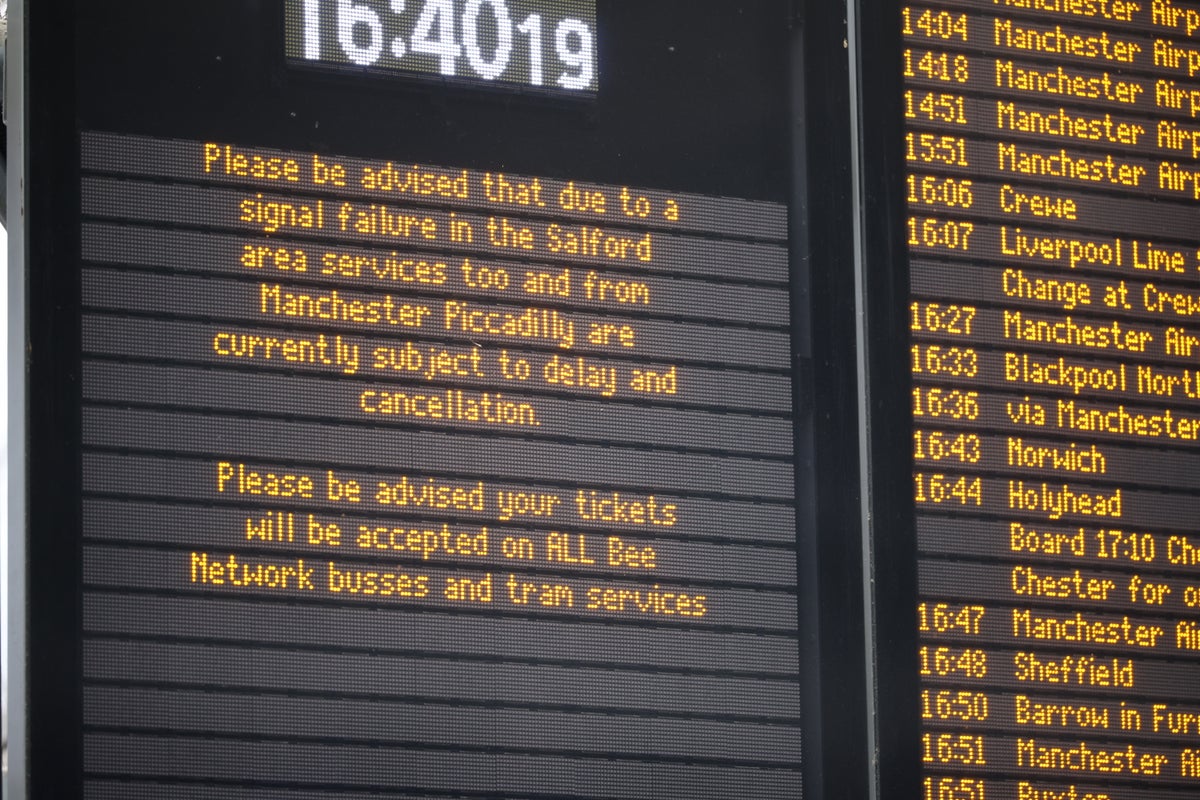
Train delays saw a major spike over the summer, new figures show, as the operators with the highest number of cancellations are revealed.
The number of planned journeys cancelled between April and June this year rose to 102,667 – a rate of 4.1 per cent. This was up from more than 80,000 cancellations (3.2 per cent) the three months prior, according to the latest data from the Office of Rail and Road (ORR).
Officials said record-breaking weather conditions played a key role in disrupting the network during the period. Sustained heatwaves and dry conditions caused faults to arise with rail tracks and overhead power lines along several key routes.
It is likely that delays for the next quarter will show an even steeper rise, with heatwave conditions continuing into July and August.
Two trains derailed in August within a 24-hour window – in Lewes and Wickford – with preliminary investigations identifying the high heat as a leading cause.
Anit Chandarana, group director of system operator at Network Rail, said: “This was an extremely challenging summer for the railway, as it was for large sections of society at home and abroad, and we are sorry we were not able to provide passengers with the level of service we would have liked to.
“The prolonged period of exceptional heat and dry weather placed significant pressure on tracks and trains. That does not diminish the experience of our passengers, and we recognise that there is work for us to do.”
The rail manager added it continues with a £2.6bn programme of works to improve climate resilience in expectation of more extreme weather in the future.
Among individual operators, CrossCountry had the highest rate of cancellations at 8 per cent – double the Great Britain average. This was followed by Avanti West Coast, at 7.1 per cent.
Nine other operators recorded rates above the national average, and just six recorded rates below.
Nick Westcott, CrossCountry's service delivery director, said: “We're sorry to customers who experienced poor performance on CrossCountry journeys between April and June.
“This was a challenging period for the railway, with extreme weather affecting fleet reliability and infrastructure, alongside a number of wider network incidents. Together, these factors led to higher levels of disruption and affected our ability to deliver the reliable service customers expect and deserve.
“We're not satisfied with where we are and know there is more to do. We're focused on improving reliability through increased train availability, tackling train crew availability challenges and continuing the refurbishment of our entire fleet.”
An Avanti West Coast spokesperson said: “Between April and June 2026, over two thirds of delays and over 70 per cent of our cancelled services were a result of issues relating to infrastructure, including two significant overhead line failures which disrupted services for several days, or external events such as trespass and a vehicle striking a bridge.
“We recognise more needs to be done to improve our performance and we’re working closely with industry partners, including Network Rail, to make sure our operation runs better, day in, day out and our customers get the reliable service they deserve.”
A Department for Transport spokesperson said: “When looking at the full year, the proportion of cancelled train services remains stable at 3.9 per cent.
“However, we recognise this summer's extreme heat, alongside other seasonal pressures, has caused frustrating delays and disruption for passengers, which is why we are investing £2.6 billion through Network Rail to increase weather resilience.
“We are determined to build a railway that finally works for the public, and we're already delivering this, taking back control by bringing train operators into public ownership as we set up Great British Railways.”
KioskNews shows a cleaned-up reading view extracted from the publisher’s page — the original always lives on their site, not ours.