"It Was A Good Investment": Zhibek Kulambayeva Backs Kazakhstan's Bold Tennis Policy
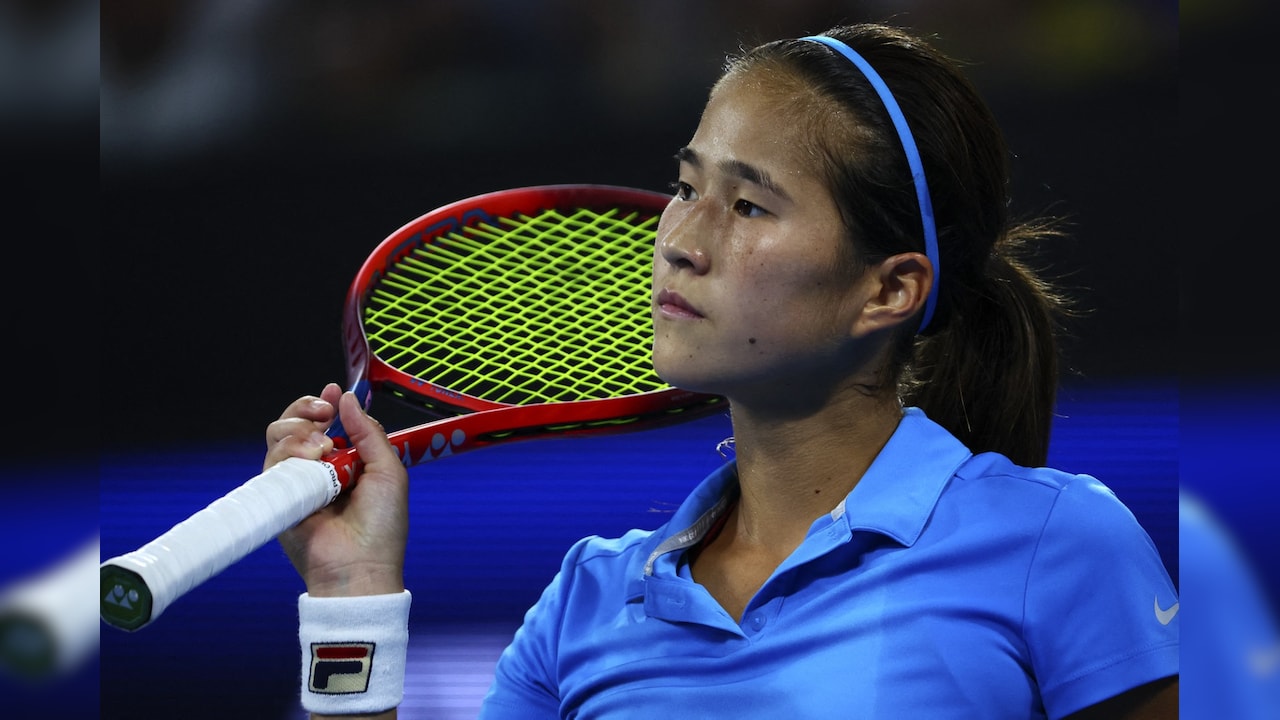
Kazakhstan's decision to support players from outside the country, including Elena Rybakina and Alexander Bublik, has proven to be a successful investment that has helped put tennis on the map and inspired a new generation of players, believes Zhibek Kulambayeva. Rybakina, who became the first player representing Kazakhstan to reach the world No.1 ranking in September, and Bublik, a former top-10 player, have emerged as the country's biggest tennis stars despite being born in Russia. Kulambayeva, a regular visitor to India for tournaments who is currently competing at the Chennai Open, believes their success has helped create a stronger tennis culture back home, even if players from her generation have not necessarily felt a direct impact.
"It's tough to say because they are completely different from my generation. But mostly for the kids, because for sure they have more motivation," Kulambayeva said in an interview with PTI.
"In Kazakhstan, the courts are fully booked. And it's always the kids, not the amateurs. So it's really nice to see."
Asked whether Kazakhstan's policy of supporting players born elsewhere and allowing them to represent the country had been a successful strategy, Kulambayeva was unequivocal.
"I think it is a good idea. Especially in the beginning of building the federation in Kazakhstan, it was necessary because there weren't many top Kazakh players, and they had to put tennis on the map in Kazakhstan. It was a good investment," she said.
"Especially with Yulia Putintseva. She's been a top player for such a long time. And with Rybakina, she's world No. 1 now. So it was a really good investment. Same with Bublik."
Rybakina, born in Moscow, switched allegiance to Kazakhstan in 2018, while Bublik, born in Gatchina, Russia, began representing Kazakhstan in 2016.
Rybakina's rise has been historic. She won the 2026 US Open and became the first player representing Kazakhstan to finish a season as world No. 1.
Kulambayeva, however, believes the biggest beneficiaries of the success of these established stars are the youngsters coming through the system, who now have visible role models to aspire to.
The world No. 95 in doubles, who has a career-best singles ranking of 292, has built much of her career on the lower-tier circuits and enjoys competing in both singles and doubles.
She admitted that while her results have been stronger in doubles, she is not yet ready to choose between the two disciplines.
"I like to play both. I have better results in doubles. In singles, I still enjoy it and I still can compete. We'll see how it goes," she said.
Kulambayeva also spoke warmly about India, where she has competed regularly over the years.
Familiarity with the weather, food and playing conditions, as well as the opportunity to explore different cities, keeps bringing her back.
"I have, in general, not bad results in India. I'm already used to the weather, the food and the conditions. I like the place, I like the people here. Every city is a bit different, so it's always nice to explore different cities in the country," she said.
Her latest Chennai campaign featured an unusual sequence of matches against Mei Yamaguchi, first in qualifying and then again in the main draw after the Japanese player entered as a lucky loser. Kulambayeva won both encounters.
She admitted that facing the same opponent again immediately after a closely fought qualifying contest left her uncertain about what to expect.
"I didn't really know if it was a good thing or a bad thing. I won, but it was a very close match. It could have gone either way," she said.
Kulambayeva explained that Chennai's slower courts helped her counter Yamaguchi's aggressive style in the main draw.
"She was trying to finish the points earlier because she didn't want to play long rallies. For me, it was the opposite. I had to try to make the rallies longer. Especially here, the courts are pretty slow, so I think that helped me as well," she said.
Her campaign eventually ended with a 6-4, 4-6, 5-7 second-round defeat to Japan's Mai Hontama.
Having taken up tennis because her parents wanted her to play a sport, Kulambayeva said the game has become a major part of her identity and taught her the value of perseverance.
"If you want something, you have to work for it. Nothing will come easily," she said, adding that tennis has also helped her develop decision-making skills and understand herself better.
While she has not given up on her childhood dream of reaching the very top, Kulambayeva said experience has made her more realistic when setting goals.
"Every kid will answer, 'I want to be number one.' But as you play, you understand there aren't many people who can actually do that. Then you try to be more aware of where you can realistically go instead of just dreaming randomly," she said.
"I'm not really there yet, but I think I'm getting closer. Step by step, ranking-wise, I just try to improve every few months."
(Except for the headline, this story has not been edited by NDTV staff and is published from a syndicated feed.)
Featured Video Of The Day
Spain Vs Argentina | Dani Olmo On WC Triumph: 'Wanted To Set An Example For The Next Generation'
KioskNews shows a cleaned-up reading view extracted from the publisher’s page — the original always lives on their site, not ours.