Chinese ‘black-hole’ purifier catches tumour cells in blood to stop cancer spread
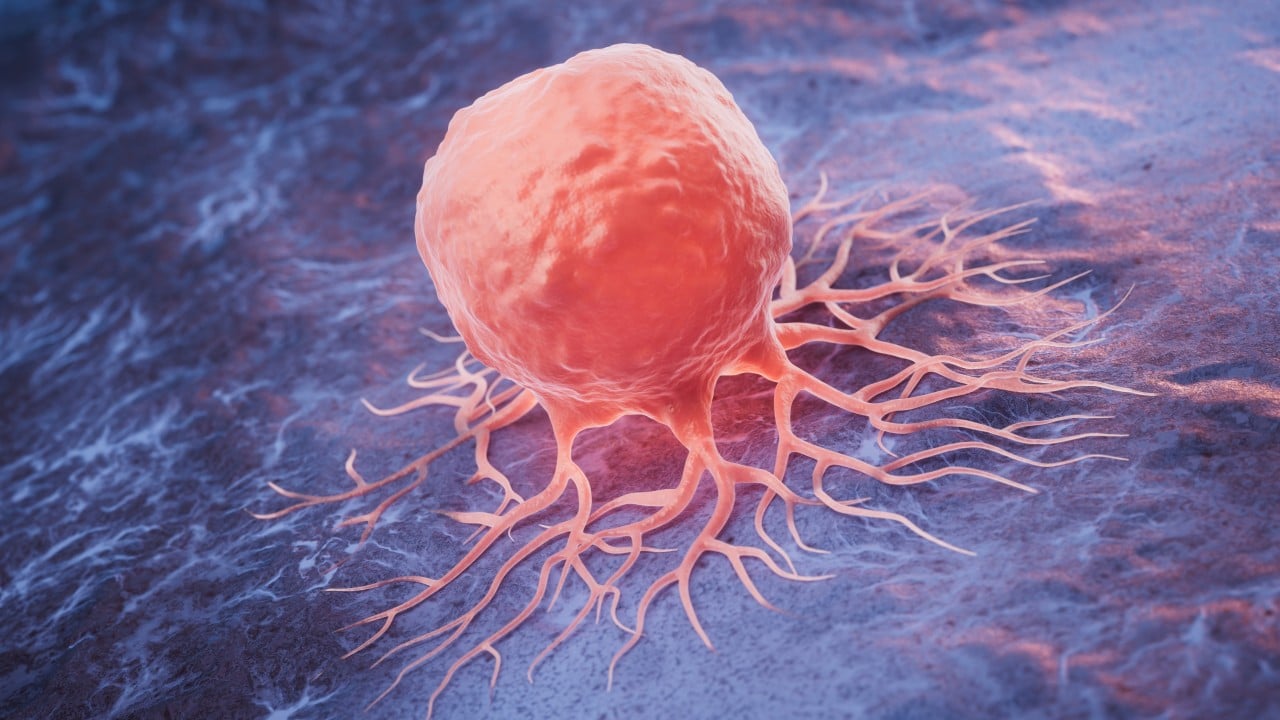
Chinese scientists have developed a first-of-its-kind purifier capable of removing breakaway tumour cells that circulate through the bloodstream, potentially preventing the recurrence and spread of some cancers.
The Shanghai Jiao Tong University-led team said the proof-of-concept platform could lower the risk of metastasis – the leading cause of cancer-related deaths worldwide – in a peer-reviewed research paper published on November 2.
When tested in mouse models of breast cancer, the device effectively removed the breakaway cells, delaying tumour relapse and extending survival, according to the paper in the journal Microsystems & Nanoengineering, part of the Nature portfolio.
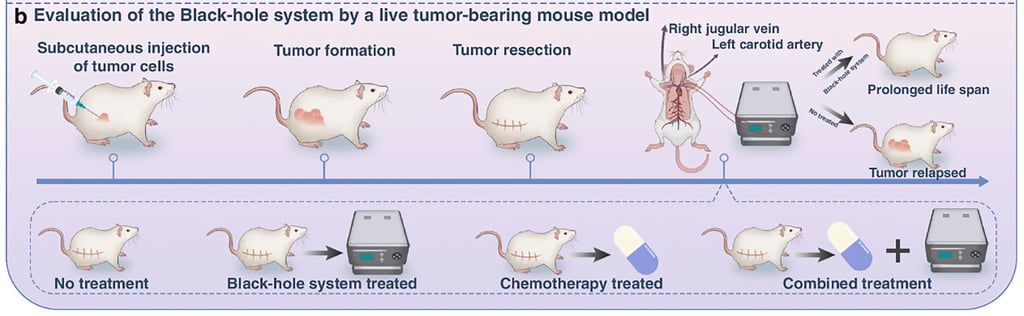
Half the mice that received purification treatment alongside chemotherapy after tumour-removal surgery survived through the study period, compared with a fifth of those given just one of the therapies and none of the mice that received no additional therapy, it said.
The researchers said they expected the “black-hole system” to become a safe and effective additional therapy for post-operative cancer management, where metastasis accounts for more than 90 per cent of cancer-related deaths.
A “pivotal element” in the metastatic process is the spread of circulating tumour cells after they break away from either the primary site or a secondary lesion formed by the spread of cancer cells to a distant tissue.
These cells are currently used in liquid biopsies to measure the progress and treatment of certain cancers by tracking them as they flow through the blood.
Various strategies have been explored to eliminate them, including photodynamic therapy, nanomaterial tagging coupled with thermal ablation and cell capture using 3D scaffolds or intravenous catheters.
The researchers noted that practical hurdles still needed to be addressed in all these methods, such as low capture efficiency, biosafety concerns and the risk of damaging healthy blood cells.
Inspired by blood purification methods, the team designed a system that uses a pump to draw blood from the left carotid artery and move it through an external microfluidic reservoir – the “black hole” – engineered to selectively trap circulating tumour cells.
After the blood passes through the reservoir, it returns to the body through the right jugular vein. Tumour cells are captured using antibodies that target EpCAM, a surface protein widely expressed on cancer cells but absent in normal blood components.
“This system enables real-time in vivo detection and removal of circulating tumour cells from peripheral circulation and holds significant promise as an adjuvant therapy to enhance the efficacy of post-surgical chemotherapy,” the team said.
The researchers used several experiments to evaluate the proof-of-concept system, including a closed-loop circulation model, according to the paper.
When human breast cancer cells were introduced to the reservoir, it achieved a capture efficiency above 99 per cent at a low flow rate, which remained at around 95 per cent when the speed was increased to 1.2ml per hour.
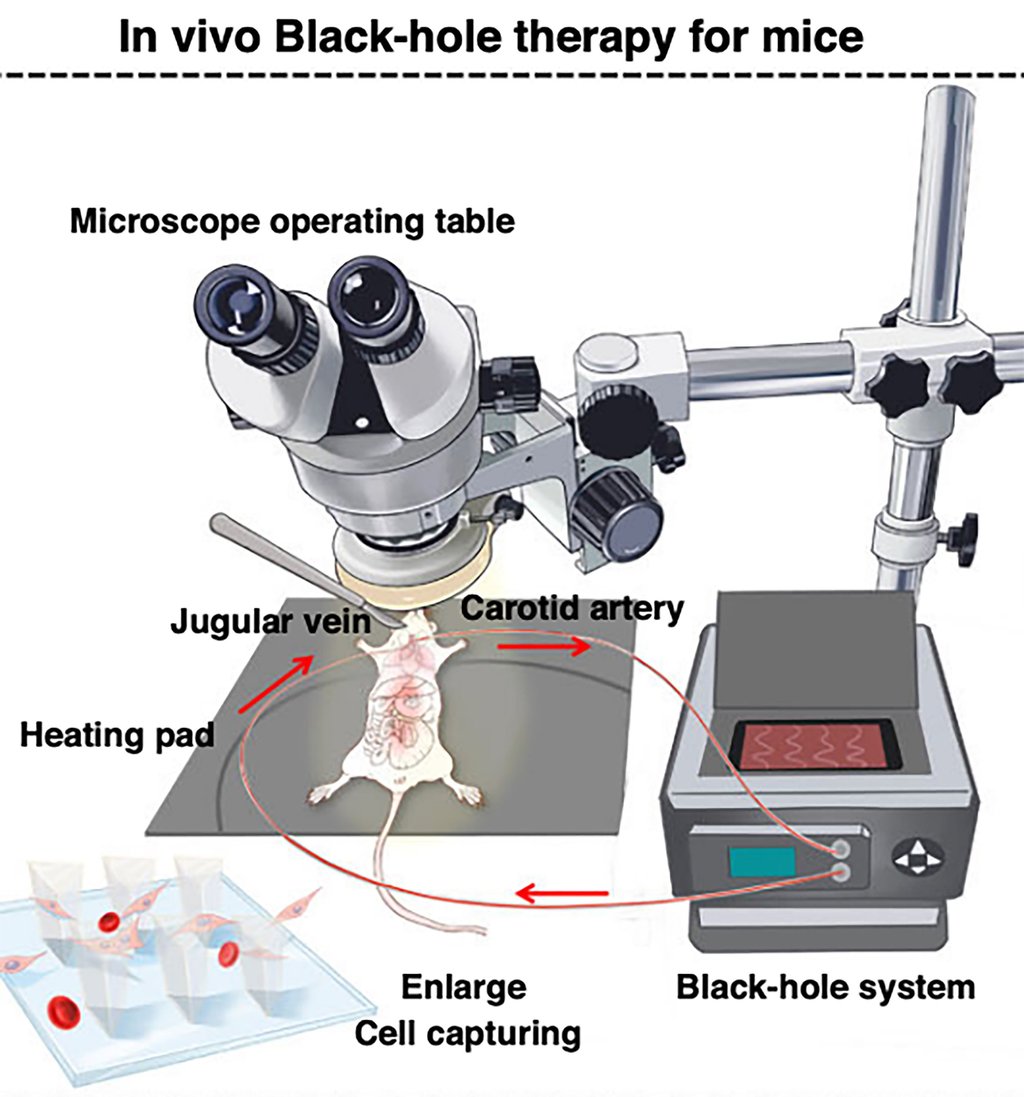
The team chose this speed to balance capture efficiency and the time needed to complete the procedure, with the intention of reducing stress on the animals that would be used in subsequent testing, the paper said.
The researchers also tested capture efficiency for multiple cancer cell lines that expressed the same surface protein, including human lung and prostate cancer.
Moving to live animal models, the researchers tested the system in mice with breast tumours. Once circulating tumour cells were detected in their peripheral blood, the team surgically removed the tumours.
The mice were then divided into four groups. One received no additional post-operative therapy, a second was given chemotherapy alone, another received only the black-hole system treatment, and both therapies were delivered to the final group.
According to the paper, the combined treatment had the highest efficacy over a four-week monitoring window, achieving a 50 per cent survival rate and 16.7 per cent reduction in overall tumour recurrence.
All mice in the untreated group died, while each of the single-therapy groups had a 20 per cent survival rate by day 28. Later analysis found no overt toxicity present in the organs of the mice, suggesting the system was biocompatible, it said.
“Overall, these results suggested that the black-hole system, particularly in [combination] with paclitaxel, effectively delays tumour recurrence, suppresses metastasis and prolongs survival in a post-operative breast cancer model,” the team wrote.
According to the researchers, the system has broad applicability across cell lines expressing EpCAM, including breast, lung, colon and gastric cancers. The reservoir could also be modified to capture other cell membrane protein markers, they said.
01:58
Filipino Catholics pray for Pope Leo’s recovery after lung cancer surgery
The team noted that the study “should be viewed primarily as a proof-of-concept investigation”, with challenges that needed to be addressed before the system would be ready to move to clinical application.
These included scaling up of the system to process larger volumes of blood at higher flow rates for human patients, as well as enabling multiple cancer cell elimination sessions rather than the single sessions given to each mouse in the study.
The researchers said they were currently working to extend their experiments into larger rat models.
“Future studies will focus on the optimisation of the black-hole system for repeated use, assessment of long-term safety and performance in larger animal models, and evaluation of its applicability across a broader spectrum of cancer types,” they said.
“Further engineering optimisation and larger-scale validation will be required before the clinical feasibility and cost-effectiveness of this strategy can be fully determined.”
Passionate about science? Dive deeper with the Dark Matters newsletter, a weekly in-depth analysis on China’s rise in science, technology and military that goes beneath the surface. Sign up for free now.
KioskNews shows a cleaned-up reading view extracted from the publisher’s page — the original always lives on their site, not ours.