LOCAL ELECTIONS 2026: Mashaba set for Joburg mayoralty as ANC, ActionSA, MK and EFF seal metro pact
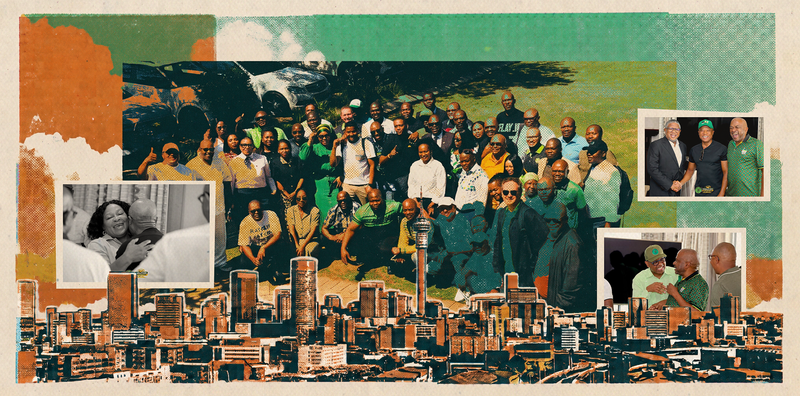
Herman Mashaba is likely to be inaugurated as Johannesburg mayor this week, marking the headline prize of the metro coalition negotiations.
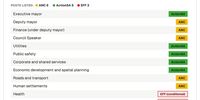
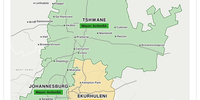
A so-called quad of parties – the ANC, ActionSA, uMkhonto Wesizwe (MK) and the EFF – will form the core of metro governments in Johannesburg, Tshwane and Ekurhuleni. This will usher in anti-migrant and populist governments in the metros. Other than Mashaba’s leadership, it could also leave the status quo government in Johannesburg in place. The ANC wants to retain the finance portfolio — to be held by a deputy mayor — as well as the infrastructure role.
The city is beset by three concurrent crises: water, electricity and waste management. Level 2 water restrictions were imposed at the weekend. A status quo arrangement won’t quickly stem these crises.
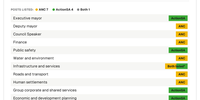
In addition, Daily Maverick has learnt that MK has offered the ANC a sweet deal to co-govern eThekwini in return for support for it to govern the province. MK won the most votes there in 2024, but the ANC, DA and the IFP formed a government with the National Freedom Party, which has a single seat. The ANC’s task team convenor in KZN, Mike Mabuyakhulu, has been sidelined from the talks, as the Sunday World reported here. He supports retaining an ANC, DA and IFP coalition model in eThekwini.
The images at the top of the story show meetings of the quad party members in the past five days, along with smaller parties like the Patriotic Alliance, Rise Mzansi and the IFP, which are likely to be accommodated in the metro governments. A last-ditch effort by the DA to strike a coalition arrangement with ActionSA at the weekend went splat even as the blue party offered to give up the capital city’s mayoral job to Nasiphi Moya, the incumbent.
Mashaba posted on X that: “Their [the DA’s] offer doesn’t deserve a response.” The DA won the highest number of votes in Tshwane (34.37%), to ActionSA’s 22.07% and the ANC’s 20.22%.
The DA offered a broad coalition pact to the ANC on Friday, 20 November, but it has not been accepted. In the revised offer, the DA proposed confidence-and-supply agreements under which one party would hold the executive and the other the council positions, with both pledging to support budgets and refrain from using motions of no confidence to oust each other.
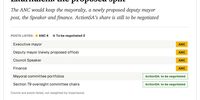
Asked if a change to the quad deal was likely when a special meeting of the ANC National Executive Committee (NEC) is held on Monday, a member of the body said a shift was unlikely:
“I think because no one wants to work with the DA – that’s where the problem is. The only discussion is on whether two mayors is too much.”
ActionSA has all the cards as kingmaker, and ANC coalition negotiators have provisionally agreed to give the party two mayoral roles – Johannesburg and Tshwane.
“I am disappointed in the talks. It’s just deal-making,” said the NEC member. He said substantive discussions on municipal reform had not formed part of the talks. “We worry that if you give a mayoral candidate in Tshwane and Johannesburg, come 2029, the ANC will be dead.”
The Sunday Times reported that roles had been divvied up across the three metros.
On the deal among the four parties with smaller parties making up the numbers, a Gauteng ANC member said: “It does look like that is where we are heading. The DA has been difficult to work with. If there has been any obstacle they could have put in place, they have [done so].
“They think they are the only ones who can govern – they don’t create space for competence elsewhere. Other political parties feel the same way. ActionSA is eating into our voter base and their electorate won’t be happy with them working with us,” said the person, explaining a secondary negotiating strategy.
Asked if it wasn’t a contradiction for the ANC to work with ActionSA when their views on migration are very different, the person said: “The electorate is becoming more xenophobic, [we found] in our door-to-door work. People said, ‘You guys [the ANC] are supporting foreigners. ActionSA has capitalised on people’s vulnerabilities.”
This person had supported the Government of National Unity partnership in 2024 but has shifted, signalling a broader trend in the ANC. The ANC will not support an ActionSA plan for a city-based immigration metro cops force.
ANC and MK kiss and make up
The coalition negotiation season has seen the ANC and MKP kiss and make up. The photographs show friendly meetings held all week, with the latest in Gauteng, led by ActionSA’s Funzi Ngobeni, MK negotiator Dali Mpofu, and the ANC Gauteng premier, Panyaza Lesufi. The group image shows Lesufi and MKP lead negotiator Duduzane Zuma at the centre.
“MKP is making a very good deal – [they are] willing to share the province and want to give us eThekwini. This is an impossible-to-refuse deal,” the person said.
At previous meetings, other ANC NEC members had raised how unstable MK is – party leader and former President Jacob Zuma leads like a strongman. He has shifted seven secretaries-general and also changed parliamentary and secretariat leadership several times.
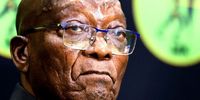
A senior ANC leader said: “We are dealing with MK [and believe] we should rather bring them in. It’s not about Zuma, it’s about the voter. The best thing is not to close anyone out.” The core of four parties negotiating crucial metro governments is also accommodating smaller parties to give the coalitions the character of governments of local unity and to make up numbers where their combined strength is still short of a majority.
The City of Johannesburg has given notice of the first council sitting to elect a Speaker on Monday, 23 November. The ANC wants the role of deputy mayor, but it has no candidate as the party did not win a proportional representation seat. Mashaba has said ActionSA may cede a seat to give the ANC’s Loyiso Masuku a position, but this raises a question of whether parties can do so. Weekend reports have also suggested that the MK mayoral candidate for Johannesburg, Bongani Baloyi, could become deputy mayor.
The kingmaker party
ActionSA will set the pace and form of governance in the Gauteng metros for the next five years. As kingmaker party, it can form and re-form governments using a lacuna in the law that would govern coalitions by instituting thresholds for representation (to limit the numbers of small parties) and make laws against destabilising motions of no confidence in mayors. Daily Maverick asked the party about a reform agenda for the three Gauteng cities, especially Johannesburg. The party answered via spokesperson Matthew George, who asked that the answers be understood in the party’s name.
Question: Will ActionSA make public the Gauteng coalition agreements once they are concluded?
Answer: Yes.
Q: I have read that ActionSA says service delivery aspects are more important than the division of positions. Which service delivery provisions does the party believe are most important?
A: ActionSA entered these coalition negotiations with the overriding objective to establish stable governments capable of restoring basic services and reversing the collapse of local government. This is precisely why we put forward clear principles of government and a programme of action in our engagements with other political parties, setting out what we believe must form the foundation of any coalition government serious about delivering for residents.
These proposals cover several critical priorities, including:
Infrastructure renewal and maintenance to stabilise basic services and address deteriorating municipal infrastructure.
Financial stabilisation to restore municipalities to sound financial health and ensure public funds are directed towards service delivery. Eradicating corruption and maladministration, including establishing dedicated forensic investigation capacity with sufficient independence to investigate wrongdoing.
Professionalising municipal administrations through comprehensive skills audits, merit-based appointments and a strict separation between party and state.
Strengthening law enforcement by expanding the capacity of metro police departments, establishing specialised units to tackle narcotics, cable theft and illegal immigration, and expanding municipal courts.
Inner-city and CBD rejuvenation, alongside dedicated investment facilitation units to attract investment and stimulate local economic activity.
Improving access to municipal healthcare through extended operating hours at municipal clinics.
Exploring the insourcing of designated municipal services, subject to feasibility studies.
Importantly, our engagements also paid particular attention to coalition partners developing a shared five-year plan from which municipal budgets, IDPs (integrated development plans) and KPIs (key performance indicators) can take their cue and against which residents can measure the government’s progress.
Q: Will ActionSA want to put in place new city managers or maintain the individuals in the three Gauteng metros? Civil society in Johannesburg wants to see a new city manager and wants this appointment process to be public. The position is the nerve centre of the metros, as you know.
A: The successful turnaround of Gauteng’s metros will depend on the calibre of professionals leading their administrations. We intend to ensure clear alignment between our ambitious turnaround agenda and senior municipal managers’ commitment to support and implement it.
ActionSA will work with our coalition partners to ensure this alignment exists and will pursue responsible interventions (like our comprehensive skills audit) to ensure our metros’ desperate need for good governance is matched by the political will and administrative capacity required to deliver it.
Q. Johannesburg is currently in the midst of three concurrent crises: water, electricity and debt, among others. What would be the coalition partners’ immediate plans to stem and manage these crises? Are you able to comment on your view of them?
A. At the time of responding to these questions, it would be premature for ActionSA to unilaterally communicate any plans on behalf of a coalition ahead of a formal announcement.
However, as outlined in our response to the earlier question, ActionSA's governance priorities, which guided our negotiations with all political parties, place urgent interventions to address these crises at the very heart of our proposed programme of action.
We have made every effort throughout these negotiations to communicate that any government we form part of must be committed to taking decisive action to stabilise Johannesburg’s finances, restore basic services, and address the infrastructure failures that have left residents without reliable water and electricity.
Q: Will the coalition retain the ANC regional executive committee members/leaders who are currently the chairpersons or deputy chairpersons of the three key entities: the Johannesburg Property Company, Pikitup and the Johannesburg Development Agency?
A: Again, ActionSA cannot comment on behalf of any coalition ahead of a formal announcement or pre-empt decisions that would need to be taken by an incoming administration.
However, this is an issue we recognise, and we can only reiterate the position we communicated throughout our election campaign in Johannesburg: where municipal entities add unnecessary bureaucracy without improving service delivery, we intend to reform, consolidate, or shut them down where legally and operationally appropriate.
Our approach to these entities will be guided by the need to improve performance, strengthen accountability, and ensure they serve residents’ interests rather than political parties.
Q: Generally, the entity boards are stacked with people who are linked in one way or another to political parties in the outgoing coalition. What will you do about this?
A: ActionSA can only reiterate our own position on the governance of municipal entities, which we made clear throughout our election campaign and reinforced in our coalition negotiations. In fact, our Johannesburg-specific proposals in the negotiations expressly call for an institutional review focused on integrating municipal-owned entities or business units into municipal departments.
This forms part of our broader commitment to ending the political patronage that has undermined the effectiveness of these entities and ensuring that appointments are based on merit, relevant expertise and the ability to deliver.
This is consistent with the principles of government we have put forward during coalition negotiations, which call for the professionalisation of municipal administrations and a clear separation between party and state. DM
KioskNews shows a cleaned-up reading view extracted from the publisher’s page — the original always lives on their site, not ours.