Singapore moves to accelerate healthcare innovations in push to be regional clinical research hub
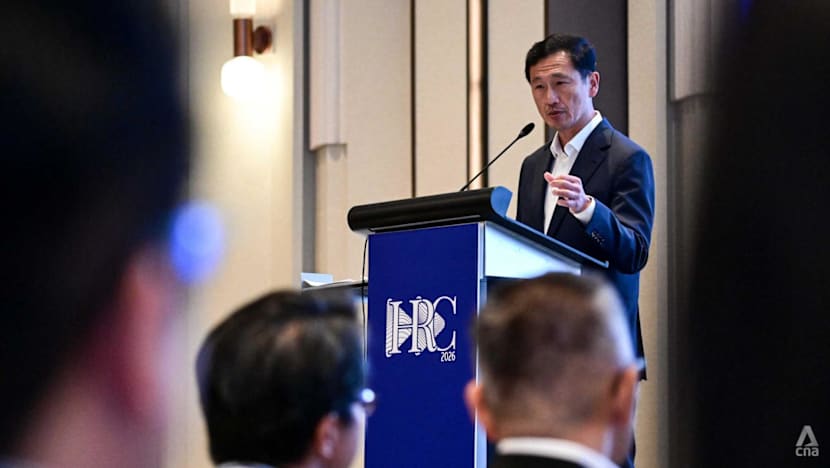
SINGAPORE: Singapore aims to become one of the most trusted and efficient places in the region for clinical research and evidence generation, said Minister for Health Ong Ye Kung on Monday (Oct 12) as he announced several moves to speed up regulatory processes for drug development and trials.
To this end, Mr Ong said the Health Sciences Authority’s (HSA) efforts will span the healthcare value chain, connecting areas such as clinical development, regulation, health technology assessment and patient access.
Among several moves, he announced a new HSA-Agency for Care Effectiveness (ACE) priority track that will allow selected health products to undergo regulatory evaluation and health technology assessment at the same time.
Another initiative involves a collaboration with the United Kingdom for a new "regulatory innovation corridor" to consider breakthrough therapies, including those that use artificial intelligence (AI) in drug development and clinical trials.
These initiatives, including HSA's plan to streamline regulatory review processes, could halve approval times for selected lower-risk Phase 3 clinical trials from 30 days to 15 days, as well as shorten the time for the first health technology assessment decision from about one year to between six and nine months after regulatory approval.
Mr Ong said that companies currently have to engage multiple government agencies as they move from research to clinical development, regulatory evaluation and patient access.
"Each hand-off can add time, cost and uncertainty. We want to simplify and streamline this journey, without compromising the independence or rigour of each regulatory process," he said.
Mr Ong, who is also Coordinating Minister for Social Policies, was speaking at the inaugural Health Regulatory Conference at the Grand Copthorne Waterfront Hotel Singapore, organised by the Ministry of Health (MOH) and HSA and supported by the Duke-NUS Centre of Regulatory Excellence.
He said HSA's regulatory approach is expanding across three boundaries – geographical, the healthcare value chain and across regulatory domains.
To strengthen Singapore's position as a globally trusted regulatory hub, HSA is forming deeper international partnerships and ensuring its regulatory framework is closely connected with international partners.
"Singapore, with all these efforts, is not simply a market of six million people. We can serve as a trusted gateway to markets encompassing hundreds of millions of people across other countries and regions," said Mr Ong.
Singapore is also working towards the World Health Organization’s (WHO) listed authority status for vaccines, HSA said in a press release.
This is the highest level under the WHO’s benchmarking framework for regulators, and such a status could potentially speed up access to vaccines while maintaining high safety standards, said the authority.
CONSOLIDATING REGULATORY DOMAINS
Key regulatory domains will also be consolidated under HSA to establish a clearer and simpler regulatory system that can assess healthcare innovations. The Health Sciences Authority (Amendment) and Other Matters Bill, which was passed in parliament in September, established HSA as Singapore’s integrated health regulator.
The past approach was for MOH to regulate healthcare services, health information, human biomedical research and biosafety.
HSA regulates health products such as medicines and medical devices, while the Secretariat of healthcare Professional Boards (SPB) supports the boards and councils overseeing the regulations of medical and allied health professionals.
The consolidation will take place over two phases, said HSA. In the first phase, the MOH’s regulatory functions and manpower will be transferred to HSA on Nov 1 this year, while the SPB's functions and manpower will be transferred to HSA by end-2027 in the second phase.
As healthcare itself is becoming more integrated, Mr Ong said the traditional boundaries between medicines, devices, services, professionals and health information are "blurring".
"Many new models of care no longer fit neatly within a single regulatory domain," said Mr Ong.
He pointed to a case in which an AI-driven medical device, an AI-enabled healthcare service and a clinician using AI may each be governed by different rules and legislation.
"These categories will remain, but there is value in one authority having oversight of AI applications that cut across them," said Mr Ong.
In the case of enforcement, as malpractice cases often involve both the misuse of a health product and misconduct by a professional, fragmented regulation can miss such connections and integrated oversight could consider the whole picture, he added.
HSA will also establish a Healthcare Industry Advisory Council by the first half of 2027, which will bring together industry partners to identify emerging opportunities and risks, advise on capabilities needed across the health innovation ecosystem, and bring industry perspectives into policy development.
Mr Ong said that healthcare regulation is no longer only about regulating for safety but increasingly shapes how the entire healthcare sector develops.
"Because patients seldom see it, we sometimes overlook how rapidly regulation must evolve. Technology, demographic shifts and medical advances continually reshape how care is delivered. Regulation must keep pace, to adapt intelligently to new realities, while upholding standards," said Mr Ong.
KioskNews shows a cleaned-up reading view extracted from the publisher’s page — the original always lives on their site, not ours.