Around Town: Inside Ikai, a new premium mithai store in Bandra that doesn’t use refined sugar
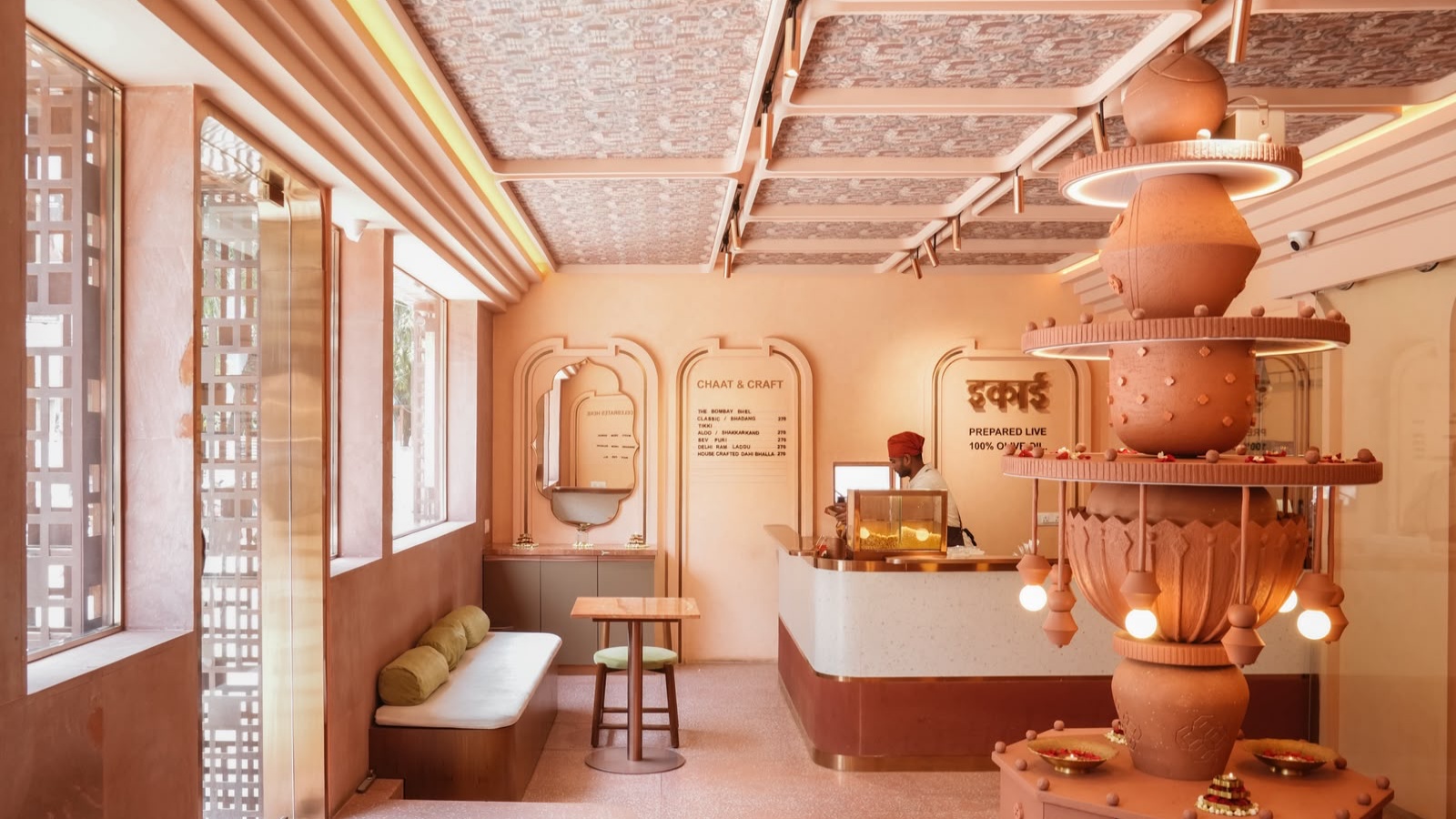
At Ikai’s Bandra store, a ladoo is assembled the way a burrito is at Chipotle. You choose the boondi, then the flavour, filling and topping, and a staffer rolls it in front of you. There is no white refined sugar anywhere in the shop.
It is the clearest expression of what founder Dr Harmitsingh Sikh is attempting: keeping Indian mithai and namkeen recognisably Indian while rethinking almost everything around them. “There was never a question of Indian sweets not tasting good,” he says. “We grew up eating them and Indian namkeen in every household.” What Ikai has worked on instead, he explains, is the ingredients, the method of making them and the packaging.
The store, which opened in March this year, feels closer to a luxury boutique than a mithai shop. The interiors are done in dusty pink and terracotta, with copper and brass detailing, patterned textile ceiling panels and warm concealed lighting. At the centre is a towering installation, while arched wall niches, geometric detailing and a terrazzo flooring. Beside the sweets, displays of raw ingredients show what goes into each piece: cashews, monk fruit sugar and varq for a kaju katli.
Ahmedabad to Bandra via Mumbai Airport
Ikai began in Ahmedabad, where Sikh, the son of a Reserve Bank employee, was born and raised. An alumnus of CEPT University and IIM Ahmedabad, he holds a doctorate in management, and once taught management students. Then he left teaching to build a business, starting as a corporate gifting aggregator supplying pharma, cement and IT companies.
He still leads One Click Innovations, parent of both Ikai and the gifting platform FoodMemories. About three years ago, he decided the company needed a brand of its own and opened Ikai’s first flagship, with a factory, in Ahmedabad.
Mumbai came through the airport. After Adani Airports approached the brand, which already had an outlet at Ahmedabad airport, Ikai launched Ikai Maharashtra, a two-year, airport-only concept for travellers wanting to carry a piece of the state home: 15 sweets and 15 savouries built on regional ingredients such as Nagpur oranges, Mahabaleshwar strawberries and Kolhapur ragi. When the contract ended last June, customers kept asking where else they could buy it. Bandra, with its concentration of creators and design-minded shoppers, became the answer.
The ingredient claims are bold. Ikai says it is the only brand in India frying all its namkeen in 100 percent olive oil, using induction for precise temperature control: Ratlami at 200 degrees and Ujjaini at 180. Mithai skips refined white sugar in favour of date palm jaggery, coconut sugar and monk fruit sugar, matched piece by piece.
Story continues below this ad
The problem with sugar alternatives is often the synthetic aftertaste. “That’s precisely why we use date palm jaggery in the ladoo, monk fruit sugar in the pista barfi, and coconut sugar in Mohanthal. Each sweet responds differently, so there isn’t one formula that works across the collection. The specific pairings are part of our recipe development, which took us six months of R&D,” he says.
The menu balances nostalgia with refinement: kaju katli, slow-reduced Nolen gur peda and a mohanthal with dark almond chocolate fudge at its centre.
Patented, architectural packaging
Much of the packaging is design-patented. The kaju katli box is shaped like a stadium, with each katli stacked to hold its position in transit, and took four months to perfect. The peda box centres on a dark chocolate and dry-fruit dip in the centre, while ladoo boxes have round cavities rather.
Sikh’s logic is social: Indian sweets are often moved onto a tray before guests see them, while a Ladurée or Bateel box goes straight to the table. Ikai wants its boxes to earn the same treatment.
Story continues below this ad
Then there is the namkeen wall: 42 products in seven segments, including numbered “Ikai Classics” designed as chakna, air-fried and roasted millet snacks, and a line for children. Namkeen costs Rs 240 to Rs 340 for 160-170 grams; sweets are Rs 100-150 a piece.
A “Chaat & Craft” counter serves nine made-to-order chaats, including Delhi-style Ram ladoo, Jodhpur’s pyaaz kachori, Indori bhutte ki kees and Varanasi tomato chaat.
Sikh is now gearing up to unveil a special Diwali collection next week at an event at Soho House in Juhu. While he doesn’t want to reveal much, he shares: “It includes a fresh take on kaju and pista rolls, with distinctive packaging and presentation, as well as sweets featuring ingredients such as pine nuts and macadamia nuts. One of the highlights is our Pishori pista barfi finished with a 24-carat gold varq.”
KioskNews shows a cleaned-up reading view extracted from the publisher’s page — the original always lives on their site, not ours.