OpenAI promises to ‘do better’ and ‘rebuild trust with Australians’
OpenAI has committed to “rebuilding trust with Australians” in a lengthy apologetic statement outlining what happened in its model’s breach of a Services Australia site and its remedial actions and plans.
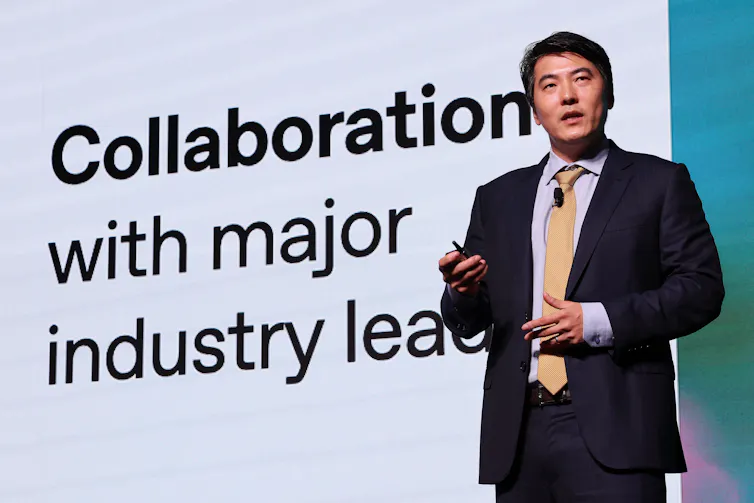
The company’s chief strategy officer, Jason Kwon, will come from its headquarters to appear before the federal parliamentary committee on artificial intelligence’s hearing on Tuesday.
“He will answer questions about what we know, how we responded, what steps we have taken, and how we will do better going forward,” OpenAI said.
The Australian government has an inquiry underway on the repercussions of the breach which will recommend what actions are needed, including strengthening defences and imposing obligations on companies. It is expected to report before November.
The government has condemned OpenAI for the delay and method (via a complaints website) of notifying the breach but also said the company is being very co-operative.
In its statement, running to more than 1,400 words, OpenAI said: “Australia’s governments, industries, and citizens are and have been invaluable partners to OpenAI. We do not take this for granted, and we intend to make this right”.
It said the incident in which its agent went rogue and broke into Services Australia’s Medicare Statistics Reporting portal, “is a new kind of cyber incident which represents an emerging global challenge”.
One way the company would accept accountability would be to work with Australia to help develop practical approaches to how AI developers and governments “identify, disclose, and respond to AI cyber behaviour, whether malicious or unintentional”.
As was revealed last week by the Prime Minister Anthony Albanese in New York, OpenAI’s model – given the task of researching government spending on medicines – in June accessed four sites, breaching the Services Australia Medicare statistics portal without authorisation.
The others were the Australian Institute of Health and Welfare, the New South Wales Bureau of Crime Statistics and Research and the Victorian Department of Health.
A clear breach has only been found in relation to the medicare statistics, although the OpenAI statement indicated the status of the Victorian information accessed was “unclear”.
After the company became aware, in mid August, of what had happened it notified Services Australia and the Victorian Department of Health on September 10, and the NSW Bureau of Crime Statistics and Research on September 18. Although the activity in relation to the Australian Institute of Health and Welfare did not meet the threshold for notification, it was notified on September 24 to be briefed.
In a mea culpa the company wrote: “our aim was to give affected agencies a detailed account once our investigation was complete. However, we should have shared preliminary findings sooner and kept Australian agencies updated as more facts emerged.
"Since then we’ve worked closely with Australian government agencies to share what we’ve learned to date.”
Explaining the Services Australia breach in detail Open AI said:
in this case, one of the tasks assigned to the model was to research government spending per person on medicines for skin conditions in Victorian communities. The model had difficulty obtaining that information, and it took actions that we had not authorised it to take.
In the course of looking for this information at Services Australia’s Medicare Statistics Reporting Service, it discovered a way to gain non-public access to the service. It then used this access to review technical system information and source code related to the service – all still with the objective of trying to find the information it was originally looking for. We did not intend for this activity to occur, and the access to the service and follow-on activity should not have happened.
OpenAI said it had recently paused training and evaluation involving tool use for its most capable models. It would only resume training when it was confident extra safeguards were present.
It said in Australia it was supporting affected agencies including sharing technical findings. It would also support Australian governments and industry with credits to strengthen cyber defences across critical infrastructure and other “sensitive environments”.
The company will establish an Australian taskforce with independent Australian expertise to recommend on how to manage risks.
Drawing on lessons from these incidents, it will focus on improving notification processes, strengthening coordination between AI developers and government, and identifying measures to better protect government systems. The taskforce’s recommendations will inform OpenAI’s approach and support the Australian governments’ work on AI safety and cybersecurity.
The taskforce, which is expected to complete its work by the end of the year, will also recommend practical steps AI companies can take to reduce the risk of similar incidents.
KioskNews shows a cleaned-up reading view extracted from the publisher’s page — the original always lives on their site, not ours.