Less coupon math, more AI: what’s new for China’s 18th Singles’ Day
For Sunny He, a 32-year-old Shanghai resident, this year’s Singles’ Day shopping season culminated in a single, high-value purchase: a 12,000-yuan (US$1,797) iPhone 18 Pro Max, sweetened by a 300-yuan voucher on Alibaba Group Holding’s Tmall marketplace.
“For me, Double 11 definitely isn’t as lively as before because I have less spare cash than in previous years,” He said. “Even so, I’ll take advantage of this chance for products that I couldn’t bear to buy at full price, like a new iPhone.”
He’s selective approach reflects a broader shift among Chinese shoppers during Singles’ Day – the world’s largest annual online retail event, also known as Double 11 – as consumers become more cautious about spending in a sluggish economy.
In response, e-commerce platforms are recalibrating their campaigns. First launched by Alibaba in 2009 as a 24-hour flash sale, the event has evolved into a month-long marathon.
This year, platforms have largely eliminated complex “coupon math” in favour of clear, direct discounts, while aggressively promoting artificial intelligence products as a new category.
Shoppers have welcomed the simpler discount structures.
“It is very convenient this year with direct price drops on every single product,” said Michelle Feng from the eastern city of Suzhou, who spent over 1,000 yuan on apparel and kitchenware across Tmall and rival site JD.com.
“I no longer have to worry about calculating complex cross-store discounts like in past years before making a purchase.”
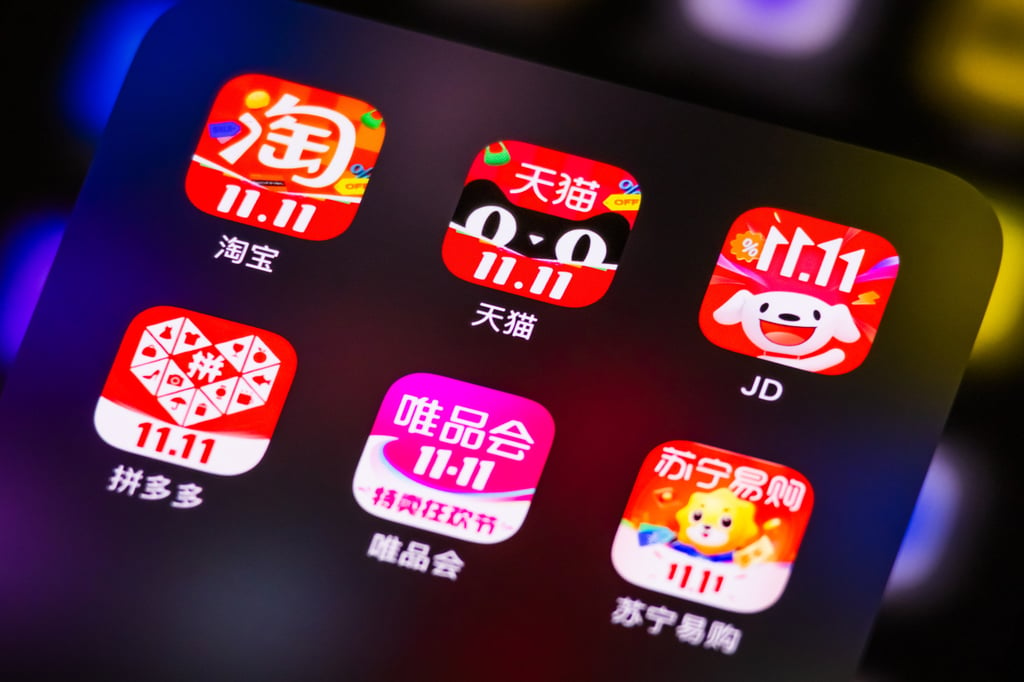
The pivot towards straightforward pricing is aimed at retaining shoppers in an increasingly saturated domestic market, according to analysts.
“Overall consumption growth has slowed,” said Guo Tao, an angel investor and researcher at e-commerce consultancy 100ec.
“Platforms can no longer rely on incremental growth; they have to fight for existing market share,” he said, adding that offering transparent, immediate deals was now essential to stop consumers and brand merchants from migrating to competitors.
The move has also relieved strain on merchants.
The legacy discount system was notoriously vulnerable to manipulation, according to Jacob Cooke, co-founder and CEO of WPIC Marketing + Technologies. Previously, some consumers added unrelated items to their carts to meet expenditure thresholds for tiered discounts, only to cancel the unwanted items after payment.
Despite economic headwinds, the simplified incentives helped generate early momentum after the campaign kicked off in late October. Cumulative sales across major e-commerce platforms hit 1.02 trillion yuan in the three weeks to October 31, up nearly 2.4 per cent from the same period last year, according to data from research firm Syntun.
Alibaba’s Taobao and Tmall captured the largest gross merchandise volume (GMV) share, which measures the total value of merchandise sold over a given period, followed by JD.com, ByteDance’s Douyin, PDD Holdings’ Pinduoduo and Kuaishou Technology.
Government incentives also played a role. Feng in Suzhou said consumption vouchers issued by provincial authorities shaved an extra 10 per cent off her orders – a welcome cushion at a time when volatile stock markets had dampened her appetite for discretionary spending.
Still, Cooke noted that local incentives carried less weight than previous national-level stimulus efforts. “They’re helpful, but they’re probably not moving Double 11 [sales performance] by more than 1 per cent either way,” he said, attributing this year’s GMV gains mostly to organic demand.
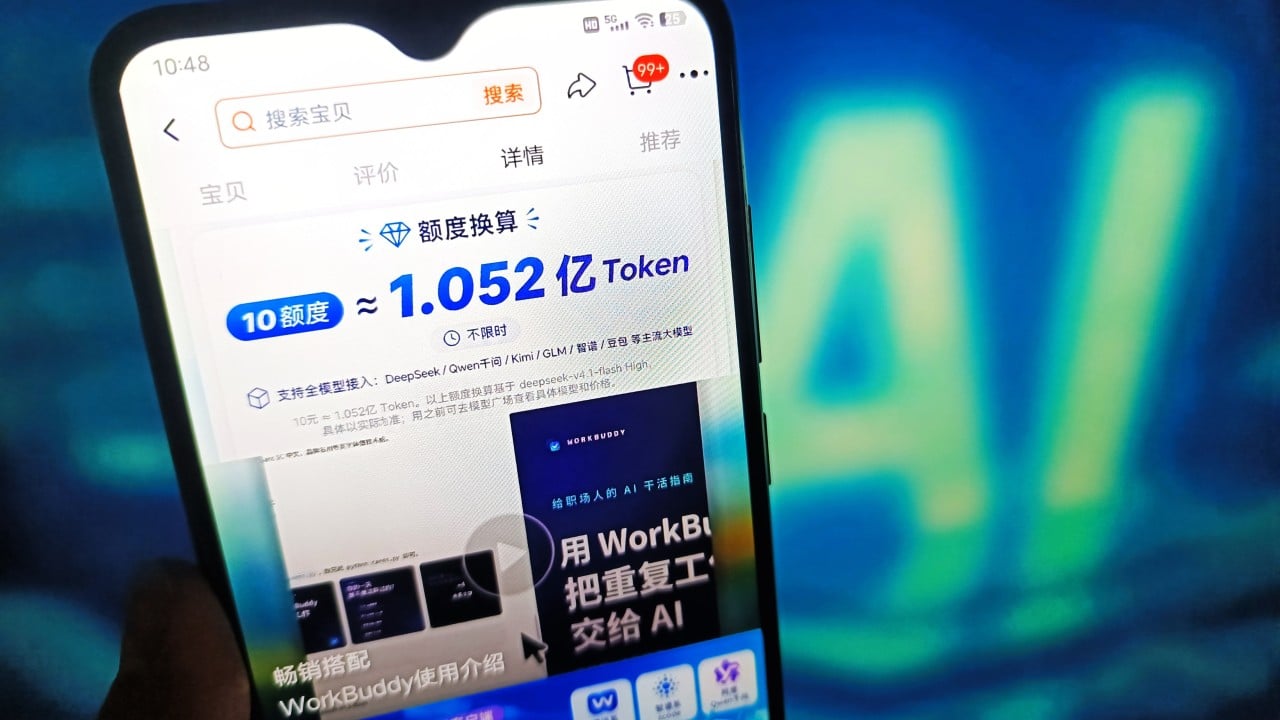
While traditional segments like consumer electronics and fashion faced fiercer competition, AI tokens – the basic units of data processing and compute power used by large language models – emerged as a breakout category.
“It was an inexpensive way to test alternative models and see if they could eventually replace Claude,” Chen said, noting he had been paying US$20 a month for Anthropic’s flagship service.
Alibaba said its newly established AI Token Centre – which aggregates packages from developers such as Alibaba Cloud, Z.ai and MiniMax – saw sales surge 450 per cent month on month between October 1 and 20. JD.com reported that sales of AI tokens, provided by its cloud unit, surged 167 per cent year on year during the festival’s opening phase.
Hardware backed by AI features followed suit.
Alibaba said opening-hour sales of AI-enabled personal computers (AIPCs) jumped over 300 per cent year on year, while JD.com reported selling more than 20 million AI-related devices – including AIPCs and smart glasses – by the end of October.
KioskNews shows a cleaned-up reading view extracted from the publisher’s page — the original always lives on their site, not ours.