Malaysian manufacturers’ Budget 2027 wish list: Lower SME taxes, billions for tech and R&D
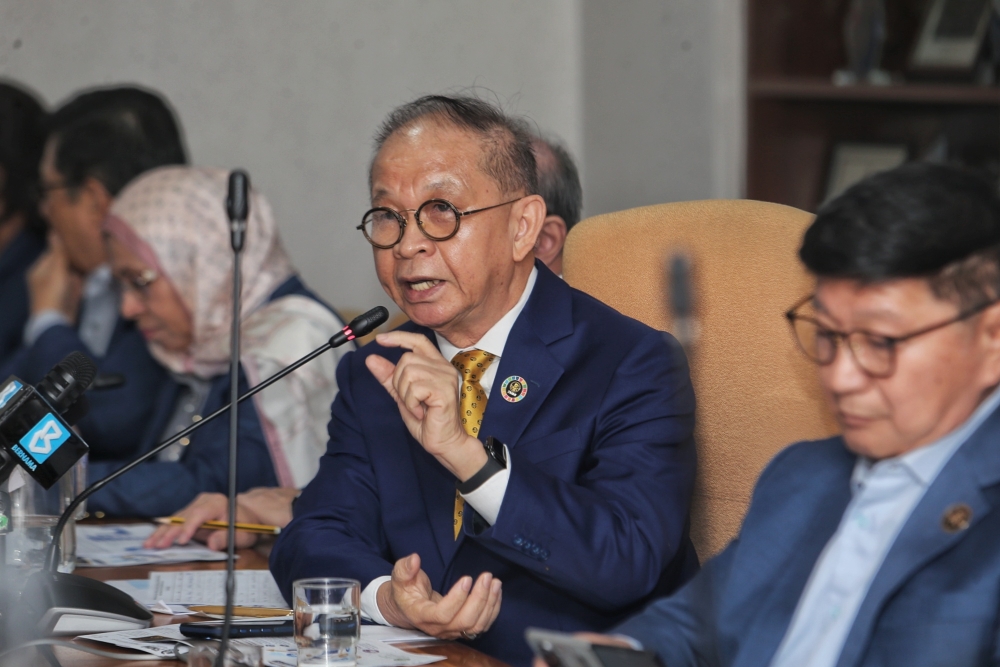

Federation Of Malaysian Manufacturers president Jacob Lee Chor Kok speaks during a press conference at Wisma FMM, Bandar Sri Damansara on September 3, 2026. — Picture by Choo Choy May
By Milad Hassandarvish
First Published: Thursday, 03 Sep 2026 3:37 PM MYT
KUALA LUMPUR, Sept 3 — Lower taxes for small and medium enterprises (SMEs), RM1.5 billion to accelerate smart manufacturing and a RM1 billion fund for industrial research and innovation — these were among the top Budget 2027 requests from the Federation of Malaysian Manufacturers (FMM) to the government.
FMM also proposed a tiered corporate income tax structure for qualifying SMEs, with a 15 per cent rate on the first RM1 million of chargeable income, 17 per cent on the next RM1 million and 24 per cent on income thereafter.
The proposed RM1.5 billion Smart Manufacturing Support Package would run from 2027 to 2030, with RM500 million for automation, RM750 million for manufacturing digitalisation and RM250 million for artificial intelligence (AI) adoption.
“This allocation is intended to drive automation (RM500 million), manufacturing digitalisation (RM750 million), and artificial intelligence (AI) adoption (RM250 million),” FMM president Jacob Lee said in a news conference here today.
He also proposed enhanced automation allowances, low-interest financing of between 2 per cent and 4per cent, and fully subsidised on-site smart-factory assessments.
For industrial research and innovation, FMM proposed a RM1 billion Manufacturing Research and Innovation Endowment Fund, to be funded equally by the government and private sector.
“This would be funded equally by the government and the private sector, and accompanied by more accessible research and development (R&D) incentives,” Lee said.
The proposals are also aimed at helping manufacturers reinvest in technology, innovation and talent while reducing the cost of doing business.
Foreign labour
FMM proposed redirecting foreign-worker levy collections towards skills development and automation.
“We propose that 60 per cent of these collections be directed toward skills development (with RM100 million in seed funding) and 40 per cent toward automation (with RM500 million in seed funding).
“This would turn levy collections into sustained investments in Malaysian talent and productivity while progressively reducing dependence on low-skilled foreign labour,” Lee said.
FMM also proposed a RM100 million National Supply Chain Resilience Fund to help manufacturers secure critical inputs, identify alternative suppliers and diversify their sources of supply.
Lee said the federation’s latest Business Conditions Survey showed that manufacturers’ priorities ahead of Budget 2027 were focused on reducing the direct cost of doing business and strengthening competitiveness.
The three most widely supported measures were direct tax or duty relief for essential raw materials, machinery and production inputs (46 per cent); lower corporate income tax, particularly for SMEs and mid-tier companies (43 per cent); and relief on electricity, natural gas or other energy costs (30 per cent).
KioskNews shows a cleaned-up reading view extracted from the publisher’s page — the original always lives on their site, not ours.