‘Left out’ voters: Election Commission orders special drive in 20 states where SIR over
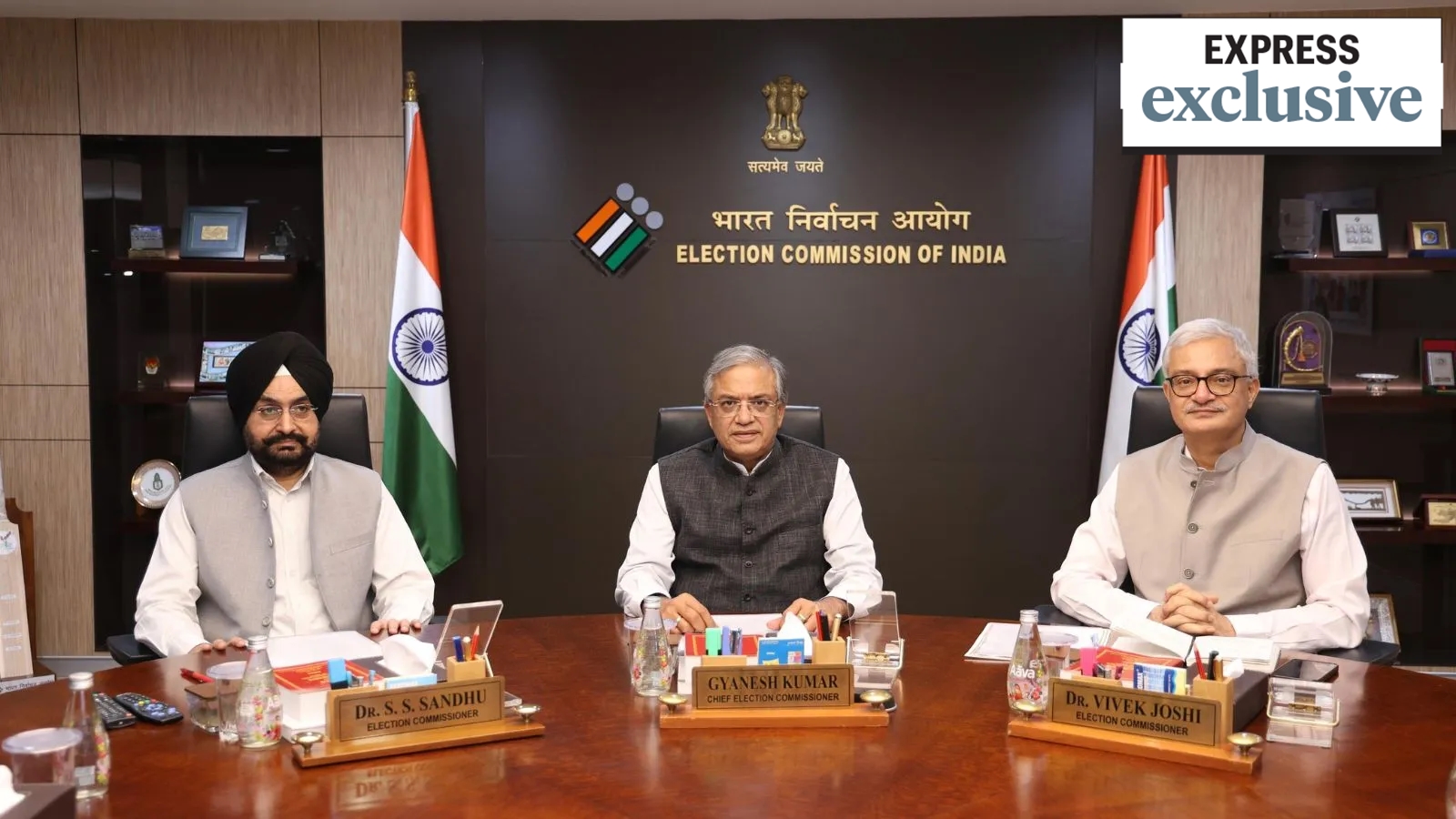
Under fire over the scale of deletions from voters’ lists in the nationwide Special Intensive Revision (SIR) exercise, the Election Commission of India (ECI) has directed the 20 states and Union Territories where the exercise has been completed to run a “special drive” to enrol voters “left out” of the rolls, The Indian Express has learnt.
The instruction was conveyed in writing on September 29 and repeated at a video conference with all state Chief Electoral Officers (CEOs) Thursday.
The investigation revealed that Election Commissioners Sukhbir Singh Sandhu and Vivek Joshi had objected on record 14 times in 10 months to decisions taken in the Commission’s name without their knowledge, including the change to Form 6 (the form new voters fill) and the centralised control of ECINet, the software on which the electoral rolls were prepared during the SIR and on which every electoral roll now sits.
The September 29 letter from the Election Commission’s Secretary to all CEOs states: “In State/UTs where SIR has already been completed, a special drive shall be undertaken by the Chief Electoral Officer, District Election Officers and EROs for the enrolment of left out and young/first time eligible electors under the process of continuous updation.”
That drive will run on a Form 6 without the question added to it in July. The online form had begun asking applicants whether they, or their parents, were on the voters’ list after the last SIR, and would not let them submit without an answer, which left an 18-year-old whose parents had been deleted with no truthful way through. Only the government can change the form, by amending the rules; it hadn’t. Both Commissioners had said so in May, and Sandhu in August called the change “unauthorised/illegal”. The September 29 letter now confines the declaration to “SIR phase only”. In the 20 states where the SIR is over, first-time voters and the “left out” will fill the plain statutory form.
At the Commission’s video conference with all state CEOs Thursday, the instruction went further, according to officers who attended. The Deputy Election Commissioner present told CEOs to compare the pre-SIR roll with the post-SIR roll, draw up the list of those deleted, and identify any who may have been left out.
Story continues below this ad
“It has been told to visit the houses, in cases especially if the voters are not mapped elsewhere or were not duplicate or not deceased and get their Form 6 filled up,” one of the officers said. The CEOs have been asked to seek assistance of political parties (or booth-level agents of political parties) for this exercise.
All CEOs have been asked to bring people back, if left out unjustly, via Form 6, the form for new voters. It is the same route Goa’s Chief Electoral Officer has to use to re-enrol the 97 voters left out of the state’s final roll on February 21 despite being found eligible by its own EROs. As The Indian Express reported on September 24, the 97 had been deleted at the draft stage, produced documents, and were cleared by the EROs, who then found that ECINet had no option to reverse the deletion. The CEO’s eight communications to the Commission over seven days, each copied to DG (IT) Seema Khanna, went unanswered, and the final roll was published without them.
That was the concern Sandhu had put on record on August 14. By law, he wrote, “all the responsibilities regarding Electoral Roll lie on EROS, DEOs and CEOs,” yet “the access control has been centralised by DG (IT),” and the DG (IT) “doesn’t have any legal authority to restrict proper and complete access and freedom to operate, as given by law, to the statutory authorities”.
In May, Joshi had called it “the gradual centralisation of the electoral roll database” and asked for an audit. Neither note was answered until the Commission’s meeting of September 26.
Story continues below this ad
The September 29 letter came three days after that meeting, the Commission’s second full sitting since April, which announced that voters served notices for being “unmapped” or for “logical discrepancies” need not appear for hearings, that a committee with an independent IIT/IIIT expert would review ECINet, and that “any further flexibility” field officers needed “will be made operational” in the software.
The letter conveys the hearing change to the states, and is copied to the DG (IT) “for making necessary changes in ECINet”. It also settles a matter the two Commissioners had raised: the declaration attached to Form 6 “will be used during SIR phase only,” and outside the SIR, “the Forms applicable as per the Registration of Electors Rules 1960 will be used”.
Maharashtra: No hasty deletions
Following the ECI’s meeting with all state CEOs Thursday, Maharashtra, currently the largest state where the SIR is still under way, has instructed its Electoral Registration Officers (EROs) not to exclude any voter in haste.
A note sent by the Chief Electoral Officer’s office Thursday to officials handling Mumbai City and Mumbai Suburban states: “Before taking a decision to exclude the name of the said voter from the electoral roll, sufficient opportunity should be given to the concerned voter to submit the necessary documents, a hearing should be held and the necessary order should be passed.”
Story continues below this ad
It states that “an eligible voter should not remain excluded from the electoral roll and there should be no obstruction to the voter’s right to vote”. Officials have been told not to take a negative decision in haste and to ensure “complete scrutiny at the ERO level”.
The note implements the Commission’s September 26 decision that voters served notices for being “unmapped” or for “logical discrepancies” need not appear for hearings in person. Booth Level Officers, the first interface between citizens and the Commission, will collect documents at the homes of voters who have been served notices and upload them for the ERO to decide; those already sent hearing notices are to be told by phone or WhatsApp that they need not come.
Special camps are scheduled on October 3, 4, 10 and 11. The note adds a safeguard for cases the BLO’s visit doesn’t settle: another chance to produce documents, then a hearing and an order, before any name comes off.
Maharashtra’s draft roll flagged 1.22 crore records for verification: 62.48 lakh for discrepancies in relatives’ details, 59.75 lakh that could not be mapped to a relative in the previous roll. The “necessary changes” to ECINet and the BLO App, the note says, are still being made at the Commission level.
KioskNews shows a cleaned-up reading view extracted from the publisher’s page — the original always lives on their site, not ours.