‘Lots of money to waste on lawyers’: Supreme Court rejects Tamil Nadu’s Cauvery water plea
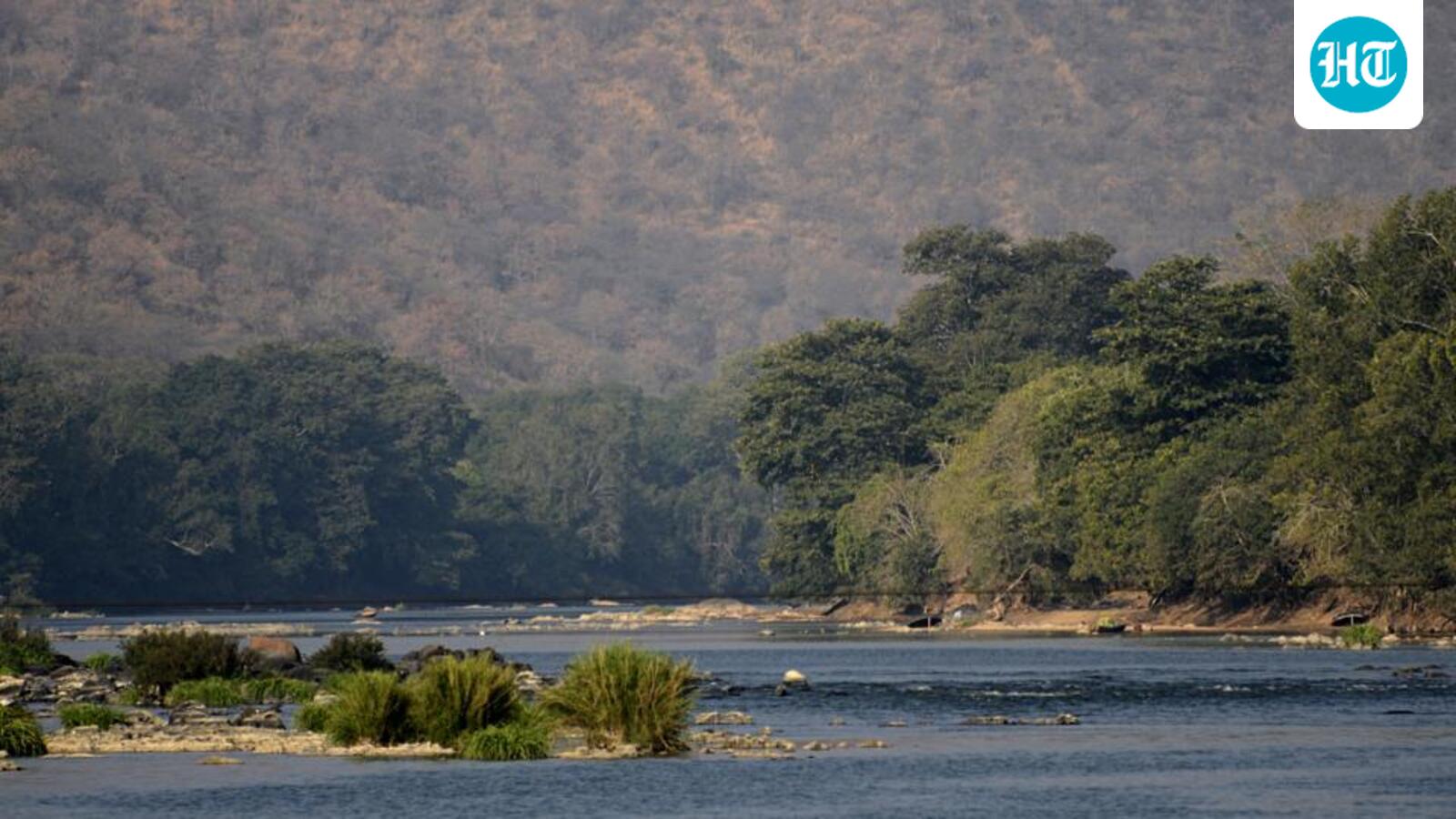
The Supreme Court on Friday dismissed Tamil Nadu’s plea seeking directions to Karnataka to immediately release an alleged backlog of over 11.7 thousand million cubic feet (TMC) of Cauvery water, with the bench remarking that the state appeared to have “lots of money to waste on lawyers” after it filed yet another application in the decades-old inter-state river dispute.
A bench of justices Vikram Nath and Aparesh Kumar Singh rejected Tamil Nadu’s application seeking directions to Karnataka to clear the alleged shortfall accumulated up to October 6 by releasing 1.3 TMC of water a day for 10 days at Billigundulu, the key measuring station on the Karnataka-Tamil Nadu border.
“The application is dismissed. You have filed another application today. It looks like the State of Tamil Nadu has lots of money to waste on lawyers… We have dismissed this application and we will also dismiss the other application,” said justice Nath while reading out the operative part of the order.
The remark came as the bench noted that Tamil Nadu had moved another application on Friday, seeking fresh directions against Karnataka.
Following the court’s observation that it was inclined to dismiss that plea as well, the lawyer appearing for Tamil Nadu requested an adjournment on the fresh application.
Friday’s order denies Tamil Nadu any relief, which has repeatedly approached the Supreme Court alleging that Karnataka hasn’t released its due share of Cauvery water despite having sufficient reservoir storage, leaving farmers in the state facing water shortages.
In its now-rejected application, Tamil Nadu pegged the shortfall in flows at Billigundulu at 11.719 TMC up to October 6, arguing that Karnataka owed it the outstanding quantity even after accounting for the reduced allocation during the current distress year.
Tamil Nadu contended that Karnataka was withholding water despite having a combined reservoir storage of around 49 TMC, which it insisted was adequate to meet its obligations to the lower riparian state.
It also accused the Cauvery Water Management Authority (CWMA) and the Cauvery Water Regulation Committee (CWRC) of failing to direct Karnataka to make good the accumulated shortfall, despite their fortnightly meetings to regulate water releases.
Opposing the plea, Karnataka argued that several districts in the state were facing drought and that its irrigation allocations had been reduced accordingly. It maintained that the water-sharing mechanism through the CWMA and CWRC was already addressing the issue and did not warrant further judicial intervention.
Under the Supreme Court’s water-sharing verdict, Karnataka must release 177 TMC of Cauvery water to Tamil Nadu in a normal year, with the allocation reduced proportionately in years of distress.
Tamil Nadu has maintained that even after accounting for the reduced allocation in the current distress year, Karnataka still owes it a substantial quantity of water. It also argued that the lower riparian state could not bear the entire burden of deficient rainfall and hydrological distress.
KioskNews shows a cleaned-up reading view extracted from the publisher’s page — the original always lives on their site, not ours.