China proposes AI export curbs to manage security
China proposed adding advanced artificial intelligence (AI) technologies to its export-control list, potentially restricting overseas transfers of AI models and chip designs in an effort to keep closer control over homegrown advancements in a strategically important sector.
The draft proposal covers 23 AI technologies, including large language models, agents, chip designs and computing clusters. Restricted technologies would include model weights and source code for products exceeding certain performance thresholds.
Chinese AI startups have this summer made significant progress in closing the gap on US industry leaders. Models such as Moonshot (月之暗面) AI’s Kimi K3 and DeepSeek’s (深度求索) latest editions offer better pricing, and Chinese companies also favor the approach of sharing the weights — used to steer an AI system toward finding an answer — of their models to encourage developers to build on top of them. They are also increasingly looking for markets beyond China, with the likes of Z.AI Co (北京智譜華章科技) making their wares available on US cloud service providers such as Amazon Web Services.
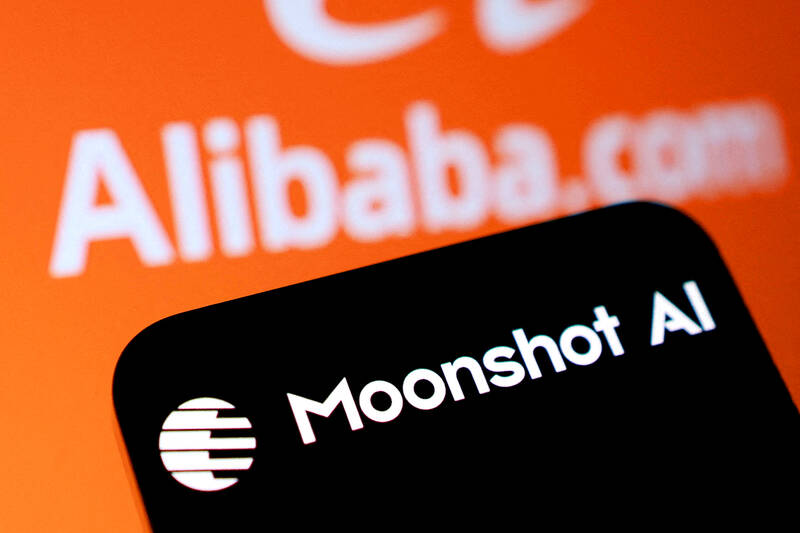
The logos of Moonshot AI and Alibaba.com are pictured in an illustration on Sept. 5.
Photo: Reuters
The proposed export curbs are aimed at ensuring “the safety and controllability” of AI technology, a spokesperson for the Commerce Ministry said, citing the risk of misuse for attacking critical infrastructure, defense industries and core government systems by non-state actors or malicious entities.
“The Chinese government’s necessary management of these technologies aims to solidify the security baseline, prevent misuse and abuse, ensure that AI remains under human control, and promote international governance of AI,” the spokesperson said in a statement.
The proposal would restrict exports of core technology for models containing at least 2 trillion parameters — such as Kimi K3 or Alibaba Group Holding Ltd’s (阿里巴巴) Qwen3.8-Max — or ranking among the world’s top 10 on measures including performance, usage and safety. The curb would cover model weights, checkpoints, source code and architecture.
The new Chinese guidelines are likely to stoke uncertainty in an AI industry already grappling with strict content controls, a licensing regime and potential US sanctions.
AI models trained on China’s “core data,” as defined by relevant legislation such as the Data Security Law, would be banned from export, the proposal said. The Data Security Law describes state core data as “data concerning national security, the lifeline of the national economy, key public livelihoods and major public interests.”
Open-source technology and research already in the public domain would not be covered, and the government would provide streamlined procedures, such as automatic licensing, to exports involving open-source AI technologies. Beijing said the measures were not aimed at any particular country, region or entity.
China simultaneously imposed a temporary registration requirement for exports of the technologies covered by the proposal. The measure took effect yesterday and applies to transactions already underway but not completed, including intellectual-property transfers, overseas licensing and changes that place Chinese technology owners under foreign control.
KioskNews shows a cleaned-up reading view extracted from the publisher’s page — the original always lives on their site, not ours.