Threats against politicians are on the rise. How can we move to a better, safer politics?

“Thoughts and prayers.” After each soul-destroying mass shooting in the United States, this is the platitude invariably trotted out by every impotent politician unable to confront the stranglehold reality of the country’s gun lobby.
“Turn the temperature down,” risks becoming Australia’s equivalent. The plaintive cry to hold back a rising tide of hatred and anger, incubated, amplified and legitimised online, now spilling into grotesque real-world violence.
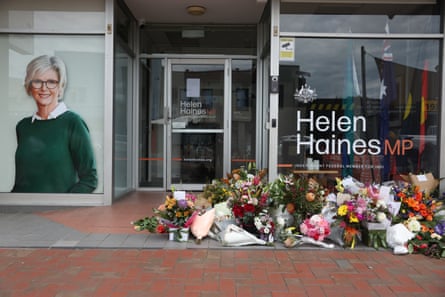
Helen Haines, the independent member for Indi, remains in hospital. She has lost both legs after a driver allegedly deliberately drove into her twice, outside her electorate office. A man has been charged. The motivation for his alleged attack remains unclear. But the horrific incident has sparked an urgent national reckoning about the safety of public figures, especially women.
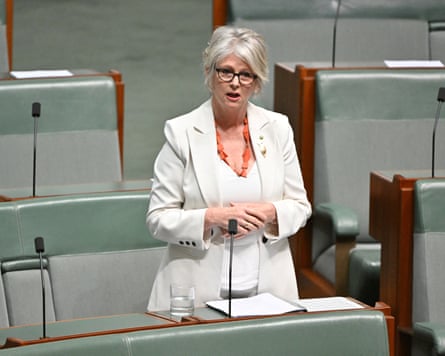
Haines’s life will never be the same. But what of political life? What of the lives of women who seek to claim their place in shaping the future of their country?
‘Targeting women because they are women’
In the days since the alleged attack on Haines, politicians have detailed their own experiences of abuse and threats.
The minister for women, Katy Gallagher, has had her children threatened. A man told Pauline Hanson online he would “hunt her down and kill her”.
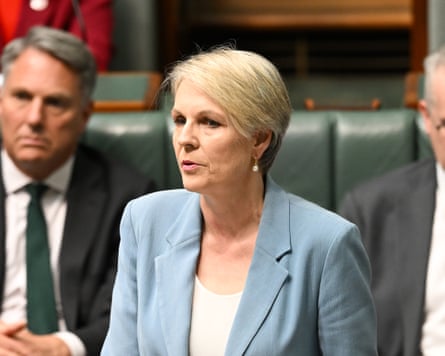
The social services minister, Tanya Plibersek, received an anonymous note slipped under the door of her home, telling her they hoped her children “die of painful cancers”. The number of death and rape threats she has received over years in public life is beyond counting, she said.
Male politicians face threats too. ACT senator David Pocock has moved house several times because of safety concerns for himself and his young family. Barnaby Joyce says a driver performed a u-turn to drive directly at him.
But the attacks and threats are overwhelmingly gendered.
Last year, then AFP commissioner, Reece Kershaw, told senate estimates that “the nature of threats and comments directed at female parliamentarians and high office holders is particularly troubling, with a common feature being offensive material centred on derogatory language about their appearance”.
“Some of this material also contains extremely violent themes, including threats of graphic, sexual violence,” he said.
“These threats, which are being made online or are being sent in the post or over the phone, are sometimes also directed at their children.”
Kershaw said politicians were targeted because of their public profiles or policy positions. “However, in some cases, it appears male offenders are targeting women because they are women.”
A parliamentary report last year found 85% of surveyed parliamentarians and their staff reported dealing with constituents “behaving in a violent, threatening or volatile manner”.
Australia is not alone. The Inter-parliamentary Union (of more than 180 parliaments around the world) found “parliamentarians around the world are facing growing levels of intimidation, harassment and violence from members of the public”. A global survey found the odds of a politician experiencing online violence were more than twice as high for women as for men.
While members of Australia’s political class are the victims of a rising hostility online erupting into the real world, they are part of establishing a baseline for the tenor and tone of political debate.
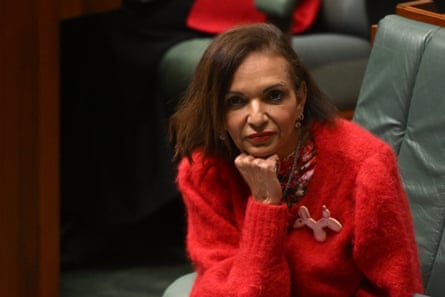
The week before Haines was allegedly attacked, the member for Moncrieff, Angie Bell, stood in the House of Representatives and said that the small business minister, Anne Aly, and the prime minister, should be “stoned in the square” for a decision made by the tax office.
That evening, Aly posted on Instagram a devastated, wearied, riposte.
“This is not just something that we should just turn away from.”
Aly then, almost as an afterthought, revealed: “this past week alone, I’ve had 19 death threats on my social media. And in the past I’ve had death threats that are couched in that exact same language: ‘stone her’.” Bell withdrew the comment and has since apologised.
‘An environment has been created’
There is a bleak irony that Aly took to social media – responsible for incubating and amplifying so much violent political rhetoric – to speak out against the attack made against her on the ostensibly more dignified floor of the parliament.
The chair of the Centre for Journalism & Democracy at City St George’s University of London, Prof Julie Posetti, is lead author of a series of UN Women reports, which began with last year’s publication, Tipping Point: The chilling escalation of online violence against women in the public sphere.
Surveying more than 600 women across 119 countries – with a particular focus on human rights defenders, activists and journalists – the report found more than 70% of respondents had experienced online abuse in the course of their work, and 41% had experienced real-world attacks, abuse, or harassment that they linked to online abuse.
British-Australian Posetti, familiar with the political culture of both countries, says attacks on politicians were both “entirely predictable and utterly shocking”.
“Women are being forced out of public-facing roles … including representative office, because of the serious threats that are being delivered at scale with virtual impunity.”
This pressure comes after years of hard-fought improvements for women in political power. While women’s representation in government has increased dramatically over the past decades, and in Australia women make up about half of federal parliament, globally women hold just 22% of cabinet level positions, and that proportion is now falling.
More than 100 countries have never had a female leader.
Posetti describes the online-to-offline trajectory of violence as a “vicious, self-perpetuating” cycle. Online threats beget offline attacks, and offline abuse – such as politicians attacking female journalists during press conferences – can trigger a tsunami of online harassment, further exacerbating the risk of offline attacks.
“It’s a fire where fuel is just continuously loaded into the mix. It elevates perpetually and it’s amplified online … through those algorithmic drivers, which are tuned to do what they do for profit, because we know that engagement is more likely to be driven by anger and rage than it is by support for some kind of positive action, for example.”
The rising tide of violent rhetoric and action is occurring alongside a broader democratic erosion, one being witnessed around the world.
Posetti said decades of progress on gender equality and the empowerment of women and girls were backsliding at an alarming rate under a rising tide of authoritarianism, in which “strong man” leaders decry everything from diversity, equity and inclusion, to low birthrates, and whose acolytes joke about male control over female bodies.
“An environment has been created where there is tolerance for slut-shaming women in politics who are routinely threatened with being ‘raped to death’, for threatening violence against women journalists, and for threatening the families of women human rights defenders with violence,” Posetti says.
“If you push women out of public life, you are less likely to get women’s issues represented effectively, you are less likely to see nuanced stories about women covered empathetically: there are real implications for women’s participation in democratic deliberation, not just in being elected to office, but women are being driven out of public debate entirely because there is no safe way to engage.”
Posetti argued misogynistic rhetoric “which just five or 10 years ago would have been viewed as repugnant and unpalatable” was being legitimised and reinforced online.
In the US, so often the grim indicator of the direction of Australian politics, in 2024 the president threatened a female political opponent with “nine barrels shooting at her … when the guns are trained on her face”. Violence is celebrated: this week Donald Trump congratulated a supporter at a rally for punching a protester.
Law follows language. Rhetoric has real-world consequences.
The case that established abortion rights in the US, Roe v Wade – settled law of the land for nearly 50 years – was overturned in 2022. Even now, a decade-old tenacious right-wing movement has swung back into vogue in that country – #Repealthe19th – which overtly argues that women be banned from voting.
Addressing the crisis
Fuelling so much is the isolating duality of the online world: the platforms that promise connection but offer only an ersatz counterfeit, while peddling invitations to the darkest corners and reinforcement of the basest of instincts.
Users are bombarded all by relentless “feeds” that feel public but are, in fact, uniquely private, carefully curated by deliberately arcane algorithms.
Violent memes are posted for all the world to see, but the algorithms hold each viewer in an individual self-reinforcing silo.
If those violent posts generate “engagement”, even a moment’s attention, more and more like it are offered, are imposed. Each feed is its own incubator, under constant singular refinement, making social media ever more isolated, more idiosyncratic, more dangerous to vulnerable people.
Posetti says there were two key elements to addressing the deepening crisis. The first is the human element: “There needs to be a commitment from organisations, from political and corporate leaders, and from others in public life, to treat other human beings with decency and dignity”.
The second is regulation of the technology platforms on which vitriol is allowed to flourish, amplify and spread. “No matter how effective the political leadership is, unless you address the technological drivers for the escalating hate towards women, minorities, other marginalised groups in society, then you are … sticking a used Band-Aid on a gaping wound, trying to address the aftermath.”
Australia, the global vanguard on social media bans for children, and the development of a proposed digital duty of care, “has a rare opportunity to take some global leadership on this”.
Focus on misogyny
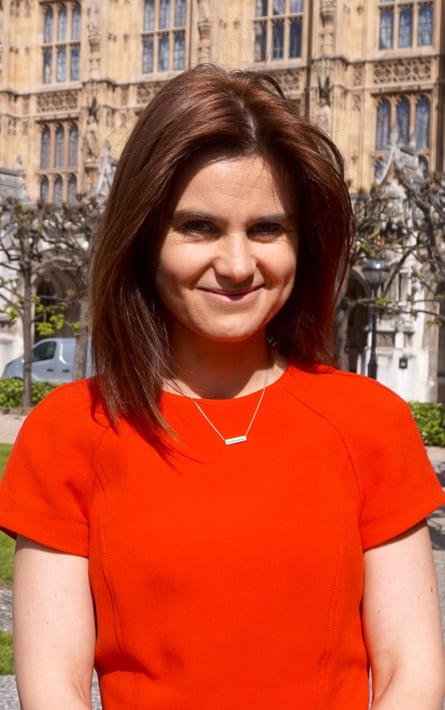
After the alleged attack on Haines, New Zealand MP Tamatha Paul saw parallels in the killings, 10 years apart, of female British politicians Jo Cox and Ann Widdecombe. (Male MP Sir David Amess was murdered in 2021).
“These were women in politics who were walking down the road, standing outside of their electorate offices, walking to their homes, being in their homes, when they have been attacked or murdered.”
Paul argued the well-meaning counsel from security agencies on how politicians could keep themself safe – don’t advertise social engagements, change routines and routes to work and home – undermined democratic engagement and missed the fundamental problem.
“Focus on the fact that misogyny and rape culture, and allowing it to manifest and fester in our society, is what normalises violence against women: either violence against high profile women in politics and all of the invisible violence that happens behind closed doors.
“Why do women have to pay with our lives?”
Paul said she had a message for men: “this is on you to call out your friends”.
“When they make jokes, when they say that politicians look like pigs, when they make comments that they would never make about another man, call them out.
KioskNews shows a cleaned-up reading view extracted from the publisher’s page — the original always lives on their site, not ours.