LOCAL ELECTIONS 2026: Manifesto test: SACP’s power to the people and a working class embraced
/file/attachments/orphans/Election2026LogoInarticle_260133.jpg "LGE-2026-logo-signpost")
The SACP is for the first time contesting an election on its own steam outside the tripartite alliance with which it has historically been in a political pact. The ANC has insisted dual members pick sides, making this an important part of the electoral race to watch. The SACP’s manifesto is refreshingly short and principled. Its brevity, however, does reveal the absence of hard experience of governing.
1. Turn on the taps
This is one of the SACP’s strongest sections: “Water that flows. Lights that work. Streets that are cared for.”
The party promises ward-by-ward audits of water and sanitation, public maintenance plans, rapid-response teams for leaks and sewer spills, and properly staffed municipal technical units. Importantly, it explicitly shifts the emphasis from emergency response to preventative maintenance, saying it wants to end dry taps and the reliance on water tankers.
The ideological difference compared with the DA manifesto is stark: rather than concessioning or private sector participation, the SACP’s solution is to rebuild municipal capacity and insource essential work.
Verdict: There is little detail about where the capital investment required to repair ageing water infrastructure will come from, or how dysfunctional water utilities and municipalities would acquire the technical skills to do this themselves.
2. Keep the lights on
The manifesto concentrates more on affordability and public provision than on electricity generation or solving outages.
It says electricity has become “six times more expensive in real terms since 2007” and promises “fair, pro-poor tariffs”, protection of lifeline services and an end to “punitive disconnections of the poor”. Cable theft is identified later in the manifesto as an attack on working-class communities and infrastructure.
Verdict: There is no substantial municipal energy plan here – little about alternative generation, grid investment, load reduction, electricity losses or how municipalities will settle debts to Eskom. That is particularly noticeable because Daily Maverick’s test specifically asks parties how they will “fix electricity, end outages and pay Eskom”.
3. Fill the potholes
The SACP is direct: “Municipal roads must be treated as essential public infrastructure, not as an afterthought.”
It promises the maintenance and repair of township and village roads and specifically identifies potholes, washed-away access roads and neglected streets as barriers to jobs, clinics, schools and markets.
On transport, it promises “integrated, affordable, safe and reliable public transport under public and community control”, including cooperative transport initiatives.
Again, the distinguishing idea is public or community ownership, rather than contracting out.
Verdict: There are few measurable targets – no resurfacing kilometres, repair turnaround times or explanation of how failing municipal road agencies would be fixed.
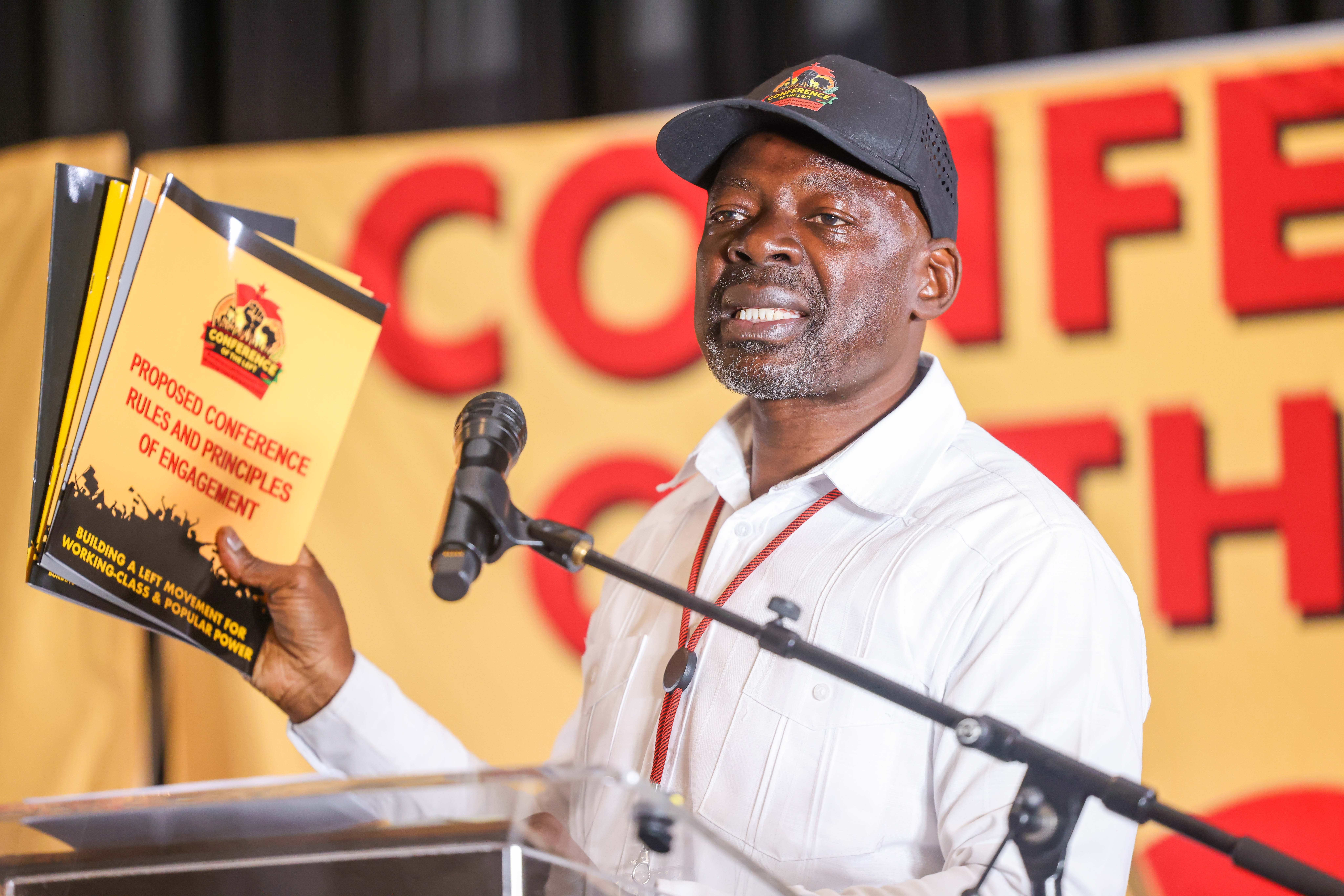
/file/attachments/2996/ED_605336_198139.jpg "JOHANNESBURG, SOUTH AFRICA - APRIL 23: Solly Mapaila (SACP General Secretary) briefs the media on the latest developments on elections and the question of dual membership at COSATU House on April 23, 2026 in Johannesburg, South Africa. The South African Communist Party (SACP) delivers its' perspective on the ANC's decision to instruct members to show their allegiance to it as opposed to the SACP in the upcoming local government elections or face dire consequences. (Photo by Gallo Images/Lubabalo Lesolle)")
4. Sort out the s***
Sanitation is folded into the water programme: ward-by-ward audits, maintenance plans and rapid-response teams for sewer spills.
There is one particularly clear commitment: “The bucket system is a humiliation and must be eradicated.”
Informal settlements would be upgraded “with the people, not against them”.
Verdict: Excellent. The only manifesto we’ve analysed thus far that says we shouldn’t have the bucket system more than 30 years into the democratic era.
5. Light up our streets
The SACP proposes community safety forums, street and section committees, repaired streetlights and safe routes, and survivor-centred gender-based violence services. It singles out stock theft, cable theft and extortion networks, describing them as attacks on working-class livelihoods and infrastructure.
Verdict: This is less a conventional “more metro police” crime plan than a community-organising model of municipal safety. And we like that.
6. Clean up our towns
This is probably the weakest fit with our test. Recycling appears as one potential component of its proposed municipal decent work plans, but there is remarkably little specific detail on refuse collection, illegal dumping, landfill management or keeping streets clean.
Verdict: This is a significant omission given how central waste collection is to municipal performance – and to our manifesto test, which specifically asks for a plan for “rubbish collection, illegal dumping and cleaner public spaces”.
7. Help us hustle
The SACP proposes municipal decent work plans covering infrastructure maintenance, food production, recycling, care work, community safety and local production. It backs worker and consumer cooperatives, village agricultural cooperatives and community-owned stores. Informal traders and platform workers should be “protected and free to organise”. Procurement should build local capacity.
The party’s local economy is built around public employment, cooperatives and local procurement rather than private investment and deregulation.
Verdict: Good. But who pays for it and how is it funded?
8. A home for everyone
Municipal land should be audited and protected from capture, then used for housing, food production, cooperatives and community facilities.
The SACP promises well-located social and affordable housing.
Verdict: Again, the emphasis is not primarily on housing numbers, but on who controls urban land and what it is used for. This is so important. Municipal land has become subjected to two trends: it goes to the highest bidder or it is part of patronage network extraction.
9. Break the nyaope curse
The manifesto discusses primary healthcare, community safety and social infrastructure, but does not set out a municipal strategy for drugs and addiction.
Verdict: There’s no plan.
10. Give us a city worth living in
This is where the manifesto is stronger again. It describes sport, arts, culture and public facilities as “essential social infrastructure, not luxuries”.
SACP councillors would hold regular, open ward assemblies. They must give monthly ward feedback and “accept recall if they betray the manifesto”. “A seat in council is a post of struggle and service, not a career or a business opportunity.”
Verdict: We love this.
Reality check
The manifesto is filled with revolutionary zeal and local people’s power. In that sense, it’s refreshing. General secretary Solly Mapaila coined the use of the phrase “state capture” locally, so the anatomy of local corruption is well tracked and well known. But it lacks real-world experience of balancing budgets and competing priorities. DM
This story first appeared in our weekly DM168 newspaper, available countrywide for R35.
KioskNews shows a cleaned-up reading view extracted from the publisher’s page — the original always lives on their site, not ours.