ABOVE THE LAW: SA links to global ‘sky traffickers’ exposed after fatal Brazil cocaine plane crash
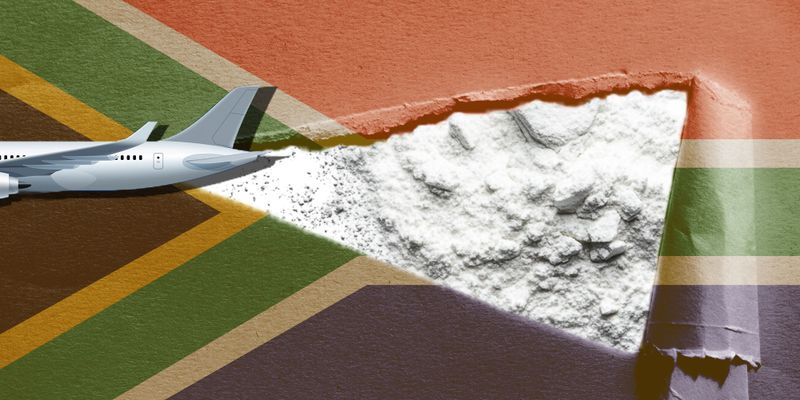
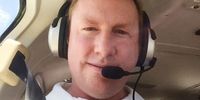
On 13 September 2025, Australian pilot Timothy Clark boarded a small aircraft in South Africa.
More than 26 hours later, parts of the aircraft lay crumpled in a sugarcane field in Coruripe, a city in Alagoas, Brazil.
Clark was dead – apparently killed on impact.
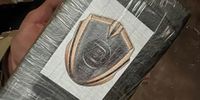
Aside from aircraft parts at the scene, authorities also found a consignment of 202kg of cocaine, branded with a counterfeit SpaceX logo.
Cocaine planes
The consignment became the crux of a reverberating transnational investigation that culminated in Brazilian police, along with Australian counterparts, last week discovering more than 600kg of cocaine in the South American country and carrying out a series of arrests there.
Australia was involved in the crackdown because aside from Clark being killed in Brazil, he was also linked to an investigation that led to the arrests in Perth a couple of years ago of two people, one with ties to South Africa.
Brazil’s Federal Police announced some of these latest developments on Wednesday, 18 November 2026.
That is the same day a local motorist was reportedly taken into custody in the Garies area in the Northern Cape after allegedly being found with more than 300kg of cocaine.
Netwerk24 detailed the arrest, while another news report suggested the seized cocaine may have been flown into South Africa from Brazil.
That case aside, the investigations in Brazil and Australia indicate how small aircraft are used to move illicit drug consignments internationally – and how South Africa is caught up in this activity.
Fatal flight after SA trip
According to a statement from Brazil’s Federal Police, it launched an operation last Wednesday to dismantle a criminal group “operating in international drug trafficking and air logistics aimed at sending cocaine abroad using small aircraft adapted for long-distance flights.”
It said the overall investigation that sparked last week’s crackdown began in September 2025, when Clark was killed in the aircraft crash.
Daily Maverick established that Clark, based on his “likes” on social media, appeared to approve of a Cape Town hotel and entertainment venue in Pretoria, indicating where he may have been when visiting this country.
While Clark’s death was reported locally and internationally at the time, broader details linked to him are now becoming clearer.
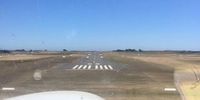
The Brazilian Federal Police statement from last week said: “The investigation indicated that the plane crashed shortly after take-off from a runway located in the middle of a sugarcane plantation and that the pilot had arrived at the location after crossing the Atlantic Ocean from South Africa, in a flight lasting approximately 26 hours.”
It said that as part of its investigation, Brazil’s Federal Police officers were working with their Australian counterparts.
The body of Australian pilot Timothy James Clark remains unclaimed in Brazil two weeks after he died in a plane crash carrying 200kg of cocaine. Clark, 46, was flying a kit aircraft over Coruripe on September 14 when it went down, with investigators later finding bricks of cocaine branded with SpaceX logos inside the wreckage. Brazilian authorities confirmed his identity but said no family member or legal representative has come forward to claim the body. If no one does within 30 days, he may be buried as a pauper. Clark, known online as “The Broker,” was once a stock market trader in Australia and Africa. Investigations have linked him to figures tied to Ireland’s Kinahan cartel, one of the world’s most powerful organized crime groups. Authorities in at least five countries are now probing Clark’s associates, as evidence suggests he helped run cocaine flights between South America and Australia. Police estimate the seized drugs could have been worth $80 million on the Australian market.
— Flightdrama (@flightdrama) October 1, 2025
Information was shared about two people arrested in Australia in December 2024, “following the receipt of a shipment of approximately 200kg of cocaine that had arrived in the country by air.”
(This is the same weight as the cocaine found at the Clark crash site in Brazil.)
According to Brazil’s Federal Police, the shared information revealed “connections between the pilot who died in the plane crash … and members of a transnational drug trafficking network.”
Brazilian police did not identify the two suspects arrested in Australia in December 2024.
The Kinahan cartel ‘connection’
Daily Maverick understands, though, that the pair are Oliver Andreas Herrmann, who Australian authorities said was from Germany and based in South Africa, and Australian Hamish Scott Falconer of Victoria.
They were arrested in Perth in December 2024.
Herrmann and Clark apparently knew each other – the online investigative journalism platform Bellingcat reported on a photograph of them at a restaurant in Zimbabwe’s capital of Harare in 2018.
The Sunday Times Ireland previously reported that Herrmann, a marathon runner with no previous links to crime, was also “an international businessman and serial investor” with money ties to Christopher Kinahan senior (who shares a name with a son), better known as Christy Kinahan.
According to US authorities, Kinahan senior, also known as “The Dapper Don”, founded the Kinahan cartel decades ago in Ireland.
Its members are now believed to be involved in international lawbreaking ranging from gold smuggling and money laundering to drug trafficking.
Drugs, guns and the Kinahan cartel
In 2022, the United States sanctioned the Kinahan cartel. At the time, the US Treasury Department explained that it “emerged in the late 1990s and early 2000s as the most powerful organized crime group operating in Ireland.” It said that subsequently, Irish courts had concluded the Kinahan cartel was “a murderous organization involved in the international trafficking of drugs and firearms.” The cartel was also involved in international money laundering. Daily Maverick previously reported on matters suggesting the Kinahan cartel’s activities extended to South Africa.
Daily Maverick has reported extensively on evidence suggesting the Kinahan cartel has operated via South Africa.
One of Kinahan senior’s sons, Daniel Kinahan, was arrested in Dubai earlier this year and extradited to Ireland, where he is facing charges for allegedly directing the activities of a criminal organisation.
It is unclear where Kinahan senior is.
He remains wanted in the United States, where a reward of up to US$5-million has been offered for information that can lead to his arrest or conviction “for participating in transnational organized crime”.

Like his son, Kinahan Senior had been in Dubai, but his United Arab Emirates visa was apparently cancelled earlier this year.
Bellingcat previously reported that, based on Google reviews Kinahan senior posted, he had been in South Africa several times.
All this places him in this country, where Clark was when he began his last flight to Brazil and where Herrmann, according to Australian authorities, had stayed.
Back to Herrmann and Falconer – the pair arrested in Perth towards the end of 2024.
Night vision goggles and drug stash
Based on the statement by the Brazilian Federal Police last week, the Australian investigation into the pair overlapped with its later investigation launched after Clark’s fatal aircraft crash.
Daily Maverick has reported that the Australian investigation began in October 2024.
The following month, Herrmann and Falconer met at Perth Airport and from there, drove to Kojonup Airport, about 250km south of Perth.
The Australian Federal Police said both returned to Perth, where Falconer “hired a utility vehicle, which investigators observed allegedly transporting multiple suitcases and jerry cans.”
On 27 December 2024, Herrmann allegedly went to the Overlander Airstrip, in Western Australia, “and met a small aircraft”. It is unclear who or what was on that aircraft.
Herrmann and Falconer were arrested the following day in Perth.
Australia’s Federal Police said that when searching Falconer’s hotel room, officers found “about 200kg of cocaine, in single 1kg blocks, in six suitcases, as well as electronic devices, night vision goggles, an airband VHF radio, and a receipt for the purchase of suitcases”.
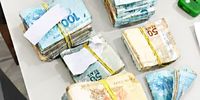
Herrmann’s room was also searched. Officers allegedly seized “four empty suitcases, aviation navigational equipment, a hardware cryptocurrency wallet, and other electronic devices”.
The Australian Federal Police, without naming Herrmann and Falconer, last week said that they “remain before the courts in Western Australia,” suggesting the case against them continues.
‘Continued criminality’
Meanwhile, in the crackdown in Brazil last week, police officers used information gleaned from seized electronic devices and financial transaction records to identify a criminal group with branches across the country.
Nineteen search warrants were executed in areas including São Paulo, Bahia, Rio de Janeiro and Paraná.
SA’s cops and cocaine
The Madlanga Commission of Inquiry is investigating accusations, first made in 2025, that a cartel has infiltrated South Africa’s criminal justice system, politics and private sector. It has heard accusations that police officers have either intentionally or through ineptitude negatively affected major cocaine cases. In 2021, a R200-million cocaine consignment from Brazil was intercepted at a container depot in Isipingo, about 20km from Durban. The Madlanga Commission heard that the consignment was stored at the poorly secured Hawks building in Port Shepstone, from where it was subsequently stolen.
An order was also made for aircraft allegedly used for trafficking to be seized.
The Australian Federal Police, in a joint statement with Brazilian police issued on Friday, said that five people had been arrested and about 660kg of cocaine seized, along with some hashish and marijuana.
According to the Brazilian Federal police statement, the group targeted in the crackdown was involved in supplying, storing, transporting and distributing drugs.
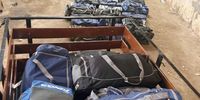
“The investigations also indicated the continuation of criminal activities … pointing to the maintenance of the logistical structure used by the investigated group,” the statement said.
This indicated that the trafficking under investigation, despite an aircraft crash and arrests, was continuing. DM
KioskNews shows a cleaned-up reading view extracted from the publisher’s page — the original always lives on their site, not ours.