Russia’s ‘eastward pivot’ gains steam as Putin confirms new China border railway
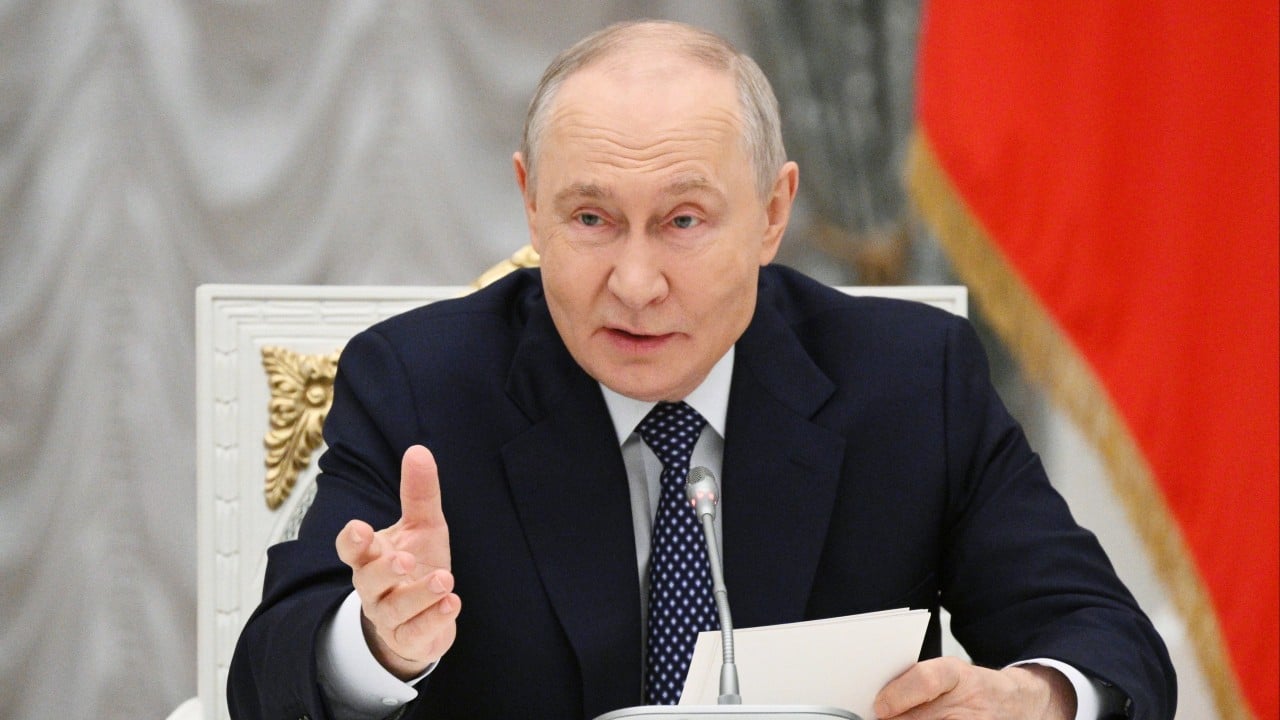
Russian President Vladimir Putin has signed into law a deal to build a second standard-gauge railway track at a key border crossing with China, as Moscow looks to accelerate its eastward pivot and boost ties with Beijing ahead of the Apec summit.
According to a document posted on Russia’s official legislative information portal on Monday, Putin has now signed a law ratifying the railway deal reached with Beijing during the Russian leader’s visit to China in May.
The two sides have agreed to jointly construct a new track along the cross-border railway linking Zabaikalsk in southeastern Russia and Manzhouli in northern China.
Crucially, the track will use the 1,435mm gauge – the world’s most widely used standard and the one adopted by China – rather than the wider 1,520mm gauge primarily used on Russia’s domestic rail network.
The second standard-gauge track would help ease constraints on cargo volumes at the border crossing, reducing waiting times for freight trains and improving the speed and reliability of services along the eastern corridor, said Li Lifan, an expert on Russia and Central Asia at the Shanghai Academy of Social Sciences.
Freight trains travelling from China to Russia currently use a single 1,435mm-gauge track at the Manzhouli-Zabaikalsk border crossing, which handles more than 60 per cent of China’s rail freight trade with Russia and a significant share of Europe-bound cargo.
Trains travelling in opposite directions take turns to cross, creating periodic bottlenecks.
Zoey Wang, director of corporates, infrastructure and project finance ratings at Fitch Ratings, said the project was expected to provide more stable transport conditions for two-way shipments of commodities, machinery and electrical products, consumer goods and cross-border e-commerce cargo.
It would also make shipping schedules more predictable for businesses and help cut costs linked to delays, cargo hold-ups and supply chain disruptions, she said.
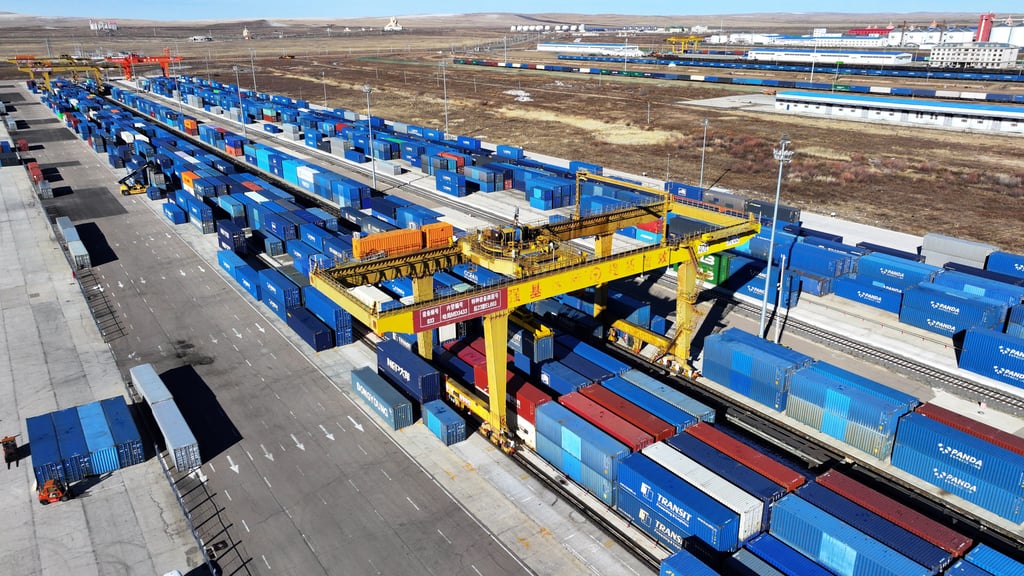
Moscow expected the second track to lift annual capacity at the Zabaikalsk crossing to 39 million tonnes by 2030, up 11 million tonnes from current levels, Russian media reported. The country has increasingly redirected trade towards Asia in recent years, as Western sanctions have restricted access to European markets.
However, experts cautioned that the additional track would not necessarily translate into a significant increase in trade volumes, adding that its greater significance lay in the strategic considerations behind the decision.
Despite Russia’s target, actual growth would be constrained by limitations in Russian railway infrastructure further inland, as cargo would still need to be transferred to 1,520mm-gauge wagons for onwards transport within the country, according to Li.
“It did not signal a shift in the country’s railway gauge system, but rather a pragmatic trade-off as its eastward pivot enters its delivery phase,” Li said.
Moscow had judged that the benefits of easing bottlenecks along its trade corridor with China outweighed the costs of maintaining procedural barriers at the border, he explained.
The timing of Putin’s signing of the law – which came ahead of the Asia-Pacific Economic Cooperation summit in Shenzhen later this month – was also deliberate, Li said. Moscow wanted to “demonstrate its ability to deliver on its commitments to Beijing and establish a precedent that could be replicated elsewhere”.
“While Russia has long adhered to this broad-gauge standard, the current depth of strategic trust and coordination between China and Russia means there is no longer any real reason to resist laying standard-gauge track on select feeder lines – especially along critical border sections,” said Zhao Long, director of the Institute for International Strategic and Security Studies at Shanghai Institutes for International Studies.
“It also reflects the growing influence and magnetic pull of China’s economic, trade and connectivity networks – not just for Russia, but across the entire Eurasian continent.”
Wang said the project reflected how China’s railway technical standards and related services were finding broader application internationally.
However, she cautioned that expanding border capacity did not automatically guarantee a corresponding rise in trade volume. The project’s actual impact, she said, would depend on a range of factors, including freight rates, customs coordination, European demand, regulatory policies and operating conditions along the corridor.
Construction of the second track on the Russian side has already begun and is expected to be completed by the end of 2026, while the Chinese section is scheduled to be finished in early 2027, Russian media reported.
KioskNews shows a cleaned-up reading view extracted from the publisher’s page — the original always lives on their site, not ours.