Eye on China: Japan reopens taboo debate over nuclear-powered submarines
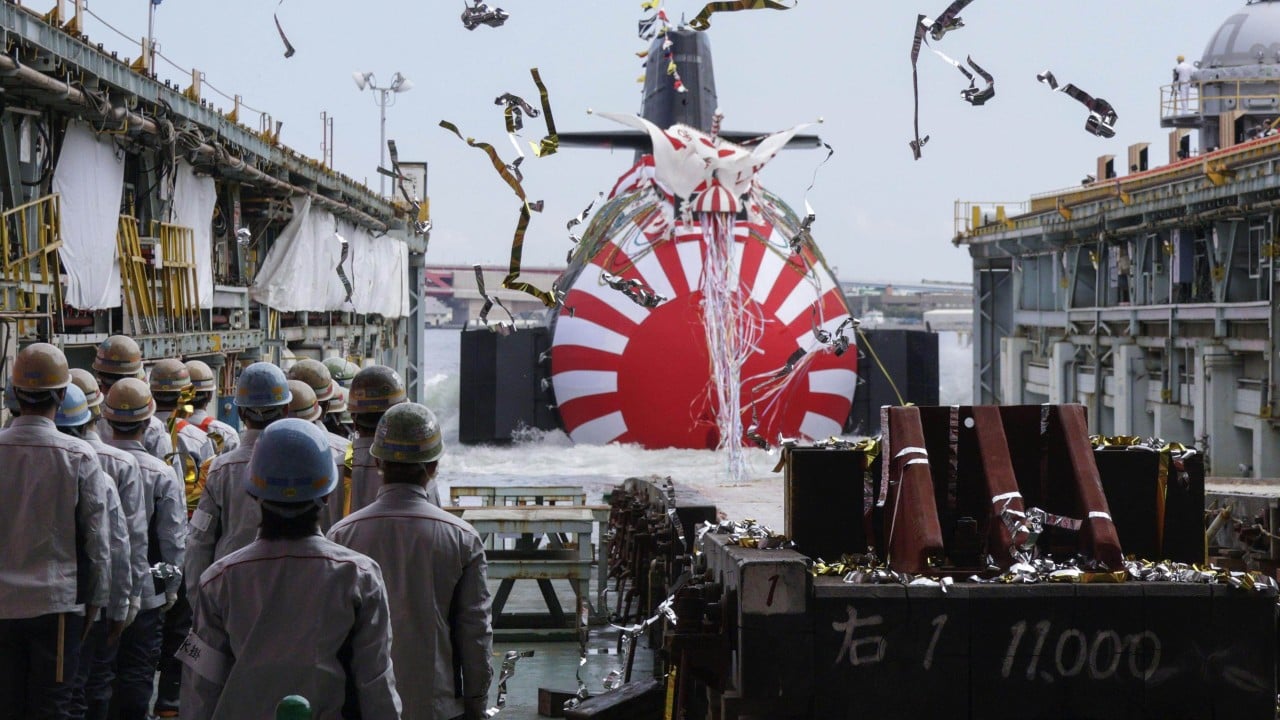
At issue is whether Japan needs nuclear-powered submarines when it already operates an advanced conventional submarine fleet and is developing uncrewed maritime capabilities.
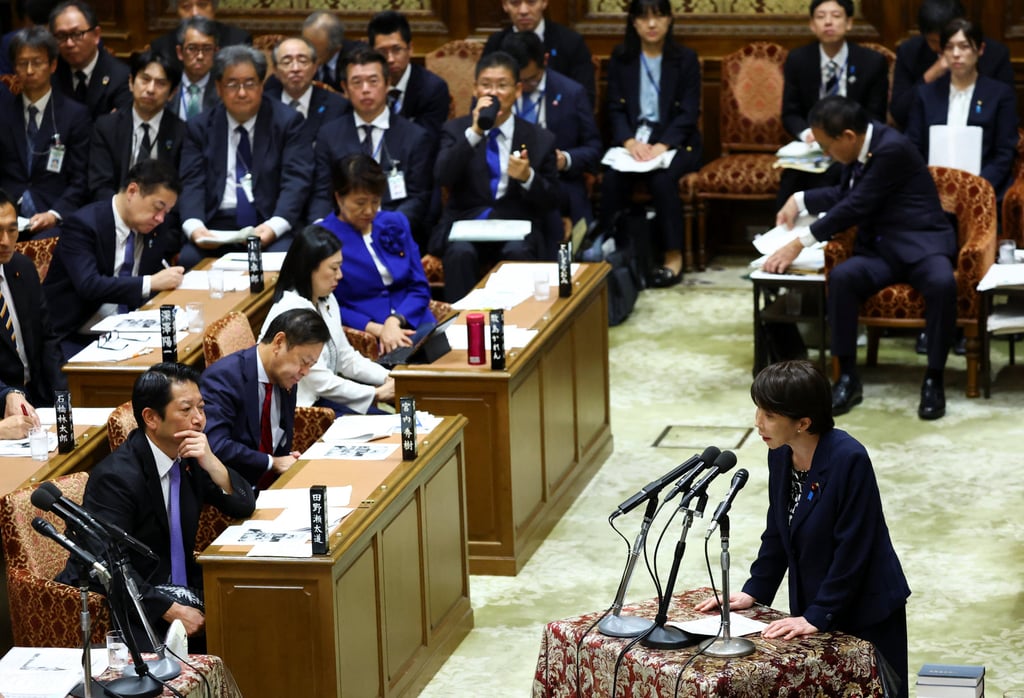
Defence Minister Shinjiro Koizumi told parliament last December that Japan’s pacifist constitution did not prohibit nuclear propulsion for military vessels.
But the country’s Atomic Energy Basic Act restricts nuclear energy to peaceful purposes. Successive governments have interpreted this as ruling out military nuclear propulsion, a position Takaichi’s cabinet reaffirmed later that month.
Beijing has criticised the controversial proposal, with Chinese foreign ministry spokeswoman Mao Ning on October 16 accusing Tokyo of seeking to gradually loosen its nuclear restrictions and linking the proposal to the wider debate over Japan’s nuclear policies.
Such moves threatened regional peace and stability, Mao warned.
The debate comes amid growing concern in Tokyo about the People’s Liberation Army’s expanding operations in the western Pacific.
On October 16, Koizumi said China’s military operations were expanding while Japan’s Pacific intelligence-gathering and surveillance capabilities remained limited, making stronger defences urgent.
The defences include underwater assets. Japan’s conventional submarines are particularly well-suited to defending the maritime chokepoints around its southwestern islands, where operating quietly at low speeds makes them effective in ambushes.
Nuclear-powered submarines could also defend these chokepoints, but their advantage lies in speed and range.
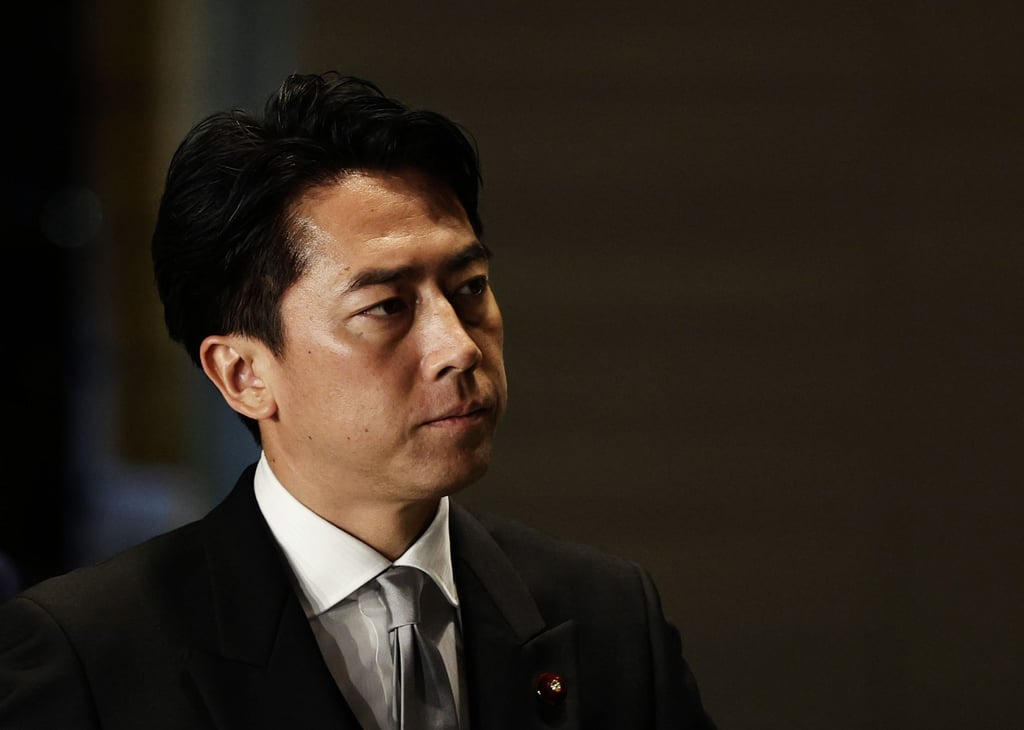
Conventional submarines can only travel at high speeds underwater for a limited time before their batteries need recharging. Nuclear-powered boats can sustain high underwater speeds over much longer distances.
That could help Japan reach Chinese naval forces in the western Pacific with greater speed, shift between patrol areas or interception points as they change course, and retreat more quickly from dangerous waters after an attack.
Such mobility and endurance would be costly.
Eric Heginbotham, a Massachusetts Institute of Technology security scholar, told The Japan Times in January that nuclear-powered submarines could cost roughly two to three times as much to buy and four times as much to operate as conventional boats, depending on design.
A June study by Hudson Institute researcher Masashi Murano and four colleagues estimated that, for similar expenditure, Japan could acquire and maintain six nuclear-powered attack submarines (SSNs) or 10 large conventional missile submarines, supplementing a baseline fleet of 22 conventional boats.
The researchers also estimated that an average of one or two nuclear-powered boats would be deployed at any given time, compared with three of the large conventional missile submarines.
They concluded that conventional missile submarines combined with underwater drones would be likely to offer Japan better value for conventional warfare.
In an interview, Murano said: “Nuclear propulsion extends a submarine’s reach, but a single boat on station cannot search blindly for Chinese SSNs across the vast Pacific.”
While nuclear propulsion becomes more valuable further from home, he questioned whether Japan should prioritise such missions, noting that “distant open-ocean operations are where the US Navy is strongest”.
01:36
China slams Japan’s first overseas missile launch in 80 years
Despite its sophisticated submarine-building industry and civilian nuclear expertise, Japan would need entirely new military infrastructure for nuclear-powered submarines.
Defence Minister Koizumi highlighted the financial and technical demands of nuclear propulsion on October 9, noting that nuclear reactors were expensive, required larger submarine hulls and demanded specialist expertise for their operation and maintenance.
He said nuclear-powered submarines were generally considered noisier than conventional boats, although their acoustic performance was improving.
Another pivotal question is how Japan would obtain naval reactor technology.
Tokyo would have to develop its own propulsion system or get help from countries such as the United States or France, with the choice affecting submarine design, construction costs and long-term dependence on foreign suppliers.
American nuclear-powered submarines use highly enriched uranium, which Japan cannot currently produce, while French designs use low-enriched uranium that is closer to the fuel used in civilian reactors.
Japan would also need specialised shipyards, maintenance facilities, nuclear-safety systems and trained naval reactor personnel.
A US Virginia-class nuclear-powered submarine requires about 140 crew members – roughly twice the complement of a Taigei-class boat.
Additional personnel would be needed for maintenance, technical support and nuclear safety, placing further pressure on Japan’s already overstretched military.
The transition would take considerable time as well.
Murano estimated that even if development began now, Japan would need “a decade or more” to field its first nuclear-powered submarine – “realistically not before the late 2030s and more likely the 2040s”.
Establishing a sustainable operational fleet would therefore take even longer.
That raises an immediate question for Tokyo: whether investing billions in nuclear-powered submarines would deliver greater military value than expanding its existing conventional submarine force and further developing its uncrewed maritime capabilities.
Christopher Hughes, a professor of international politics and Japanese studies at the University of Warwick, questioned whether countering the PLA Navy was necessarily the “prime function” of Japan’s interest in nuclear-powered submarines.
Tokyo might instead be seeking a more survivable conventional counterstrike capability, he suggested.
But this would not necessarily require nuclear propulsion. Japan is studying how to integrate vertical missile-launch systems into future submarines.
Jeffrey Hornung, Japan lead for the think tank Rand Corporation, said that if he were a Japanese lawmaker, he would seek an assessment of whether nuclear-powered submarines would close “an important gap” in Japan’s capabilities.
If conventional submarines, underwater drones and advanced mines could meet those needs, that should give policymakers “reason for pause” before rushing into acquisition, he said.
KioskNews shows a cleaned-up reading view extracted from the publisher’s page — the original always lives on their site, not ours.