10 Action Movies That Hooked Me From the First 10 Minutes

Marcel is a writer who is passionate about most movies and series. He will watch anything that's good. He is a content manager by day and a videographer when needed. Marcel used to work at a major streaming service based in Asia Pacific as a Content Specialist and was the Distribution Manager for a local movie distribution company.
Sign in to your Collider account
First impressions matter, and some action movies want to grab the audience's attention right from the get-go. A great opening ten minutes can tell you everything you need to know about the kind of ride you're about to experience. Some tease spectacular action with amazing set pieces, and some employ suspense and atmosphere to make every moment count.
The films on this list use the first ten minutes so effectively that you can instantly tell they're about to be proper masterpieces. From the revolutionary superhero storytelling of The Dark Knight and The Matrix to the relentless intensity of John Wick: Chapter 4 and the immersive spectacle of 1917, the greatest openings demonstrate just how inventive action filmmaking can be.
'The Shadow Strays' (2024)

The Shadow Strays is an underrated action masterpiece directed by Timo Tjahjanto. The opening is set in Japan, introducing us to the main character known only by her codename, 13 (Aurora Ribero). Although it appears to be another routine assignment, she is defeated by her target's bodyguard. Despite killing her target, 13 is then suspended and grounded for retraining.
This opening is slick and stylish. The action is set beautifully in a traditional Japanese house, before moving to a snow-covered garden. Tjahjanto, who directed the acclaimed actioner The Night Comes For Us, wastes no time displaying his brutal vision and technical prowess. The scene promises that the combat sequences will just get bigger, and it does. The film also establishes 13's character immediately, making it an effective storytelling stage as well. The Shadow Strays is an underrated and underseen Netflix film that deserves to be discovered by fans of bone-crunching action.
'Mission: Impossible – Dead Reckoning Part One' (2023)

The cold opening of Mission: Impossible – Dead Reckoning Part One is literally a cold one set in a Russian submarine named Sevastopol, which also houses a sophisticated artificial intelligence. Tom Cruise (Ethan Hunt) is not present, but we see the crew encountering a mysterious threat. On the radar, they see another submarine attacking them, so they launch a counterattack. However, there is no attack, and their torpedo returns to destroy them, leaving the AI and the key to access it gone in the ocean.
It is pretty bold to create this extended opening that does not feature the main actor and is full of mystery. Anchoring the sequence is Marcin Dorociński, who played the submarine captain and is probably familiar to fans of The Queen's Gambit. It is an important scene to establish the threat the IMF team is facing for two movies. It gives the villainous Entity a distinctive kind of menace that is manipulative and dangerous. The claustrophobic scene is brilliant in building tension as it has practically no fight sequences, just the crew in the submarine.
'John Wick: Chapter 4' (2023)

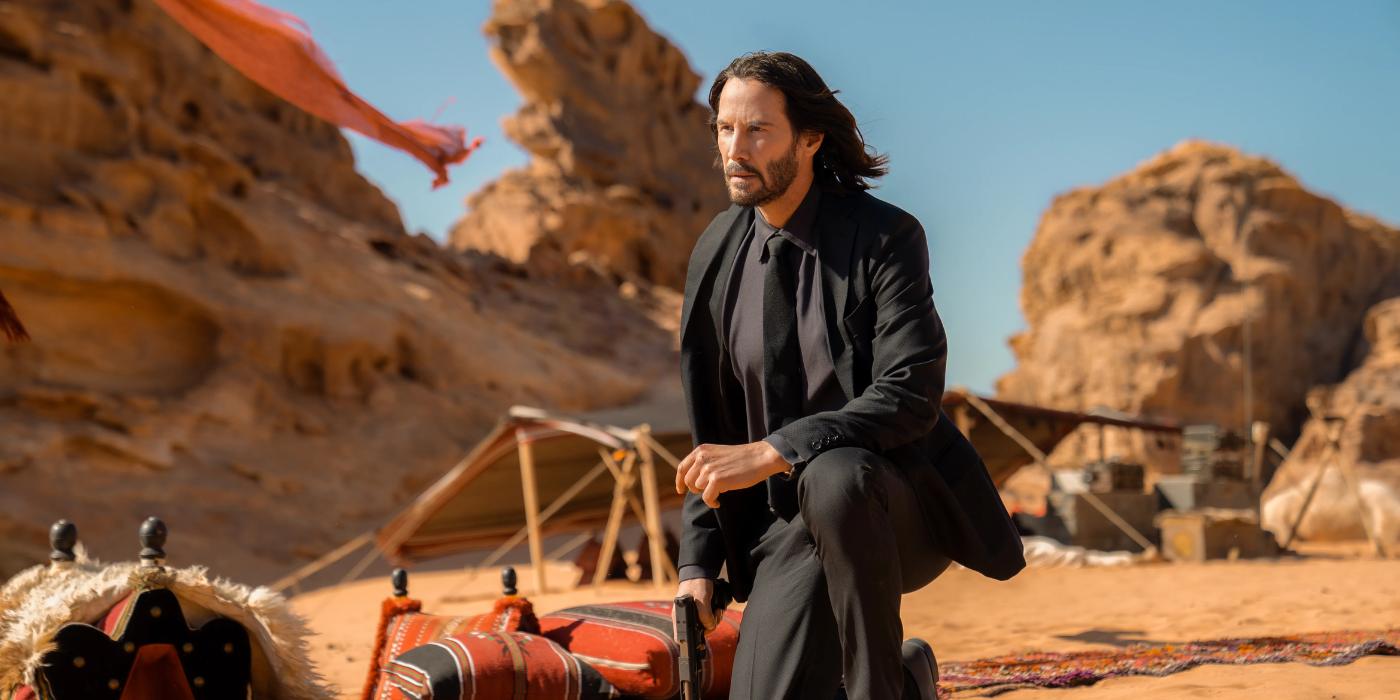
The opening ten minutes of John Wick: Chapter 4 waste absolutely no time reminding audiences that Keanu Reeves' John Wick is a total badass. John has disappeared into the desert, where he rides through the darkness on horseback in search of the mysterious Elder. After dismantling the henchmen, he finds a new Elder who replaced the retired one. Their negotiation is not fruitful, and John kills the Elder, setting the stage for his final showdown with the High Table.
This fourth chapter once again embraces the franchise's signature combination of carefully composed widescreen imagery, striking locations, and deliberate movement, creating an atmosphere that feels simultaneously operatic and grounded. Then, it also expands the mythology and the background to his conflict with Bill Skarsgård's Marquis later on. By killing the Elder, John has decided that the only way to escape the system is by facing it head-on. John is not interested in running and hiding, which is why the combat scenes in this film are all big and brutal. It's arguably the best chapter in the franchise.
'One Battle After Another' (2025)

The opening of One Battle After Another throws audiences straight into the action, introducing a group of radical activists known as the French 75. Perfidia Beverly Hills (Teyana Taylor) is helping organize a daring operation to liberate detained immigrants from a detention facility near the US–Mexico border, alongside Pat Calhoun (Leonardo DiCaprio) and the other members of the group. During the operation, Perfidia subdues Captain Steven J. Lockjaw (Sean Penn), leaving him weirdly captivated.
Paul Thomas Anderson's Oscar-winning film may be the most unconventional on the list, but that doesn't diminish its highly effective and compelling opening. Perfidia immediately emerges as the most magnetic presence, with Taylor giving her a combination of confidence, aggression, and provocative unpredictability that's impossible to ignore. Her encounter with Lockjaw is especially important because it establishes a disturbing personal dimension to the main conflict. The scene is further complemented by Jonny Greenwood's magnetic score. It's a powerful opening for one of the highly acclaimed films of the 2020s.
COLLIDERInteractive
Ballot sealed
Movies/Academy Awards/Best Picture
Collider · Best Picture
Which Oscar Best Picture
Is Your Perfect Movie?
Five winners · ten questions · one envelope
Five Oscar Best Picture winners. Five completely different visions of what cinema can be and what it can do to you. One of them is the film made for the way your mind works, and ten questions will work out which. The nominees
2020Parasite
2023Everything Everywhere All at Once
2024Oppenheimer
2015Birdman
2008No Country for Old Men
Reel01 / 10
Question 01 of 10TONE
01 What kind of film experience are you really after? The best movies do not just entertain. They leave something behind.
Keys 1 to 5 or A to E · Enter to advance
Reel02 / 10
Question 02 of 10THEME
02 Which idea grabs you most in a film? Great films are driven by a central obsession. What is yours?
Keys 1 to 5 or A to E · Enter to advance
Reel03 / 10
Question 03 of 10STRUCTURE
03 How do you like your story told? Form is content. The way a story is shaped changes what it means.
Keys 1 to 5 or A to E · Enter to advance
Reel04 / 10
Question 04 of 10VILLAIN
04 What makes a truly great antagonist? The opposition defines the protagonist. What kind of opposition fascinates you?
Keys 1 to 5 or A to E · Enter to advance
Reel05 / 10
Question 05 of 10ENDING
05 What do you want from a film's ending? The final note is the one that lingers. What do you want it to sound like?
Keys 1 to 5 or A to E · Enter to advance
Reel06 / 10
Question 06 of 10WORLD
06 Which setting pulls you in most? Where a film takes place shapes everything: mood, stakes, what is even possible.
Keys 1 to 5 or A to E · Enter to advance
Reel07 / 10
Question 07 of 10CRAFT
07 What cinematic craft impresses you most? Every great film has a signature, the element that makes it unmistakable.
Keys 1 to 5 or A to E · Enter to advance
Reel08 / 10
Question 08 of 10PROTAGONIST
08 What kind of main character do you root for? The protagonist is the lens. Who you follow says something about you.
Keys 1 to 5 or A to E · Enter to advance
Reel09 / 10
Question 09 of 10PACE
09 How do you feel about a film that takes its time? Pace is a choice. Some films sprint. Others let tension accumulate slowly, deliberately.
Keys 1 to 5 or A to E · Enter to advance
Reel10 / 10
Question 10 of 10AFTERMATH
10 What do you want to feel walking out of the cinema? The best films leave a mark. What kind of mark do you want?
Keys 1 to 5 or A to E · Enter to advance
The envelope, pleaseAnd the Oscar goes to
★ Best Picture, 2020 Parasite Bong Joon-ho, 2019 A film that hides its true intentions until the moment it is ready to reveal them.
You are drawn to films that operate on several levels at once, that begin in one genre and quietly, brilliantly migrate into another. Bong Joon-ho's Parasite is a film about class, desire and the architecture of inequality that manages to be darkly funny, deeply suspenseful and genuinely shocking across a single extraordinary running time. Your instinct is for cinema that rewards close attention and punishes assumptions, right up to its devastating final image. From the Collider file
- The first film not in the English language to win Best Picture, in the Academy's 92-year history to that point.
- It took four Oscars in one night: Picture, Director, Original Screenplay and International Feature.
- It won the Palme d'Or at Cannes in 2019 by a unanimous jury vote, the first Korean film to do so.
- The Park family's modernist house was not a location. It was built from scratch on an outdoor lot.
Reads between the lines Loves a reveal Attention to detail
★ Best Picture, 2023 Everything Everywhere All at Once Daniel Kwan and Daniel Scheinert, 2022 A film that refuses to choose between being entertaining and being meaningful.
You want it all, and this one gives you all of it. The Daniels' Everything Everywhere All at Once is among the most maximalist films ever made: action comedy, multiverse science fiction, family drama, existential crisis, and an emotional core that sneaks up on you in the middle of the chaos. You respond to ambition. Being overwhelmed is the design, not the side effect, because the feeling of being crushed by infinite possibility is exactly what the film is about. From the Collider file
- Seven Oscars, including three acting wins for Michelle Yeoh, Ke Huy Quan and Jamie Lee Curtis.
- Michelle Yeoh became the first Asian woman to win Best Actress.
- The visual effects were handled by a team of fewer than ten people, most of them self-taught.
- Ke Huy Quan had all but left acting for two decades before this role brought him back.
Wants everything Big swings Soft center
★ Best Picture, 2024 Oppenheimer Christopher Nolan, 2023 A film about the gap between what we can do and what we should do.
You are drawn to cinema on a grand scale, films that treat history not as a backdrop but as a force, then place their characters inside that force and watch what happens. Christopher Nolan's Oppenheimer sits inside one of the most consequential moments in human history and refuses to look away from it. You want your films to feel important without being self-important, earning their ambition through craft and the gravity of the subject. This one is enormous, complicated, and offers no easy comfort. From the Collider file
- Seven Oscars, including Nolan's first wins for directing and for Best Picture.
- Cillian Murphy and Robert Downey Jr. both took their first Academy Awards for it.
- Kodak engineered a black-and-white 65mm stock that did not previously exist so Nolan could shoot those sequences on IMAX.
- A three-hour, R-rated drama about theoretical physics that passed 950 million dollars worldwide.
Thinks in decades Scale and weight No easy comfort
★ Best Picture, 2015 Birdman Alejandro G. Iñárritu, 2014 A film doing something that probably should not be possible.
You are drawn to films that foreground their own construction, where the how of the filmmaking becomes part of the what it is about. Alejandro G. Iñárritu's Birdman, stitched to appear as one continuous take, is cinema examining itself through the cracked mirror of a fading actor's ego. You respond to formal daring. Michael Keaton's performance and Emmanuel Lubezki's restless camera make something unlike anything else: a film about creativity, relevance, self-destruction and never quite knowing whether your work means anything at all. From the Collider file
- Four Oscars, among them Best Picture and Best Director for Iñárritu.
- Emmanuel Lubezki's win here was the middle of three consecutive cinematography Oscars, after Gravity and before The Revenant.
- Antonio Sánchez's improvised drum score was ruled ineligible for the score category, which caused a minor uproar.
- The long-take illusion was built from a handful of extended shots joined by hidden cuts.
Formally daring Camera as character Ego and art
★ Best Picture, 2008 No Country for Old Men Joel and Ethan Coen, 2007 A film that treats dread as a form of meaning.
You are drawn to cinema that trusts silence, refuses to explain itself, and lets unease do the talking. The Coen Brothers' No Country for Old Men is about the arrival of a new kind of evil: implacable, arbitrary, and indifferent to the moral frameworks we use to make sense of things. It is one of the most tightly controlled films ever made, and that control is the source of the terror. You want your films to haunt you rather than comfort you, and you have no interest in a resolution that would be a lie. From the Collider file
- Four Oscars: Picture, Director, Adapted Screenplay, and Supporting Actor for Javier Bardem.
- Adapted from Cormac McCarthy's 2005 novel, with much of his dialogue carried over intact.
- Carter Burwell's score runs about sixteen minutes and is nearly inaudible by design.
- Roger Deakins was nominated twice that year, for this and The Assassination of Jesse James, and won for neither.
Trusts silence Dread over answers No tidy endings
Ballot tally · your top three
1
2
3
Copied to your clipboard
Ballot counted byCOLLIDERCollider.com · The Awards Desk
'Thief' (1981)

The opening of Thief introduces Frank (James Caan), a professional safecracker carrying out an elaborate nighttime robbery with great precision. Working alongside his trusted associate Barry (Jim Belushi), Frank breaks into a high-security vault and methodically dismantles its sophisticated locking mechanism. Once the job is complete, he collects his share and returns to the outside world.
Thief is one of the best neo-noir films and definitely one of Michael Mann's best films. Rather than presenting the robbery as a frantic, improvised operation, Michael Mann allows the audience to observe Frank's work in meticulous detail, from the specialized tools he uses to the careful movements of his hands. The process is laborious, technical, and surprisingly quiet, with the sounds of drilling, metal scraping, and machinery creating an intense atmosphere that puts the viewers in his situation and headspace.
'Once Upon a Time in the West' (1968)
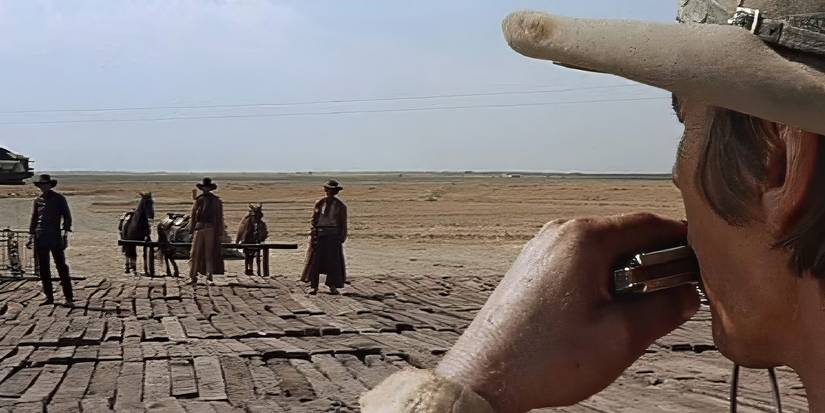
Once Upon a Time in the West starts with three gunmen arriving and taking up positions around the station, waiting for someone to arrive by train. When the train finally arrives, the men discover that their intended target is not aboard. Instead, they encounter a mysterious harmonica-playing stranger, played by Charles Bronson, who has apparently come looking for them. The confrontation erupts into a sudden gunfight, and the stranger kills all three men.
Compared to the other films on this list, this opening is the least action-packed, but it is still memorable and effective. Rather than immediately explaining who the three men are or what they want, Sergio Leone lets the audience sit with them as they wait. These apparently insignificant details stretch the tension to an almost unbearable degree, until the fight erupts. The stranger's entrance is particularly effective because Bronson barely needs to speak to establish his character. By the time the scene ends, Leone has demonstrated extraordinary confidence in his audience and visual storytelling.
'1917' (2019)

1917 opens with Lance Corporals Will Schofield (George MacKay) and Tom Blake (Dean-Charles Chapman), two British soldiers resting beneath a tree during the First World War. Their moment of rest ends when Blake is summoned and instructed to bring Schofield with him on a mission that could determine the fate of an entire British battalion, including Blake's own brother.
The genius of this opening is how much tension Sam Mendes creates before showing the audience a single major battle. It starts with a quiet stillness and then plunges the characters and the audience right into battle. Most importantly, it prepares us for the film's remarkable technical achievement. Its continuous shot technique, courtesy of the Oscar-winning Roger Deakins, makes the audience feel as though there will be no escape from the journey once it begins, just like what the characters are going through. It becomes less of a gimmick but a necessary storytelling tool in this story that unfolds in real-time.
'Gladiator' (2000)

Gladiator opens with Maximus (Russell Crowe), a Roman general commanding the armies of Emperor Marcus Aurelius (Richard Harris) during a campaign against Germanic tribes near the empire's northern frontier. Before the battle begins, Maximus contemplates his surroundings and then starts his rousing speech. When the fighting finally begins, the Romans charge through enemy lines and legionaries advance in coordinated formations against the Germanic warriors.
Ridley Scott does what he does best in this opening sequence. He starts slow and then escalates with the chaotic battle scenes, combining an epic scale with the intimacy of a character study. The battle itself is a remarkable demonstration of cinematic craftsmanship. The camerawork, massive production and thundering score are combined to create an immersive experience, glued together by Crowe's Oscar-winning performance. With breathtaking spectacle, visual storytelling, and a deeply human hero, it is clear that from this opening, Gladiator is one of the best films ever made.
'The Matrix' (1999)

The Matrix begins inside a dimly lit hotel room, where Trinity (Carrie-Anne Moss) is being tracked by the police, who have apparently discovered her connection to Morpheus. When officers enter the room to arrest her, they quickly discover that they have underestimated their target. Trinity takes them down with astonishing speed and gravity-defying movements. Then, mysterious men in black suits arrive, chasing Trinity through rooftops until she gets away.
In a matter of minutes, The Matrix introduces a mysterious world, an extraordinary heroine, a powerful enemy, and a world with different rules than ours. The film turns this action sequence into a puzzle, encouraging audiences to wonder what kind of world could produce such extraordinary events. The opening also establishes the visual identity that would become one of the film's most influential contributions to cinema. The action choreography, which combines wire-fu and gunfights, is also astounding. It is undoubtedly one of the best openings in the action genre.
'The Dark Knight' (2008)
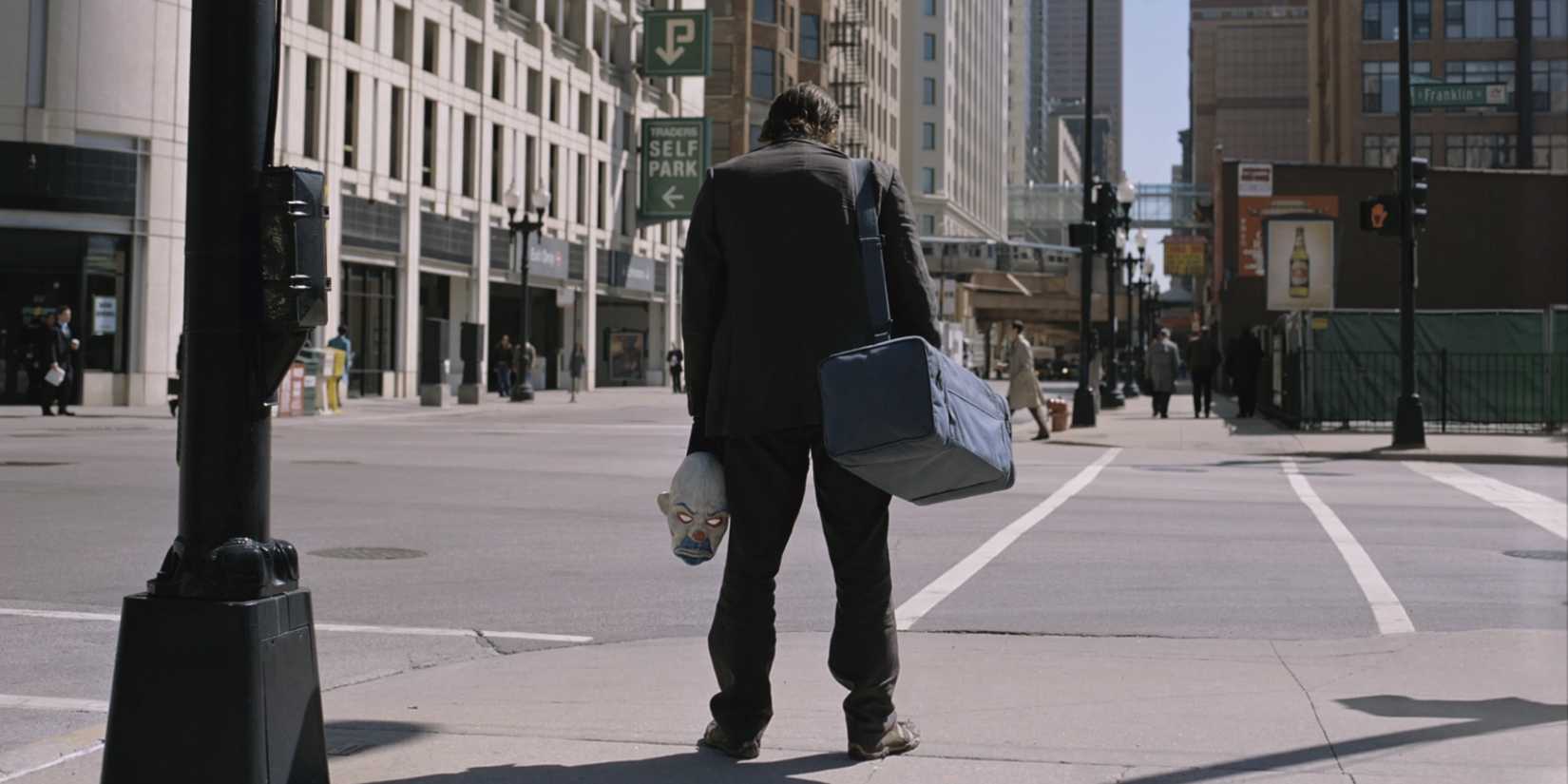
The Dark Knight immediately begins with a bank heist carried out by a group of men wearing clown masks. They are given specific jobs, but as the robbery unfolds, the robbers begin killing one another, as instructed by their mysterious employer. In the final moments of the heist, the bank manager tries to strike down a clown with his shotgun, but is shot back. Then the criminal reveals himself to be The Joker (Heath Ledger), kills the last clown, and disappears into the city.
This opening establishes Christopher Nolan as one of the directors who craft spectacular action sequences. The Joker is an instant icon, unpredictable and chaotic, exploiting greed and human nature through manipulation. When he is unmasked, all of the doubts surrounding Heath Ledger's casting immediately went away; he would go on to earn a posthumous Oscar win for Best Supporting Actor. The Dark Knight is always in conversation for the best superhero movies of all time, and it is quite clear through this opening alone.
The Dark Knight
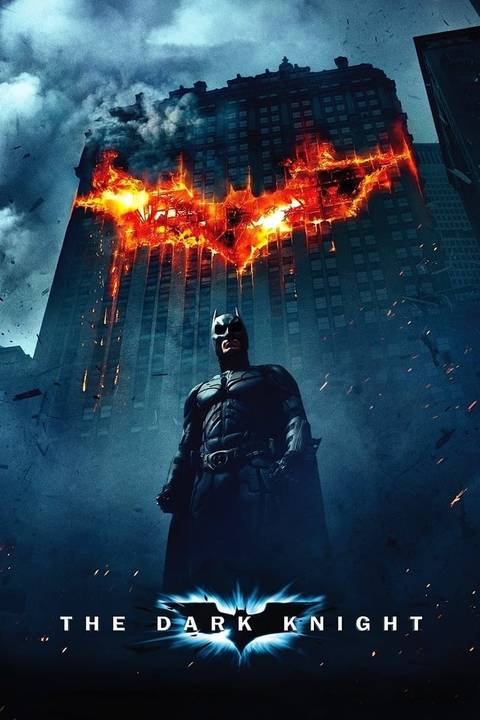
- Release Date
- July 16, 2008
- Cast
- Christian Bale, Heath Ledger, Aaron Eckhart, Gary Oldman, Michael Caine, Morgan Freeman, Monique Gabriela Curnen, Ron Dean, Maggie Gyllenhaal, Cillian Murphy, Chin Han, Nestor Carbonell, Eric Roberts, Ritchie Coster, Anthony Michael Hall, Keith Szarabajka, Colin McFarlane, Joshua Harto, Melinda McGraw, Nathan Gamble, Michael Vieau, Michael Stoyanov, William Smillie, Danny Goldring, Michael Jai White
- Runtime
- 152 minutes
- Director
- Christopher Nolan
- Writers
- Christopher Nolan, Bob Kane, Jonathan Nolan, David S. Goyer
KioskNews shows a cleaned-up reading view extracted from the publisher’s page — the original always lives on their site, not ours.