Going ‘car-lite’: why more Singaporeans are quitting driving
When the time came to renew his certificate of entitlement (COE), Andrew Tan hit the brakes on coughing up an eye-watering S$112,000 (US$87,400) to keep his car on Singapore’s roads for another 10 years.
Instead, the 49-year-old business consultant decided in May to go without a car for the first time in two decades.
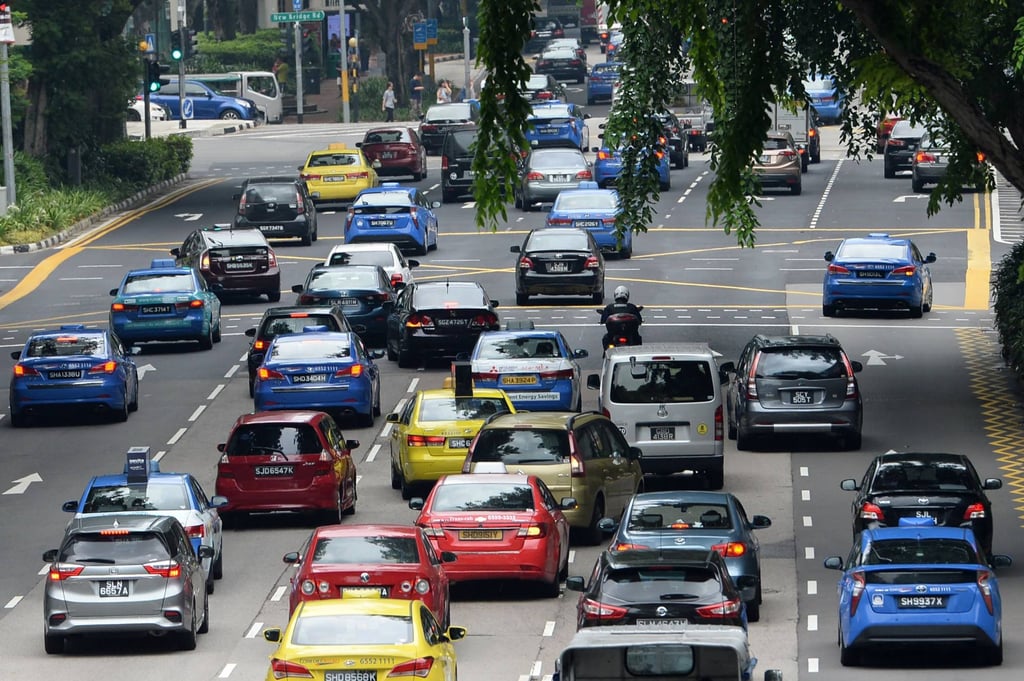
High COE prices, rising running costs and the hassle of parking and congestion are prompting more Singaporeans to reconsider car ownership, as the land-scarce city state expands public transport, cycling infrastructure and other alternatives in a push for a more “car-lite” society.
Quarterly figures released by the government’s Land Transport Authority in July showed there were 516,237 privately owned cars in Singapore, the lowest number since 2019, even as the share of rental, ride-hailing and corporate cars had increased. Privately owned cars still accounted for 79 per cent of all those on the roads, however.
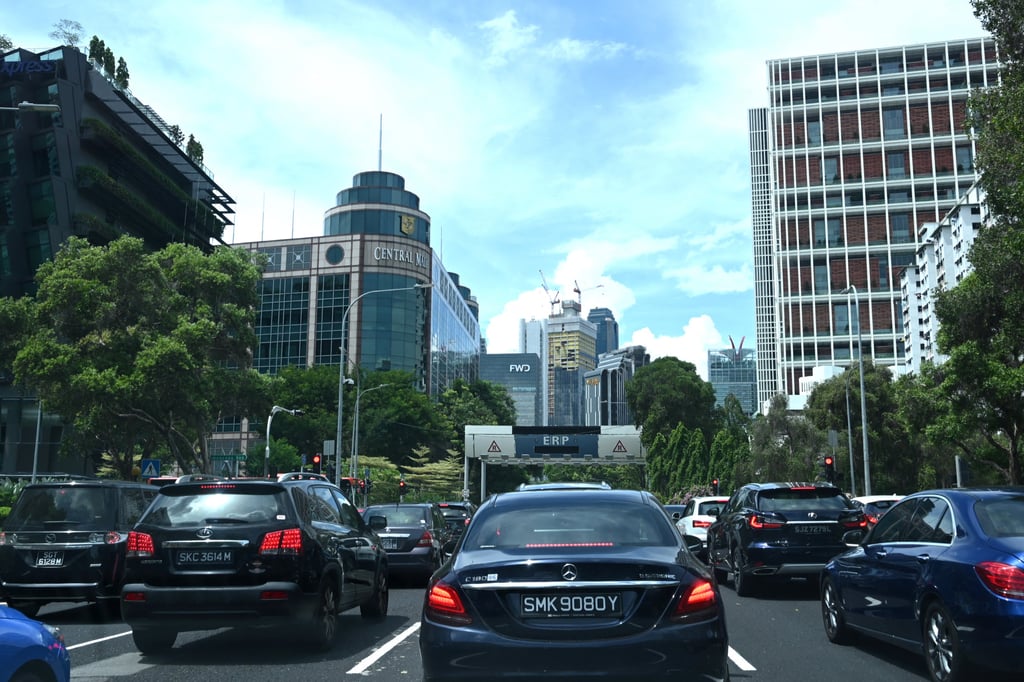
When Tan bought his first car in May 2006, he said the COE cost S$10,000. A decade later it had climbed to S$50,000 and renewing again this summer would have cost more than double that amount.
Other reasons to give up driving included rising road tax, fuel, maintenance and insurance costs, he said, as well as the city state’s congestion-charging system, known as electronic road pricing (ERP).
An automated system that charges drivers a fee for using busy roads during peak hours, ERP dates back to 1998, though there were other paper-based systems in place beforehand.
At the start of last month, ERP charges returned to the Orchard Road shopping district for the first time since the start of the pandemic in 2020.
Singapore has been actively encouraging people to walk, cycle and use more public transport under the Land Transport Authority’s “Move Lite” campaign, first launched in 2022.
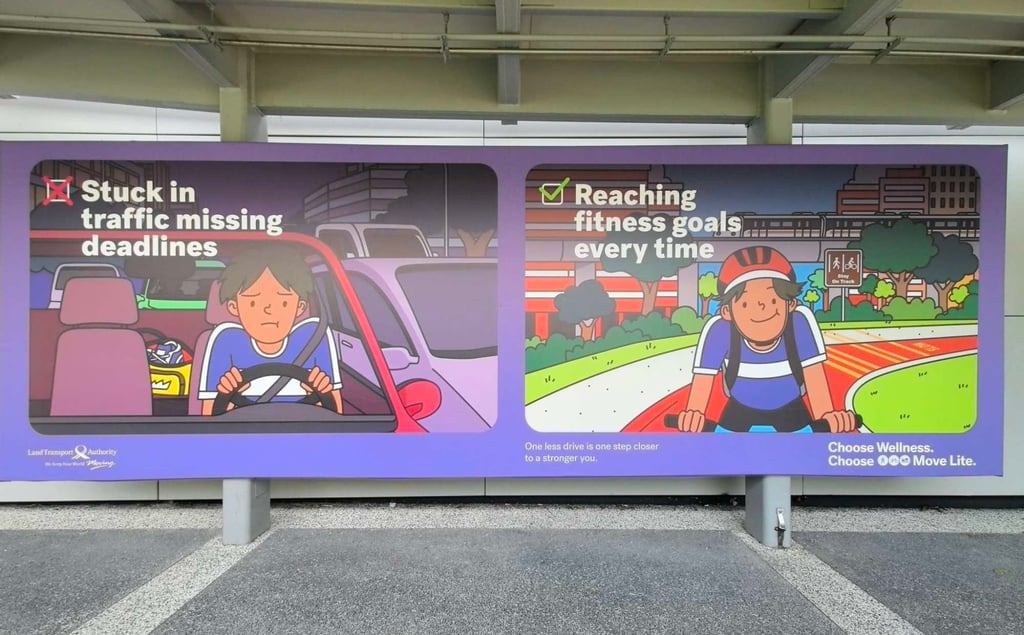
In its early days, the campaign mostly focused on the positives of public transport and not owning a car, but the strategy has since moved towards spotlighting the downsides of driving such as being stuck in traffic and wasting time hunting for parking.
Still, its main aim was to promote more sustainable ways of travelling, not deter people from driving, through its use of “relatable, everyday scenarios”, a spokesman for the authority said.
“The campaign seeks to help commuters make informed travel choices while raising awareness of the increasingly convenient and accessible alternatives to driving,” he said, adding that planning and managing Singapore’s transport network meant balancing the needs of different road users while making the best use of limited land.
To achieve this, the spokesman said Singapore was investing in public transport and “active mobility” infrastructure while managing vehicle ownership and road usage to keep transport efficient and sustainable.
“Our objective is not to prioritise one group of commuters over another, but to provide Singaporeans with more mobility options that are safe, reliable and sustainable for different journeys and needs.”
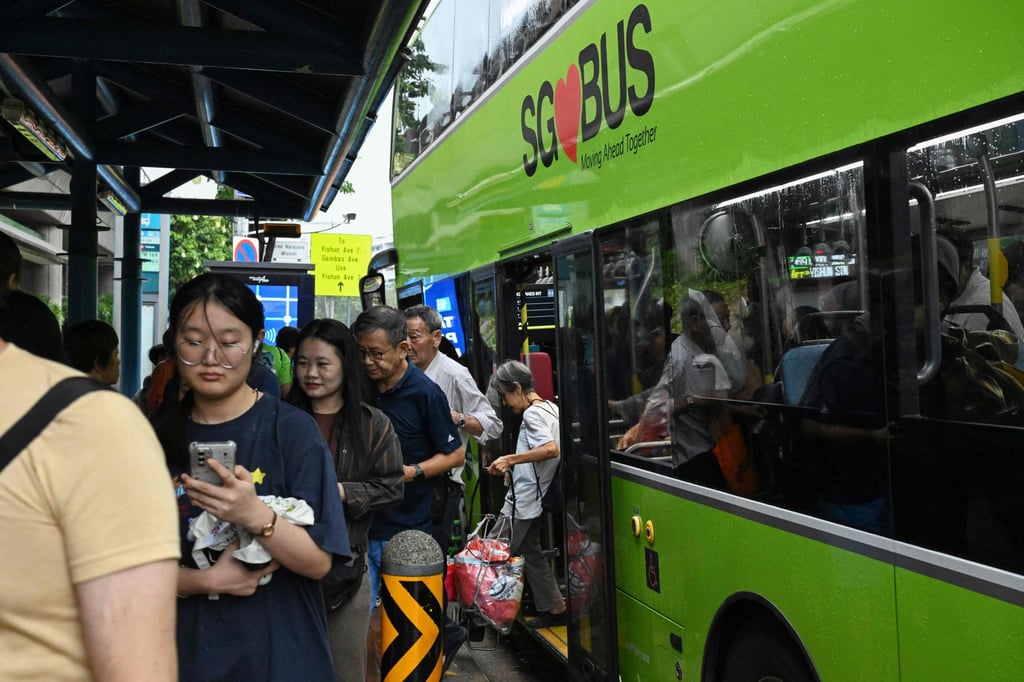
Singapore only has 744.3 sq km (287.4 square miles) of land and roads take up about 12 per cent of it, which is why authorities have been working to make walking, cycling and public transport more accessible and convenient.
The COE system, launched in May 1990, controls how many vehicles are allowed on the roads by requiring motorists to bid for a certificate in online open auctions. Each COE confers the right to own a vehicle for 10 years.
Singapore has maintained a zero-growth policy for private cars and motorcycles since February 2018 and the Land Transport Authority aims to keep this cap in place until January 31, 2028, while allowing for a small expansion of commercial vehicle and bus fleets.
With the cost of living on the rise, Tan said owning a car was a poor coping strategy for uncertain times, especially considering he had to “set aside contingency funds for young children and aged parents as well”.
Rising costs have also prompted other car owners to think twice about renewing their COEs.
Retired engineer Ricky Quek, 63, recently decided to stop driving after 28 years, citing high COE and petrol prices. Renewing his COE would have cost him S$130,000, he said.
“Public transport is reasonably cheap and no hassle compared to owning a car,” Quek said. “Having a car is definitely convenient but drives up the expenses.”
Small annoyances
Mounting expenses are only part of the picture, however. Other factors discouraging driving include efforts to lower speed limits with stricter enforcement and penalties, and extensive road works linked to major construction projects.
Work on a new multilayered expressway known as the North-South Corridor, the multimodal Changi Northern Corridor project near the airport and a new subway called the Cross Island Line is affecting a number of major arterial roads and highways.
Tech entrepreneur Davidson Chua, 27, says he has noticed more of these roadworks recently, especially during the off-peak times when he likes to commute.
“I do often feel a small annoyance when I am expecting less traffic but end up [encountering] lane closures because of road works or pruning,” said the self-proclaimed motoring enthusiast, adding that he typically preferred covered parking spaces though those could be harder to come by.
Chua said he would only drive two or three days some weeks, “because I don’t see a point in driving down to areas like the CBD [central business district]. It costs more time and money.”
His car is now on its second 10-year COE cycle, with the next renewal due in three years’ time.
“I would love to renew,” he said. “But the COE price will definitely play a huge role in the decision-making process.”
Gopinath Menon, a former chief transport engineer at the Land Transport Authority who led the ERP’s roll-out, told This Week in Asia that measures to limit car ownership had been a part of Singapore’s overall transport strategy since the mid-1970s.
“Realising that the small island cannot keep building more roads to tackle traffic congestion, the strategy called for reasonable demand management for private vehicle travel and for public transport to be the main mode of travel,” said Menon, who is now an independent transport engineering consultant.
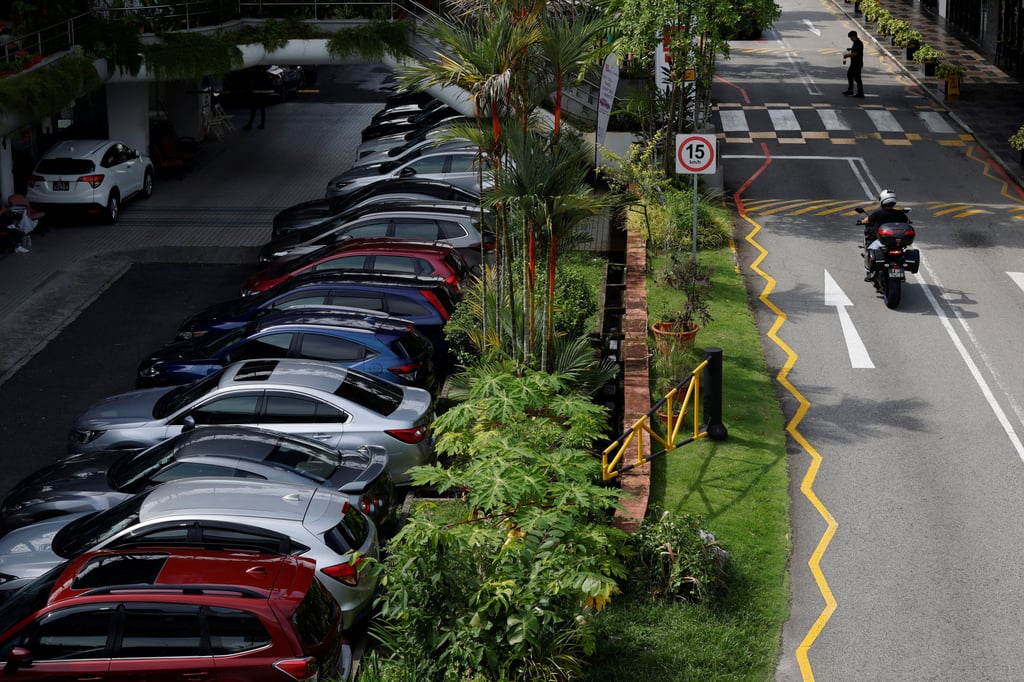
Higher parking charges were first to be introduced, alongside an analogue predecessor to the ERP known as the Area Licensing Scheme in 1975. The COE bidding framework followed in 1990, with ERP being rolled out later that same decade.
“Higher driving costs have pushed more people to switch from cars to vastly improved public transport and other public modes such as private-hire vehicles and active mobility,” Menon said, referring to walking and cycling. “This is called the push-pull strategy.”
Speed bumps on the road to a “car-lite” concept included “ambition and attitudes towards car ownership”, he said.
But infrastructure can help lead the way. Menon pointed to the increasing number of pedestrianised zones and bus lanes as ways to reclaim road space for non-car traffic.
Some districts and towns are also car-lite by design, with amenities placed close together, public transport prioritised and access to cycle paths and footpaths improved.
Given the high costs of car ownership, Singapore’s government needs to make the case that cars are a luxury, not a necessity, for the vast majority of citizens, according to public policy expert Terence Ho, an adjunct associate professor in practice at the National University of Singapore’s Lee Kuan Yew School of Public Policy.
“There will naturally be some unhappiness about the high COE and ERP charges, particularly when certain roads are still congested at peak hours despite the charges,” Ho said. “But by and large, the vehicle control measures have been effective.”
The number of private cars, excluding private-hire vehicles, had grown just 1 per cent over the past five years, he said, while the share of resident households owning a car had fallen from as high as 42 per cent in 2012/13 to 36 per cent in 2023.
This was despite the fact that many households included young children or elderly family members, Ho said.
For Derek Wong, 35, a car is a non-negotiable for ferrying around his two young children and ageing parents. He bought a second-hand Honda Freed in December, with a COE that expires in September 2035.
“I just felt we had to bite the bullet and this will probably be our last car since we won’t need it when the children are older,” said Wong, a writer whose children are aged two and seven.
“The benefits of the convenience still outweigh the drawbacks. It is a hefty investment but given the time it saves, we feel it is worth it.”
Whether COE subsidies should be granted to large families or to those with elderly members, young children or people with disabilities has repeatedly been raised in parliament.
In a reply on the government portal AskGov in November, the Transport Ministry said the difficulty lay in deciding which groups should receive preferential treatment. A COE subsidy for families would have to be substantial, it said, and lower-income families unable to own a car would be unlikely to benefit.
“COE revenues go towards funding public transport,” the ministry said, adding that its approach was to provide high-quality public transport, complemented by taxis and private-hire cars.
On the Mass Rapid Transit (MRT), Singapore’s main underground and elevated railway system, reliability hit a record in August, the Land Transport Authority said in a report released last month. The network’s mean kilometres between failures, a measure of the average distance a train travels before a delay of more than five minutes, rose to 2.88 million km (1.79 million miles) from 2.37 million km in July.
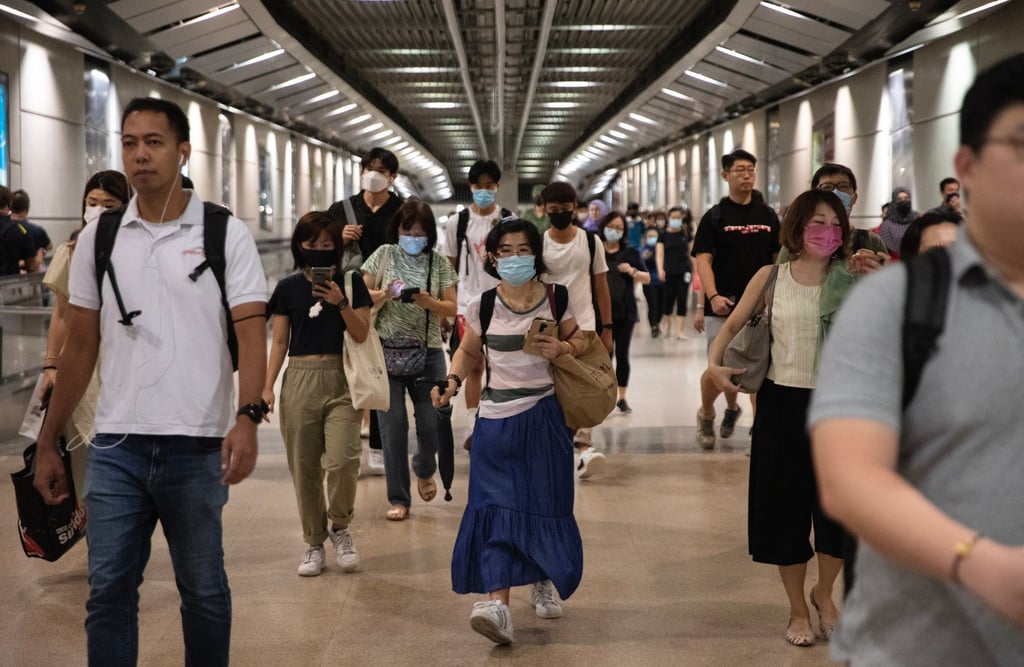
About seven in 10 resident households are already within a 10-minute walk from an MRT station and the government aims to raise that proportion to 80 per cent by the 2030s.
Yet the overall decline in private car ownership had as much to do with the cap on total vehicle numbers as improving public transport links, said Walter Theseira, an associate professor of economics at the Singapore University of Social Sciences.
This restriction tended to push car usage towards private-hire models whereby higher utilisation rates made the expensive COE premiums easier to justify, Theseira said.
“The high willingness to pay for COEs suggests that the underlying private demand for cars continues to be strong,” he said.
“The policy objective can’t be to help Singaporeans achieve car ownership ambitions, as it’s a zero-sum game, but … to help Singaporeans stop needing a car.”
Alternative paths
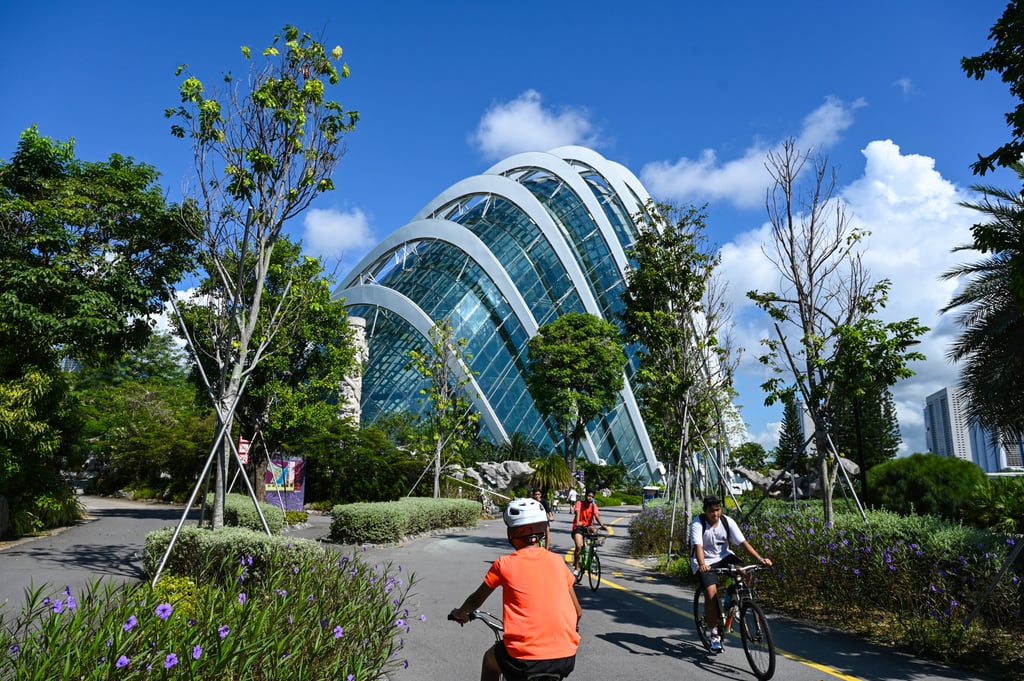
For those ready to ditch the car, Singapore’s expanding cycling network offers a ready alternative. The city state currently has more than 730km (454 miles) of cycling paths and dedicated traffic-free green corridors known as “park connectors”, with work under way to expand the network to about 1,300km by 2030.
Bicycles have been allowed to share pavements with pedestrians since around 2010, according to Menon, with many walkways later widened to ease congestion and improve safety.
Even so, he said cycling was still mainly used for recreation, running errands and so-called first- and last-mile trips to railway stations and bus interchanges. It was unlikely to become the No 1 choice for most commuters given the high quality of public transport, Menon said.
Theseira agreed, pointing to Singapore’s hot climate and the relatively long distance of an average commute as limiting factors – though he saw potential in electric bikes and other motorised devices.
“In many places, very quickly, when people get access to electrified modes of cycling, they usually take that up,” he said, while noting the city state’s current restrictions on such devices, imposed for pedestrian safety, and lack of suitable infrastructure.
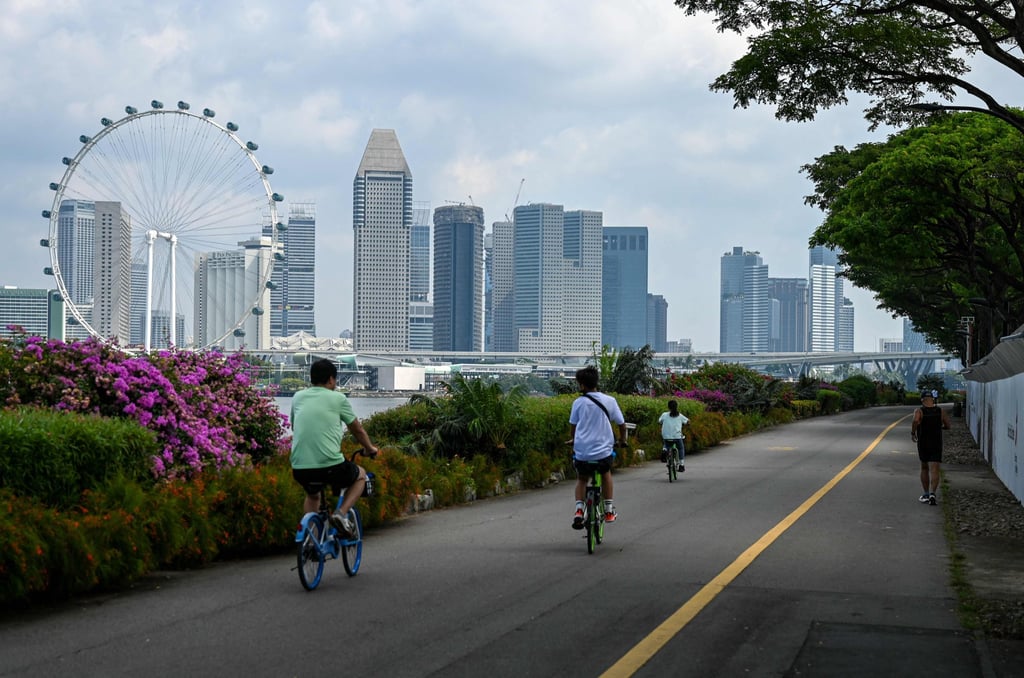
Jason Slaughter, an Amsterdam-based content creator who runs the YouTube channel Not Just Bikes, published a video late last month arguing that rules forcing riders to frequently slow down, give way to cars or dismount and push would limit the take-up of cycling in Singapore.
He also critiqued the city state’s cycling infrastructure, highlighting what he called “questionable choices” such as 90-degree turns and lanes that end abruptly, adding he suspected it was “designed by people who never ride a bicycle”.
His video, titled “Cycling Made Difficult (but it’s getting better!)”, had been watched almost half a million times as of Friday.
For Tan, who now relies on public transport and bicycle paths to get around after giving up on car ownership, the trade-offs are worth it.
“I grew up without a car, so I do not have much difficulty adjusting,” he said. “For my Japanese wife, my two young kids and business needs, the adjustments are not as easy. Yet for the amount saved, it’s worth the inconvenience.”
KioskNews shows a cleaned-up reading view extracted from the publisher’s page — the original always lives on their site, not ours.